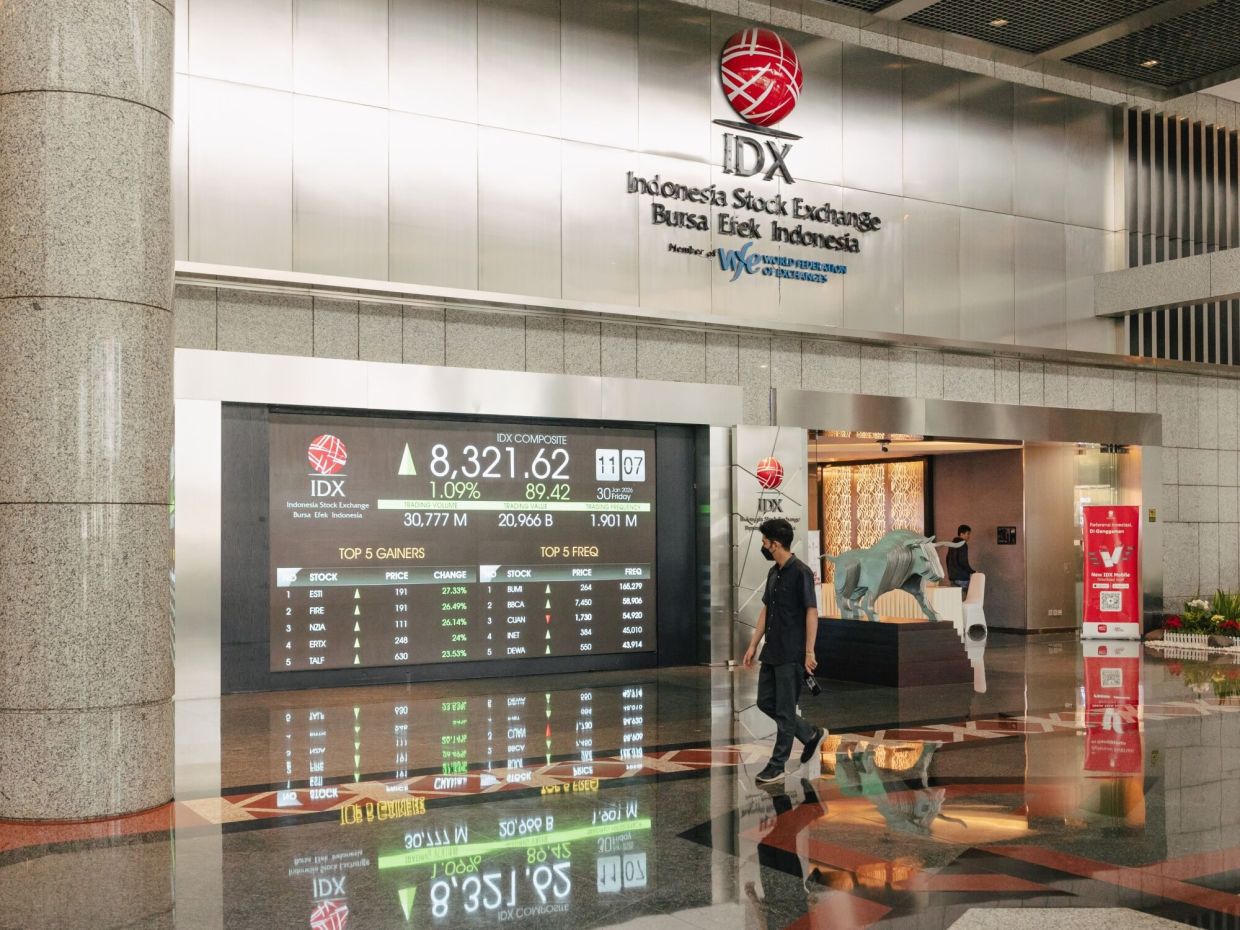
Indonesia's financial markets face another critical juncture as MSCI, the world's dominant index provider, has escalated concerns about the country's investment accessibility on the eve of a landmark classification review. The index giant's latest assessment, released Thursday, identifies significant gaps in ownership transparency and market conduct that could undermine confidence among international investors who rely heavily on MSCI's determinations to guide trillions of dollars in global capital allocation.
The timing of MSCI's warning is particularly consequential as the firm prepares to announce next week whether it will downgrade Indonesia from emerging market to frontier market status—a reclassification that analysts estimate could force passive funds and index-tracking investors to liquidate approximately $13 billion in holdings. Such a move would represent a dramatic reversal for a nation that has long aspired to attract deeper integration with global capital markets and to position itself as a regional financial hub.
MSCI's primary complaint centres on what it terms limited visibility into shareholding structures and the presence of coordinated trading behaviour that distorts normal market mechanics. In its market accessibility review, the index provider specifically downgraded Indonesia's information flow criterion to negative status, reflecting persistent opacity in both ownership disclosure practices and real-time market activity monitoring. This deterioration in information flow strikes at the heart of efficient market functioning, as investors cannot accurately determine the true free float of listed companies or reliably assess trading patterns free from manipulation concerns.
The Indonesian stock exchange and the Financial Services Authority did not provide immediate responses to enquiries about MSCI's latest findings, though both institutions have previously committed to addressing governance deficiencies. The extended period of scrutiny began in January when MSCI first flagged transparency inadequacies and signalled a potential downgrade, prompting emergency reform measures from the authorities. These initiatives included raising the minimum free float requirement for listed companies from 7.5 per cent to 15 per cent, a substantial jump intended to disperse ownership and reduce concentration risks. The urgency of the situation was underscored when both the stock exchange chief executive and the regulatory body's leadership stepped down within hours of each other in mid-January, suggesting internal pressure to demonstrate commitment to reform.
Yet despite these interventions, Indonesia's capital markets have continued deteriorating significantly since January. The benchmark Jakarta index has contracted by 29 per cent year-to-date, reflecting broader investor anxiety about both market governance and macroeconomic stability. Foreign investors have already withdrawn approximately $3.65 billion from Indonesian equities so far in 2026, a substantial outflow that accelerated following MSCI's removal of six companies from its indexes in May, most of which carried connections to prominent Indonesian tycoons.
Some market analysts and fund managers have offered somewhat more measured interpretations of MSCI's Thursday review. Mohit Mirpuri, a fund manager at SGMC Capital in Singapore, contended that while the headline messaging conveyed concerning implications, the broader context suggested a more nuanced picture. He noted that only one of MSCI's multiple accessibility measures deteriorated materially, and that Indonesia continues to demonstrate competitive positioning relative to other major Asian markets including South Korea, China and India across several important evaluation criteria. His base case remains that Indonesia will retain its emerging market classification despite the persistent transparency challenges.
The structural issues flagged by MSCI extend beyond regulatory governance to encompass Indonesia's currency and foreign exchange infrastructure. MSCI specifically highlighted the absence of an efficient offshore currency market while noting significant constraints within the onshore foreign exchange market. These limitations restrict international investors' ability to hedge currency exposure effectively, adding an additional layer of risk premium to Indonesian investments and complicating the mechanics of cross-border capital flows.
Indonesia's macroeconomic environment has deteriorated substantially under President Prabowo Subianto's administration, with populist policy measures and mounting fiscal concerns pushing the rupiah to successive record lows. In response, Bank Indonesia has implemented successive interest rate increases in recent weeks designed to defend the currency and stabilise financial conditions, though such measures carry risks of dampening economic growth. The Indonesian economy, valued at approximately $1.4 trillion annually, has transitioned from being a favoured destination for global investors to a market characterized by diminishing confidence and rising risk aversion.
International credit rating agencies have already signalled their own concerns about Indonesia's policy trajectory. Both Moody's and Fitch downgraded their debt rating outlooks to negative during the first half of 2026, explicitly citing reduced credibility in policymaking processes as underlying rationale. This convergence of criticism from MSCI, rating agencies and foreign investors underscores the seriousness of Indonesia's current standing in global capital markets and the distance remaining before the country can restore the institutional and policy certainty required to maintain its emerging market classification.
MSCI's decision next week will function as a watershed moment for Indonesian financial markets and broader foreign investor sentiment toward Southeast Asia. A downgrade would essentially remove Indonesia from the portfolios of countless passive funds automatically tracking MSCI's emerging market index, while simultaneously signalling to active managers that the market warrants substantial underweighting due to heightened governance and political risks. The stakes for Indonesia's policymakers and financial authorities have seldom been higher, as the consequences of such reclassification would reverberate across multiple dimensions of economic activity and institutional confidence.


%22%2F%3E%3C%2Fpattern%3E%3C%2Fdefs%3E%3Crect%20width%3D%22100%25%22%20height%3D%22100%25%22%20fill%3D%22url(%23ph2hy9vg)%22%2F%3E%3Crect%20width%3D%22100%25%22%20height%3D%22100%25%22%20fill%3D%22url(%23ph2hy9vp)%22%2F%3E%3Ctext%20x%3D%2250%25%22%20y%3D%2250%25%22%20text-anchor%3D%22middle%22%20dominant-baseline%3D%22central%22%20fill%3D%22rgba(255%2C255%2C255%2C0.95)%22%20font-family%3D%22Georgia%2C%20'Times%20New%20Roman'%2C%20serif%22%20font-weight%3D%22700%22%20font-size%3D%22272%22%20letter-spacing%3D%22-0.02em%22%3EAnwar%3C%2Ftext%3E%3C%2Fsvg%3E)