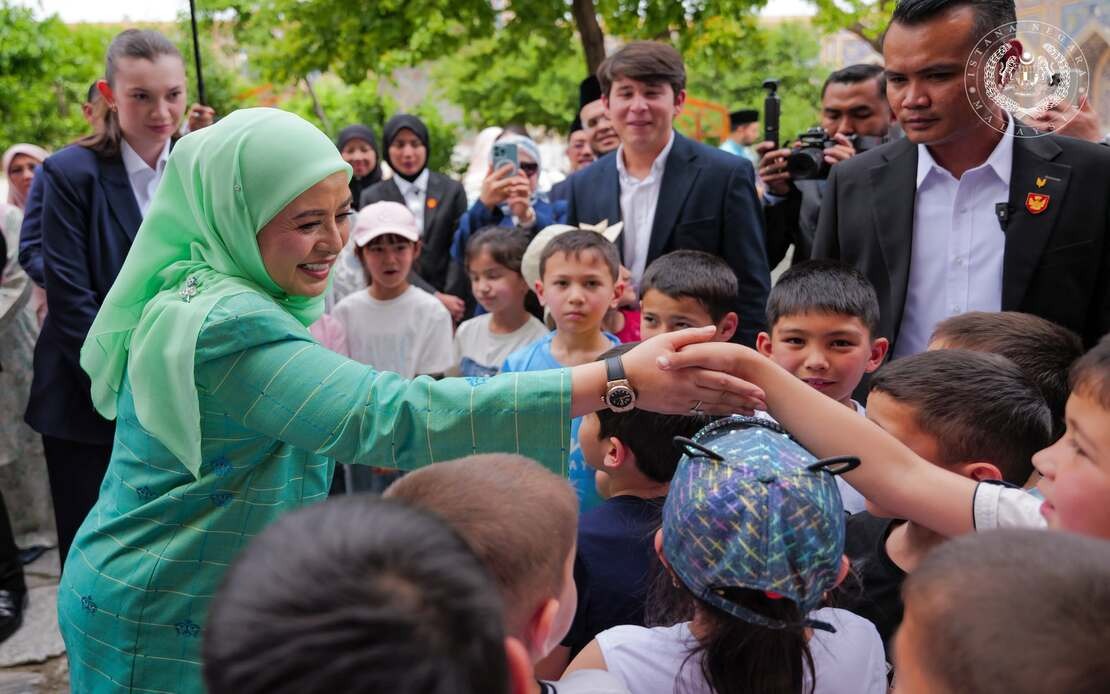
Queen Raja Zarith Sofiah has highlighted mutual respect as one of the defining principles that have long sustained Malaysia's pluralistic society, emphasising its vital role in maintaining national unity and fostering collective well-being. Speaking through a message posted on the official Facebook page of Sultan Ibrahim Sultan Iskandar, the Queen stressed the necessity of practising courtesy and maintaining respectful relations within Malaysian communities, both domestically and when engaging with international visitors.
The significance of the Queen's statement lies in its timing and message, as Malaysia continues to navigate the complexities of a diverse, multi-ethnic and multi-religious society where social cohesion remains paramount. By publicly reinforcing the value of mutual respect, the nation's highest institution is reaffirming the constitutional and cultural foundations upon which Malaysia was built at independence. This messaging carries particular weight in contemporary Malaysia, where community relations and interfaith dialogue continue to feature prominently in national discourse.
In her address, the Queen specifically drew attention to Islamic teachings on respectful conduct, particularly directing her remarks toward the Muslim majority. She referenced a hadith transmitted through the authentic collection of Al-Bukhari, in which Prophet Muhammad emphasised the interconnected nature of faith and ethical behaviour toward others. The hadith, narrated by Abu Hurairah, encompasses three principles: believers should refrain from harming their neighbours, should show hospitality to guests, and should either speak with kindness or maintain silence rather than engage in harmful speech.
This Islamic framework for social conduct aligns closely with Malaysia's constitutional principles of religious freedom and peaceful coexistence. The invocation of religious teaching as a foundation for civil behaviour demonstrates how spiritual values and national cohesion can be mutually reinforcing rather than contradictory. For Malaysian readers across all faiths, the underlying message—that one's beliefs should translate into considerate treatment of others—represents a universally recognised ethical principle that transcends religious boundaries.
The Queen's emphasis on courtesy and respect carries practical implications for Malaysian society. In an era when social media often amplifies divisive rhetoric and anonymous online spaces encourage harsh exchanges, a public reminder from the nation's highest authority about the value of restraint and consideration can serve as an important counterweight. The call to either speak good or remain silent offers a timely intervention in contemporary discourse patterns, suggesting that not every sentiment merits public expression.
Raja Zarith Sofiah's commitment to these principles was demonstrated through a recent encounter in February, when she spent time warmly engaging with more than 100 international tourists who had gathered at the principal entrance of Istana Negara. This interaction exemplified the gracious approach to both citizens and visitors that the Queen advocates. Such moments are significant for Malaysia's international image, as they demonstrate the openness and hospitality that the nation seeks to project to the world. Visitors who experience warmth and courtesy from the highest levels of society often become ambassadors for Malaysia upon returning to their home countries.
The gesture also carries weight within Malaysia itself, as it models the behaviour the Queen advocates. When citizens observe their monarch engaging respectfully and warmly with people from different nations and backgrounds, it reinforces the cultural value of inclusive conduct. This representational function is particularly important in a constitutional monarchy where the sovereign serves as a symbol of national unity and values. The personal example set by the Queen thus becomes a form of soft leadership that influences broader social attitudes.
For Malaysia's position in Southeast Asia and beyond, the Queen's emphasis on mutual respect has regional relevance. The Association of Southeast Asian Nations has long emphasised non-interference and mutual respect as founding principles, making Malaysia's internal emphasis on these values consistent with its regional diplomatic posture. A society that practises mutual respect internally is better positioned to maintain stable external relations and contribute constructively to regional organisations and initiatives.
The timing of the Queen's message also reflects awareness of contemporary challenges to social harmony. Whether addressing tensions between different religious communities, managing the integration of diverse immigrant populations, or navigating disagreements over national policies, Malaysian society benefits from periodic public affirmations that respect for others remains non-negotiable. Such statements, particularly when coming from the institution of the monarchy, help recalibrate public discourse away from polarisation.
The Queen's reference to Islamic teachings also addresses a particular audience—Malaysia's Muslim majority—with a message tailored to their spiritual framework. This targeted approach respects the religious context of the audience while still conveying universal principles. By grounding her call for mutual respect in recognised Islamic authority, the Queen makes the message more resonant and binding for Muslim Malaysians, increasing its likelihood of influencing behaviour and attitudes.
Broader still, the Queen's message reflects a sophisticated understanding that harmony in a diverse society cannot be taken for granted but must be actively cultivated and publicly affirmed. Mutual respect is not simply an abstract value to be taught in schools but a lived practice that requires constant reinforcement, particularly from leadership. When the monarchy—an institution that transcends partisan politics—speaks to these values, it reminds Malaysians that social harmony serves everyone's interests.
Looking forward, the significance of the Queen's message extends beyond the immediate moment of its delivery. It sets a benchmark for the kind of society Malaysia aspires to be—one where courtesy, consideration, and respect for the dignity of others define daily interactions. In doing so, Raja Zarith Sofiah reinforces Malaysia's distinctive model of managing diversity, a model that, despite ongoing challenges, has successfully accommodated hundreds of millions of people from different faiths, ethnicities, and backgrounds within a single constitutional framework.

%22%2F%3E%3C%2Fpattern%3E%3C%2Fdefs%3E%3Crect%20width%3D%22100%25%22%20height%3D%22100%25%22%20fill%3D%22url(%23ph2hy9vg)%22%2F%3E%3Crect%20width%3D%22100%25%22%20height%3D%22100%25%22%20fill%3D%22url(%23ph2hy9vp)%22%2F%3E%3Ctext%20x%3D%2250%25%22%20y%3D%2250%25%22%20text-anchor%3D%22middle%22%20dominant-baseline%3D%22central%22%20fill%3D%22rgba(255%2C255%2C255%2C0.95)%22%20font-family%3D%22Georgia%2C%20'Times%20New%20Roman'%2C%20serif%22%20font-weight%3D%22700%22%20font-size%3D%22272%22%20letter-spacing%3D%22-0.02em%22%3EAnwar%3C%2Ftext%3E%3C%2Fsvg%3E)