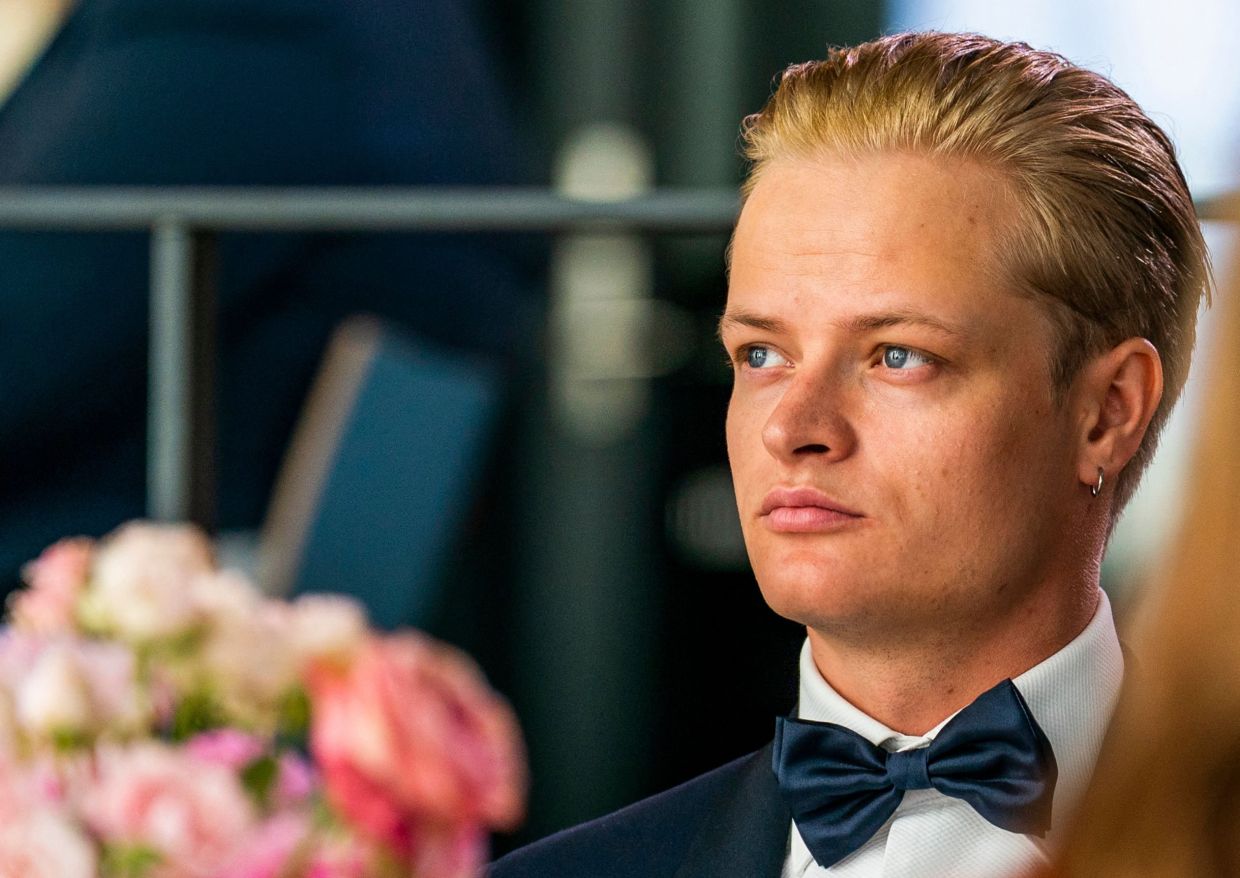
Marius Borg Høiby, the eldest son of Norway's Crown Princess Mette-Marit, received a four-year prison sentence on Monday following his conviction on rape and assault charges that have captivated international attention due to his proximity to Scandinavia's royal family. The Oslo District Court verdict concluded a six-week trial that examined allegations spanning from 2018 to 2024, with the court finding him guilty of two of four rape charges while acquitting him on the remaining two counts. Beyond the rape convictions, the court also found him culpable of assault and domestic abuse, requiring him to provide financial compensation to his victims.
The 29-year-old faced an extensive criminal docket encompassing 40 separate charges, ranging from serious sexual offences to comparatively minor infractions including drug-related violations and breaches of restraining orders. Between 2018 and 2024, prosecutors alleged that Høiby sexually assaulted four women who were either asleep or otherwise incapacitated and unable to consent. Though Høiby consistently denied the rape allegations, he acknowledged responsibility for numerous lesser offences during the proceedings, a strategic position that ultimately did not shield him from conviction on the more serious charges.
The divergence between prosecutorial and defence arguments proved substantial. The state sought a sentence of seven years and seven months, arguing the severity of the crimes warranted extended imprisonment. In contrast, his legal representatives pursued acquittal on rape charges entirely and lobbied for a maximum 18-month sentence on the offences he had conceded. The court's decision to impose four years represents a compromise positioned between these competing positions, reflecting judicial assessment of both culpability and mitigating circumstances.
Highly unusual for trials involving individuals with royal connections, Høiby did not appear physically in court during the Monday verdict announcement, citing health concerns. Instead, he observed the reading of the judgment through video link directly from his prison cell, an arrangement that underscores the exceptional circumstances surrounding this case. This absence, coupled with the court's prior rejection of bail applications pending verdict, illustrates the seriousness with which Norwegian authorities have treated the allegations despite familial ties to the crown.
The case carries profound implications for understanding royal accountability in contemporary Scandinavia. Although Høiby holds no official royal title and performs no formal state functions, his upbringing within the royal household—he is Crown Princess Mette-Marit's son from a pre-marital relationship, and was raised alongside her subsequent children with Crown Prince Haakon, heir to the Norwegian throne—placed him in an extraordinary position relative to ordinary citizens. This background ensured that what might otherwise constitute a serious but unremarkable criminal matter became a significant test of whether royal connections insulate or merely complicate legal proceedings.
Evidence presented throughout the trial included digital materials retrieved from Høiby's mobile telephone, encompassing messages, photographs and video recordings that corroborated allegations made by multiple accusers. The reliance on such technological evidence reflects modern investigative practices and demonstrates the difficulty of concealing serious criminal conduct in an era of pervasive digital documentation. Multiple women testified regarding their experiences, providing the court with direct accounts that proved instrumental in the guilty verdicts.
For Southeast Asian observers, this case illustrates broader questions about how wealthy and well-connected individuals navigate justice systems, even in Nordic countries renowned for egalitarian principles and strong rule of law. The Norwegian court's willingness to convict and imprison a member of the royal family, despite evident political and social complications, suggests that institutional independence can prevail over patronage considerations. However, the sentence's positioning between prosecution and defence requests also reflects the inherent tensions when courts balance severity against other factors.
The verdict is not conclusive, as Høiby retains the right to appeal through Norway's appellate system. This avenue of recourse, standard in Norwegian jurisprudence, means the case may yet generate additional legal proceedings and continued public scrutiny. Each subsequent appeal will likely receive comparable international attention given the royal dimension.
Timing adds another layer of complexity to this case. Crown Princess Mette-Marit's declining health has recently intensified focus on the royal family's circumstances. She suffers from pulmonary fibrosis and currently awaits a lung transplant, placing her in a medically precarious position. This health crisis occurred contemporaneously with her son's trial, creating a backdrop of family distress alongside legal consequences. Appeals courts previously rejected arguments for Høiby's temporary release pending judgment, maintaining strict detention protocols throughout the proceedings.
Further complicating the royal family's public standing, recent revelations emerged regarding Crown Princess Mette-Marit's historical contacts with Jeffrey Epstein, the American financier and convicted sex offender who died in custody in 2019. The crown princess has publicly apologised for maintaining this connection and acknowledged exercising poor judgment in doing so. She faces no criminal allegations and is not accused of wrongdoing; nonetheless, these disclosures have subjected the Norwegian monarchy to heightened scrutiny regarding whom its members have associated with and why. The convergence of her son's sexual assault trial with retrospective examination of her own questionable associations has intensified international examination of the royal household.
For Malaysian and regional audiences, this Scandinavian case demonstrates that even stable, transparent democracies with strong institutions confront challenging questions when criminal allegations intersect with privilege and family prominence. The outcome suggests that systematic justice can proceed despite such complications, though not without considerable public drama and institutional friction. Whether Høiby's conviction and imprisonment ultimately strengthen or strain Norwegian public confidence in royal institutions will depend partly on how his appeal proceeds and partly on whether such cases become normalised benchmarks of institutional impartiality.


%22%2F%3E%3C%2Fpattern%3E%3C%2Fdefs%3E%3Crect%20width%3D%22100%25%22%20height%3D%22100%25%22%20fill%3D%22url(%23ph2hy9vg)%22%2F%3E%3Crect%20width%3D%22100%25%22%20height%3D%22100%25%22%20fill%3D%22url(%23ph2hy9vp)%22%2F%3E%3Ctext%20x%3D%2250%25%22%20y%3D%2250%25%22%20text-anchor%3D%22middle%22%20dominant-baseline%3D%22central%22%20fill%3D%22rgba(255%2C255%2C255%2C0.95)%22%20font-family%3D%22Georgia%2C%20'Times%20New%20Roman'%2C%20serif%22%20font-weight%3D%22700%22%20font-size%3D%22272%22%20letter-spacing%3D%22-0.02em%22%3EAnwar%3C%2Ftext%3E%3C%2Fsvg%3E)