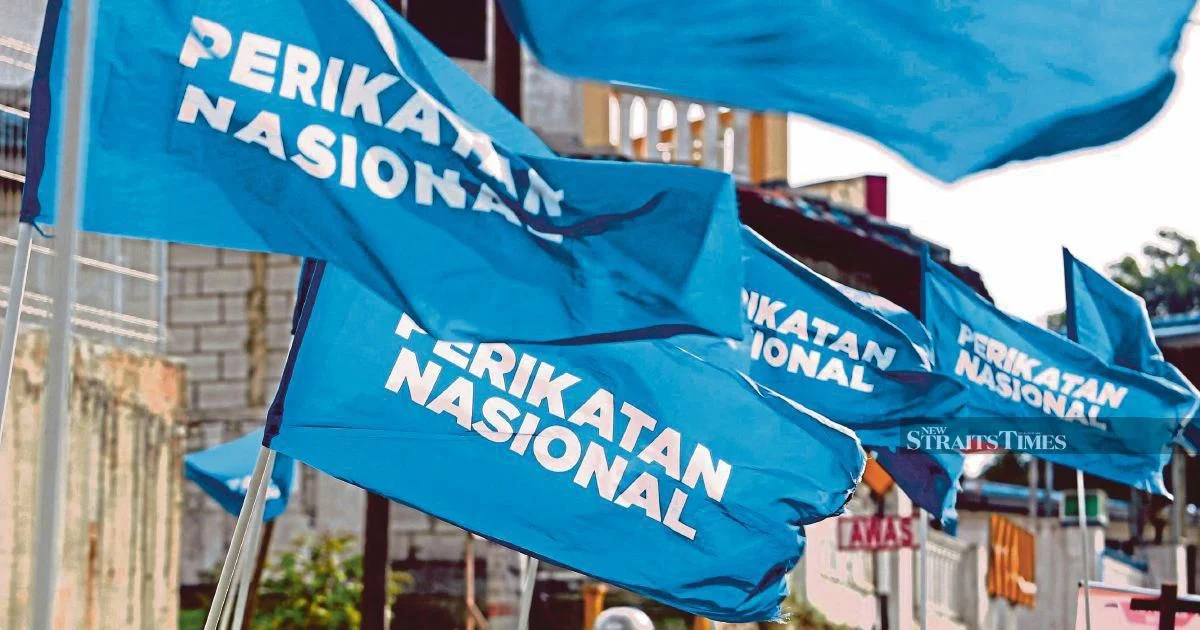
Tensions within the Perikatan Nasional coalition reached fresh heights yesterday when senior PAS figures challenged the legitimacy of Bersatu's use of the bloc's shared logo ahead of state elections in Johor and Negri Sembilan. The dispute, which emerged into public view from PAS party headquarters in Kota Baru, signals deepening fractures within an alliance that has struggled to maintain unity since its formation. The disagreement underscores broader concerns about governance structures and decision-making protocols within the coalition, raising questions about how major policy and operational matters are determined among member parties.
According to PAS leadership statements, only the Perikatan Nasional coalition chairman possesses the constitutional authority to grant permission for any member party to utilise the bloc's official logo in electoral campaigns or other official capacities. This assertion appears designed to curb what PAS perceives as unilateral action by Bersatu, suggesting the party may have proceeded without securing formal approval through proper channels. The clarification of this authority structure indicates a lack of agreed-upon protocols within the coalition, or alternatively, a deliberate breach of established procedures by one or more parties seeking advantage in upcoming electoral contests.
The Johor and Negri Sembilan elections represent significant political moments for the Perikatan Nasional coalition, which has been working to consolidate its base following the 2022 general election and subsequent state-level contests. These elections will serve as crucial testing grounds for the coalition's continued viability as a unified political force. Success in these states could strengthen the bloc's position nationally, while setbacks might amplify existing tensions and prompt soul-searching among member parties about the sustainability of their partnership.
Bersatu, led by Muhyiddin Yassin, has positioned itself as a central player within Perikatan Nasional since the coalition's inception. The party's apparent willingness to proceed with logo usage without explicit coalition-wide authorisation suggests confidence in its standing within the bloc, or possibly a calculated decision to act unilaterally and seek retroactive approval. Alternatively, Bersatu may have genuinely believed it possessed the requisite authority, reflecting confusion about governance protocols that should have been clarified during coalition formation or in subsequent formal agreements.
PAS, the Islamic party led by Hadi Awang, has emerged as the other dominant player within Perikatan Nasional, holding significant influence due to its substantial parliamentary representation and extensive ground organisation across multiple states. The party's public questioning of Bersatu's authority represents a reassertion of its role in coalition governance and may reflect underlying tensions about resource allocation, campaign strategy, and credit-taking for electoral victories. Such displays of authority are common in multiparty coalitions, where larger members seek to establish that decisions affecting all parties require consensus rather than unilateral action by individual members.
The coalition framework, while enabling opposition to Pakatan Harapan's governance, has proven challenging to manage operationally. Previous instances of disagreement between member parties over candidate selection, resource distribution, and campaign messaging have been documented, suggesting structural weaknesses in how the bloc coordinates internal decision-making. The current logo dispute epitomises these ongoing difficulties and raises broader questions about whether Perikatan Nasional possesses sufficiently robust institutional mechanisms to function effectively as a unified political force capable of governing multiple states and contesting national elections.
Malaysian coalition politics frequently encounter such disputes, as parties inherently pursue their individual interests alongside collective goals. The balance between autonomy and unity has historically proven difficult to maintain, particularly when electoral stakes are high and political fortunes remain uncertain. The Perikatan Nasional experience thus far suggests that founding documents and operational procedures may have been drafted insufficiently clearly to prevent such disagreements, or that political realities on the ground have outpaced the coalition's institutional capacity to manage them.
For Malaysian voters and political observers, these internal tensions carry important implications. A fragmented coalition struggling to maintain discipline and decision-making coherence raises questions about its ability to govern effectively should it assume power at state or national level. Conversely, the PAS assertion of formal procedural authority suggests the coalition does possess mechanisms for enforcement, which could theoretically stabilise the partnership if properly invoked. How coalition leaders navigate this particular dispute may set precedents for future disagreements and indicate whether Perikatan Nasional can mature beyond its current difficulties.
The Perikatan Nasional chairman holds crucial responsibility for mediating such disputes and establishing binding interpretations of coalition rules. The elevation of this logo question to public discourse indicates that private negotiations between parties may have failed to produce resolution, forcing the matter into the realm of public positioning and political pressure. This dynamic, while transparent, also undermines the coalition's image of unity and raises concerns among potential supporters about the stability of any future government Perikatan Nasional might lead.
Regionally, the Malaysian coalition's internal struggles may be observed with interest by other Southeast Asian opposition movements and political coalitions attempting to maintain unity while contesting dominant incumbents. The Perikatan Nasional experience demonstrates both the potential and the perils of opposition coalitions, offering lessons about institutional design, governance protocols, and the management of competing interests within broader political partnerships aimed at power.


%22%2F%3E%3C%2Fpattern%3E%3C%2Fdefs%3E%3Crect%20width%3D%22100%25%22%20height%3D%22100%25%22%20fill%3D%22url(%23ph2hy9vg)%22%2F%3E%3Crect%20width%3D%22100%25%22%20height%3D%22100%25%22%20fill%3D%22url(%23ph2hy9vp)%22%2F%3E%3Ctext%20x%3D%2250%25%22%20y%3D%2250%25%22%20text-anchor%3D%22middle%22%20dominant-baseline%3D%22central%22%20fill%3D%22rgba(255%2C255%2C255%2C0.95)%22%20font-family%3D%22Georgia%2C%20'Times%20New%20Roman'%2C%20serif%22%20font-weight%3D%22700%22%20font-size%3D%22272%22%20letter-spacing%3D%22-0.02em%22%3EAnwar%3C%2Ftext%3E%3C%2Fsvg%3E)