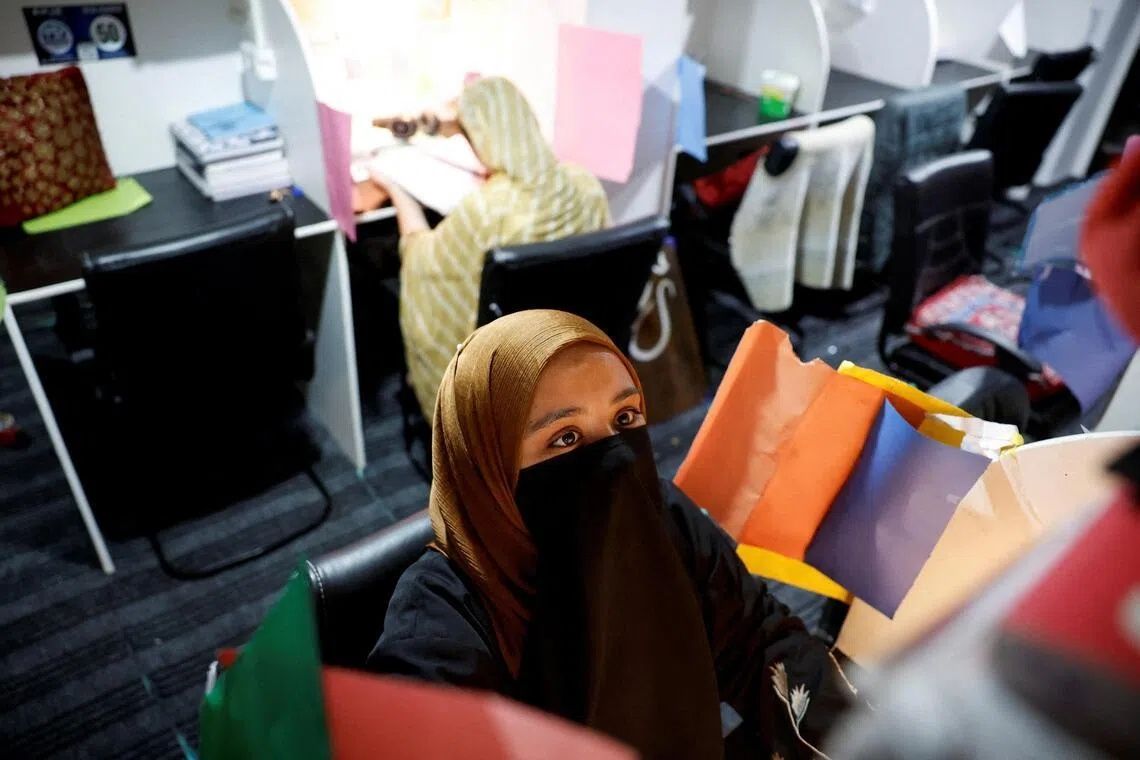
More than two million aspiring doctors across India are grappling with intense psychological pressure as they prepare to retake one of the nation's most fiercely competitive examinations this Sunday, a situation entirely beyond their control. The National Eligibility cum Entrance Test, the gateway to medical school seats coveted by millions, was originally administered on May 3, but authorities made the unprecedented decision to invalidate all results following widespread allegations that examination papers had been circulated in advance through social media channels. For students who have invested years in rigorous preparation, the sudden cancellation represents not merely a procedural inconvenience but a profound blow to their aspirations at a critical juncture in their academic careers.
The competition for medical school places in India remains extraordinarily fierce, with only five to six percent of test-takers securing admission to government and private medical institutions nationwide. This exceptionally low acceptance rate transforms the examination from a routine assessment into a high-stakes ordeal that determines the professional trajectories of millions. The prospect of retaking such a demanding test compounds the psychological toll already embedded in the initial preparation phase, as students must summon the mental fortitude to approach the examination again despite the emotional exhaustion of their first attempt. For many candidates, the combination of an unforgiving admission ratio and the loss of their original effort creates a spiral of anxiety that extends beyond academic concerns into broader questions about opportunity and fairness.
Alima Javed, a 20-year-old medical aspirant from Srinagar, articulated the frustration confronting countless peers when she described how the examination system depletes psychological reserves after years of dedicated study, only to have results invalidated through no action of her own. The emotional labour invested in mastering complex medical science material, combined with the institutional failure that necessitated the retake, has crystallized into a pervasive sense of injustice among the student community. This sentiment extends beyond individual disappointment; it reflects broader concerns about the integrity of India's examination infrastructure and the government's capacity to protect the credibility of its most important educational assessments. The cancellation, while necessary to preserve examination standards, inadvertently punished honest candidates while attempting to address systemic vulnerabilities.
The alleged paper leak has triggered an extraordinary political and social backlash, with student demonstrations emerging across New Delhi and other major Indian cities as hundreds of candidates voice their grievances in public forums. The movement has evolved beyond a narrow educational complaint into a focal point for broader discontent about institutional accountability and merit-based opportunity in India. For Prime Minister Narendra Modi's administration, the crisis has become an unexpected political liability, complicating the government's broader education agenda and drawing criticism from opposition figures who view the examination fiasco as symptomatic of deeper governance failures. The demonstrations signal that India's youth are increasingly willing to mobilise collectively when they perceive systemic injustice, a development with implications for how political parties approach education policy in future electoral cycles.
Anecdotal reports have suggested a connection between the examination cancellation and student suicides, allegations that opposition media outlets and political actors have amplified in public discourse. While verification of such claims remains difficult given the complexity of attributing causation in mental health crises, the allegations point to the profound psychological strain that high-stakes competitive examinations place upon Indian youth. The intersection of academic pressure, institutional mismanagement, and mental health vulnerabilities creates a dangerous environment in which examination failures can trigger catastrophic responses among vulnerable individuals. This reality has prompted educators and mental health professionals to question whether India's examination system, structured around such narrow success metrics, adequately accounts for the psychological wellbeing of candidates or provides sufficient support mechanisms for those experiencing crisis.
Education Minister Dharmendra Pradhan has committed to ensuring that the retake examination operates with heightened standards of fairness and transparency, attempting to rebuild public confidence in a system severely damaged by the leak allegations. The government has implemented comprehensive security protocols designed to prevent recurrence of the original compromise, including enhanced surveillance at testing centres, more stringent procedures governing question paper distribution, and the introduction of digital tracking technologies throughout the assessment chain. These measures, though technologically sophisticated, remain insufficient to address the underlying anxieties of candidates who have lost faith in institutional competence. The administrative response, while substantive, cannot undo the psychological damage inflicted by the original failure or fully restore candidate confidence that the retake represents a genuinely level playing field.
In a controversial measure intended to prevent further information leaks, the Indian government ordered a temporary suspension of the messaging application Telegram until the examination concludes, citing concerns that the platform's anonymity features and channel reconstruction capabilities created unique vulnerabilities. This action drew immediate condemnation from free speech advocates who view the blocking of telecommunications infrastructure as an excessive governmental overreach that undermines broader digital rights. When Telegram challenged the ban through India's court system on June 19, the judicial authority upheld the government's authority to implement such restrictions, determining that the measures were legally justified and proportionate to the security challenges posed by the examination. The court's decision reflects the tension in Indian jurisprudence between individual privacy rights and governmental power to restrict communications in service of broader institutional interests, a balance that digital rights activists view as increasingly tilted toward state control.
Governmental investigators have launched a comprehensive multi-agency inquiry designed to identify the sources of the paper leak and trace the financial networks through which examination materials and advance information circulated among cheating syndicates. Arrests have been executed in multiple states as authorities apprehend individuals suspected of involvement in question paper distribution or coordination of coordinated cheating schemes. Prosecutors have signalled their intention to pursue enhanced penalties against those convicted of examination misconduct, hoping that more severe consequences will deter future attempts to compromise assessment integrity. The investigative effort, while addressing immediate criminal dimensions of the scandal, also highlights how sophisticated cheating networks have become in India, operating with apparent technical sophistication and financial resources that suggest this represents not isolated malfeasance but rather an established ecosystem of examination fraud.
Despite governmental assurances and security enhancements, many students report that the measures have done little to alleviate their mounting anxiety about the impending retake. Aliya Jalaal, another 20-year-old candidate, described how her satisfaction with her initial examination performance evaporated when the results were cancelled, leaving her so profoundly destabilised that she sought psychiatric intervention to manage her psychological distress. Her experience encapsulates a broader pattern among candidates who now approach the retake not merely as another examination but as an institutional test of whether their individual efforts can overcome systemic failures. The psychological burden extends beyond examination performance into existential questions about whether the educational system fundamentally respects the interests and wellbeing of those attempting to navigate it.
For Malaysian and Southeast Asian observers, the Indian medical examination crisis offers sobering insights into the challenges confronting large-scale competitive assessment systems across the region. As many Southeast Asian nations contemplate expansion of their higher education capacity and increasingly rely upon standardised examinations to manage competition for limited professional school seats, the Indian experience demonstrates the critical importance of examination security, transparent administration, and psychological support infrastructure. The situation also underscores how institutional failures in assessment systems, particularly those with immediate consequences for millions of individuals, can rapidly escalate into broader social and political conflicts that extend far beyond educational circles. Regional governments would be prudent to examine India's experience as a cautionary example of how examination mismanagement can erode public confidence in institutional credibility and create unintended psychological harms among vulnerable student populations.


%22%2F%3E%3C%2Fpattern%3E%3C%2Fdefs%3E%3Crect%20width%3D%22100%25%22%20height%3D%22100%25%22%20fill%3D%22url(%23ph2hy9vg)%22%2F%3E%3Crect%20width%3D%22100%25%22%20height%3D%22100%25%22%20fill%3D%22url(%23ph2hy9vp)%22%2F%3E%3Ctext%20x%3D%2250%25%22%20y%3D%2250%25%22%20text-anchor%3D%22middle%22%20dominant-baseline%3D%22central%22%20fill%3D%22rgba(255%2C255%2C255%2C0.95)%22%20font-family%3D%22Georgia%2C%20'Times%20New%20Roman'%2C%20serif%22%20font-weight%3D%22700%22%20font-size%3D%22272%22%20letter-spacing%3D%22-0.02em%22%3EAnwar%3C%2Ftext%3E%3C%2Fsvg%3E)