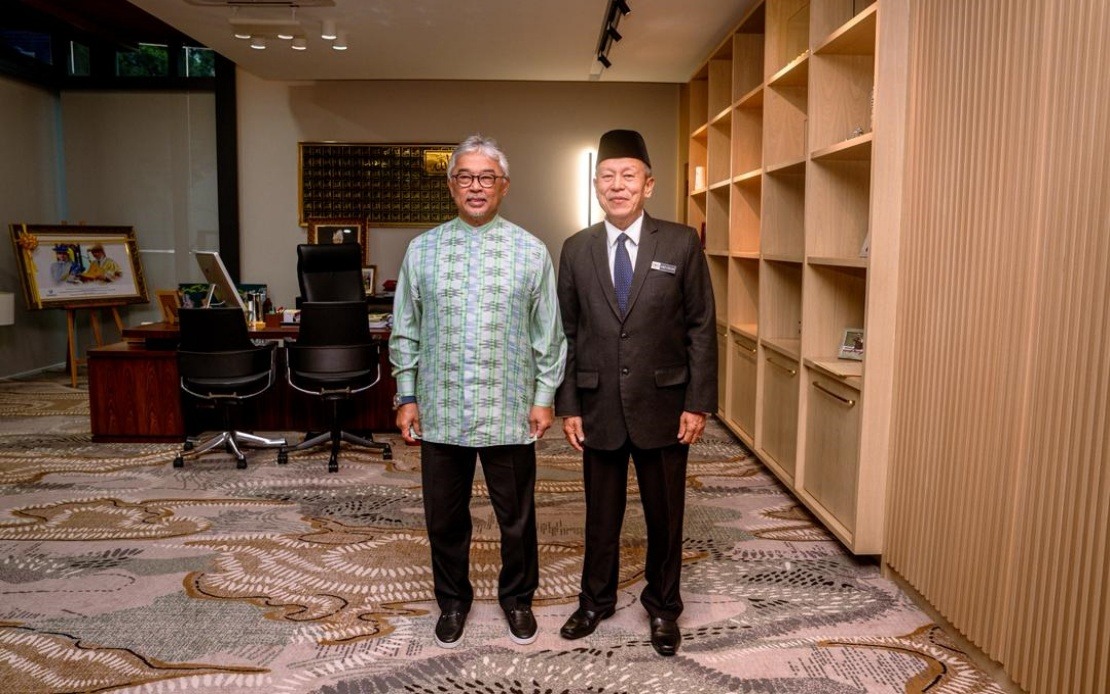
The Sultan of Pahang, Al-Sultan Abdullah Ri'ayatuddin Al-Mustafa Billah Shah, received Malaysian Anti-Corruption Commission (MACC) chief commissioner Datuk Seri Abd Halim Aman at Shahzan House in Ampang yesterday in what the commission described as a significant engagement between the monarchy and Malaysia's premier anti-corruption body. The hour-long meeting underscores the institutional importance placed on combating graft at the highest levels of the nation's governance structure.
During the audience, Abd Halim briefed the Sultan on the MACC's recent operational developments and strategic directions as the agency continues its mandate to investigate and prevent corruption across government agencies, private enterprises, and public institutions. The commission presented a comprehensive overview of its work and priorities, reflecting the agency's commitment to maintaining dialogue with key stakeholders who influence national governance standards.
The discussions extended beyond routine updates to encompass broader systemic issues affecting Malaysia's anti-corruption landscape. The meeting addressed how the commission approaches governance challenges, prevention mechanisms designed to deter corrupt practices before they occur, and the array of initiatives the MACC has deployed to restore and maintain public trust in its operations. These conversations reveal the commission's recognition that effective anti-corruption work requires sustained engagement with institutional leadership across the country.
Public confidence in enforcement agencies remains a persistent challenge across Southeast Asia, where perception of impartiality and effectiveness directly influences compliance and reporting. By maintaining direct communication channels with state-level leadership, the MACC signals its commitment to transparency and demonstrates that its work operates with the awareness and support of the kingdom's stewards. Such engagements are particularly valuable in reinforcing that anti-corruption efforts represent a national priority rather than the isolated agenda of a single agency.
Abd Halim subsequently expressed deep appreciation to His Royal Highness for allocating time to understand the commission's mandate and current operations. The chief commissioner's gratitude extended to acknowledging the Sultan's demonstrated concern for the MACC's ongoing battle against corruption and his support for initiatives aimed at strengthening integrity within government systems. This public affirmation of royal backing carries weight in Malaysian political culture, where hereditary institutions command significant moral authority.
The MACC chief further highlighted that the Sultan's attention to governance matters reflected an understanding that transparent, accountable administration forms the foundation of institutional legitimacy. By receiving detailed briefings on anti-corruption work, the Sultan positioned himself as an engaged stakeholder in Malaysia's integrity agenda, a stance that carries implications for how the government responds to the MACC's investigations and recommendations across different jurisdictions and sectors.
For Malaysian governance observers, such meetings between constitutional monarchs and law enforcement leaders carry symbolic weight beyond the immediate discussion topics. They signal that anti-corruption work enjoys institutional legitimacy across the formal power structure, potentially insulating the MACC from political pressure and demonstrating unity around the principle that graft undermines national development. In a context where some Southeast Asian anti-corruption agencies have faced accusations of selective prosecution, such visible support matters.
The timing and nature of the briefing also reflect contemporary challenges the commission faces in maintaining credibility. Public perception of the MACC's independence and impartiality has fluctuated in recent years amid controversial cases and questions about resource allocation. By engaging directly with prominent state leadership, the agency appears intent on rebuilding or reinforcing relationships that demonstrate its commitment to serving all Malaysians regardless of status or political affiliation.
Pahang itself holds particular significance in Malaysia's political landscape as a state with considerable economic influence and a large bureaucracy. The Sultan's engagement with the MACC's leadership creates a platform for the commission to reinforce its message regarding governance standards expected within state administration and Pahang-based federal agencies. The meeting thus represents not merely ceremonial acknowledgment but a substantive opportunity to align state-level governance priorities with national anti-corruption objectives.
Looking forward, such institutional conversations may influence how state governments approach integrity mechanisms within their own administrations. When supreme rulers actively engage with anti-corruption work, they implicitly communicate expectations to their administrations regarding compliance, transparency, and cooperation with enforcement agencies. This cascading effect contributes to broader cultural shifts around accountability, particularly important in contexts where informal power networks have traditionally circumvented formal institutional checks.
The MACC continues to operate within Malaysia's complex constitutional framework, where state rulers retain significant ceremonial and symbolic authority while federal enforcement agencies carry operational responsibility. Building and maintaining these relationships ensures that the commission's work benefits from understanding at the highest levels of state governance, facilitating cooperation and information-sharing that ultimately strengthens anti-corruption outcomes across administrative levels.


%22%2F%3E%3C%2Fpattern%3E%3C%2Fdefs%3E%3Crect%20width%3D%22100%25%22%20height%3D%22100%25%22%20fill%3D%22url(%23ph2hy9vg)%22%2F%3E%3Crect%20width%3D%22100%25%22%20height%3D%22100%25%22%20fill%3D%22url(%23ph2hy9vp)%22%2F%3E%3Ctext%20x%3D%2250%25%22%20y%3D%2250%25%22%20text-anchor%3D%22middle%22%20dominant-baseline%3D%22central%22%20fill%3D%22rgba(255%2C255%2C255%2C0.95)%22%20font-family%3D%22Georgia%2C%20'Times%20New%20Roman'%2C%20serif%22%20font-weight%3D%22700%22%20font-size%3D%22272%22%20letter-spacing%3D%22-0.02em%22%3EAnwar%3C%2Ftext%3E%3C%2Fsvg%3E)