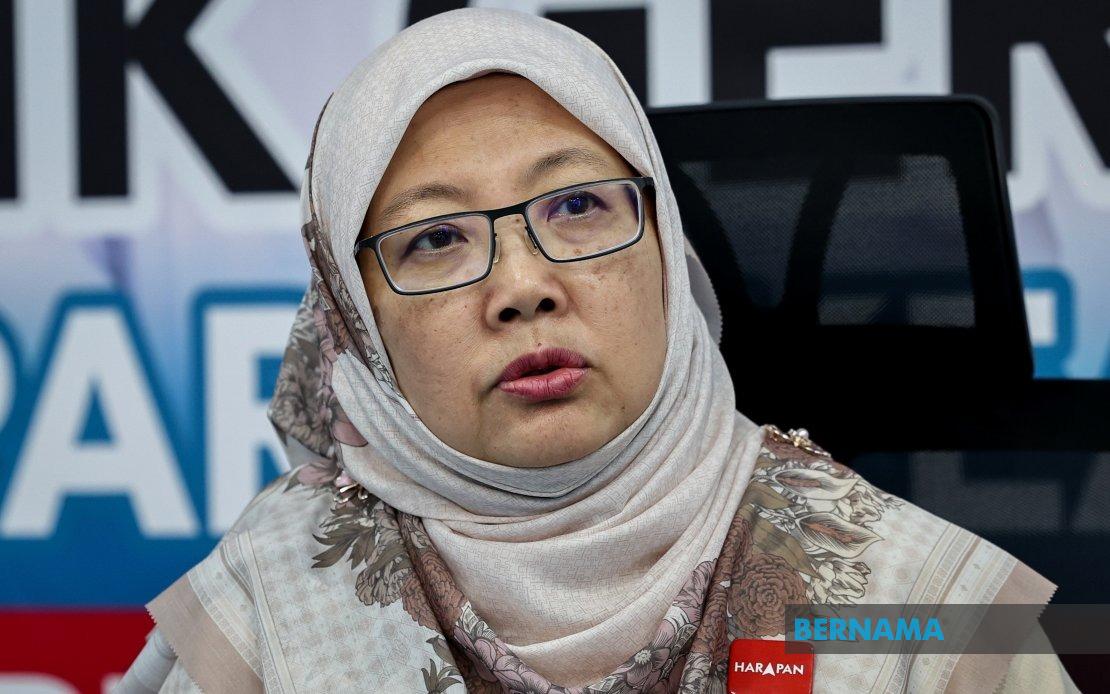
Pakatan Harapan will unveil its complete roster of candidates for the upcoming Johor state election during a ceremony scheduled for Monday, according to Johor PKR chairman Datuk Seri Dr Zaliha Mustafa. The high-profile event will feature prominent party figures, with PH chairman Datuk Seri Anwar Ibrahim expected to preside over the announcement, underscoring the coalition's commitment to the crucial state contest. The venue for the candidate launch has been strategically chosen in the northern section of the state, likely in Bukit Gambir, Tangkak, a decision that reflects PH's tactical approach to consolidating electoral momentum in what has traditionally been a competitive region.
The selection of a northern Johor location carries significant political weight. Dr Zaliha explained that this geographic choice was deliberately made to capitalize on the groundswell of public enthusiasm that has emerged following a series of campaign engagements across the zone, including notable community response during an event in Bukit Naning. By hosting the candidate announcement in this area, PH seeks to sustain and amplify the positive reception it has garnered from constituents, translating grassroots momentum into electoral support when voting takes place. This strategy reflects a sophisticated understanding of regional dynamics within Johor, where northern constituencies have demonstrated particular receptiveness to the coalition's messaging.
The process of identifying candidates extended beyond the usual party hierarchy, incorporating perspectives from grassroots branch organizations to ensure nominees possessed genuine understanding of local community requirements and demonstrated proven service delivery. The coalition emphasizes that this consultative approach guarantees that selected candidates have authentic connections to the areas they will represent. Dr Zaliha noted that the candidate selection also prioritized diversity across multiple dimensions, intentionally weaving together professionals, younger politicians, women, and representatives from various ethnic communities. This deliberate emphasis on inclusivity aims to present a balanced slate that reflects Johor's demographic composition and appeals to voters seeking representation that genuinely mirrors their constituencies.
Beyond demographic considerations, PH's candidate selection methodology incorporated another critical element: the capacity of chosen nominees to advance the broader coalition agenda and contribute meaningfully to electoral objectives. This two-pronged approach ensures that individual candidates not only fulfill local representation functions but also align with systemic party priorities and national-level initiatives. The coalition has made clear that participation in this election represents far more than a bid to incrementally expand its legislative seat count from previous contests. Instead, PH has articulated an explicit and ambitious target of winning sufficient seats to form the state government, fundamentally reshaping Johor's political landscape after decades of other administrations.
The electoral structure reflects significant ambition within the coalition. PH will present candidates across all 56 State Legislative Assembly constituencies, with the burden of candidate recruitment distributed among coalition partners according to their respective strengths and historical presence in the state. PKR, as the largest component party within PH, will field candidates in 20 seats, while DAP will contest 17 seats and Amanah will present 19 nominees. This seat allocation represents a negotiated balance among coalition members that factors in previous electoral performance, demographic concentration, and party organizational capacity. For Malaysian observers, particularly those in Johor, this distribution signals the coalition's serious infrastructure investment in the state and confidence in its ability to mount a comprehensive campaign across diverse constituencies.
The electoral timeline operates within a compressed but well-defined schedule that concentrates activity across several crucial weeks. The Johor state election has been scheduled for July 11, providing voters with an opportunity to fundamentally alter the state's political direction. Candidate nominations must be submitted by June 27, giving successful nominees approximately two weeks to conduct preliminary campaigning before early voting commences on July 7. This condensed calendar demands exceptional organizational efficiency from all political parties, requiring rapid mobilization of campaign resources, volunteer networks, and media strategy immediately following candidate announcement. For PH particularly, the Monday announcement serves as the official commencement of its formal campaign operations, transforming its prior groundwork into structured electoral competition.
The significance of Johor's state election extends well beyond the immediate context of one state contest. As Malaysia's third-largest state by population and a crucial economic hub in the southern region, Johor's political complexion carries implications for national coalition dynamics and the broader balance of power within Malaysian politics. A successful PH outcome would represent a major breakthrough in a state that has historically presented electoral challenges for the coalition. Conversely, setbacks would reinforce questions about PH's viability in critical swing territories. For Southeast Asian observers tracking Malaysian political developments, the Johor election serves as an important indicator of national political trends and voter sentiment regarding coalition governance at the state level.
Dr Zaliha's public statements regarding the candidate selection process revealed a thoughtful approach that attempts to balance multiple competing priorities. The inclusion of diverse professional backgrounds, age cohorts, and gender representation responds to contemporary voter expectations regarding parliamentary representation that extends beyond single-dimensional qualification metrics. This reflects evolving Malaysian political culture where constituencies increasingly expect representatives offering varied expertise and perspectives rather than homogeneous candidate profiles. The emphasis on women candidates, young professionals, and ethnic diversity aligns with broader demographic and social trends within Johor, positioning PH as a forward-thinking political force attuned to contemporary concerns about representation and inclusive governance.
The strategic location choice for the Monday announcement ceremony also carries symbolic weight worth examining. Northern Johor, encompassing constituencies like Bukit Gambir and Tangkak, represents territory where PH perceives particular opportunity for electoral gains. By launching candidates in this region rather than in Johor Bahru or other urban centers, the coalition signals confidence in its capacity to compete effectively in constituencies that extend beyond its traditional strongholds. This geographic statement constitutes part of PH's broader narrative about expansion and renewed vitality, suggesting organizational confidence that extends beyond urban constituencies into rural and semi-rural areas where different political calculi often determine electoral outcomes. The venue selection therefore functions as both practical campaign initiation and political messaging tool.
For Malaysian political observers and international analysts tracking Southeast Asian political developments, the Johor state election represents a significant test case for opposition coalition durability and electoral strategy. The coordination required among three separate political parties—PKR, DAP, and Amanah—to present a unified slate across all 56 constituencies demands considerable internal negotiation and mutual respect for agreed allocations. Tensions inevitably arise when multiple parties contest the same territory, and the success or failure of PH's Johor campaign will partially reflect whether the coalition can manage internal dynamics effectively while maintaining public messaging coherence. Monday's candidate announcement will therefore constitute the coalition's first major public test of its organizational integration and strategic alignment heading into what promises to be a intensely contested election campaign.

%22%2F%3E%3C%2Fpattern%3E%3C%2Fdefs%3E%3Crect%20width%3D%22100%25%22%20height%3D%22100%25%22%20fill%3D%22url(%23ph2hy9vg)%22%2F%3E%3Crect%20width%3D%22100%25%22%20height%3D%22100%25%22%20fill%3D%22url(%23ph2hy9vp)%22%2F%3E%3Ctext%20x%3D%2250%25%22%20y%3D%2250%25%22%20text-anchor%3D%22middle%22%20dominant-baseline%3D%22central%22%20fill%3D%22rgba(255%2C255%2C255%2C0.95)%22%20font-family%3D%22Georgia%2C%20'Times%20New%20Roman'%2C%20serif%22%20font-weight%3D%22700%22%20font-size%3D%22272%22%20letter-spacing%3D%22-0.02em%22%3EAnwar%3C%2Ftext%3E%3C%2Fsvg%3E)