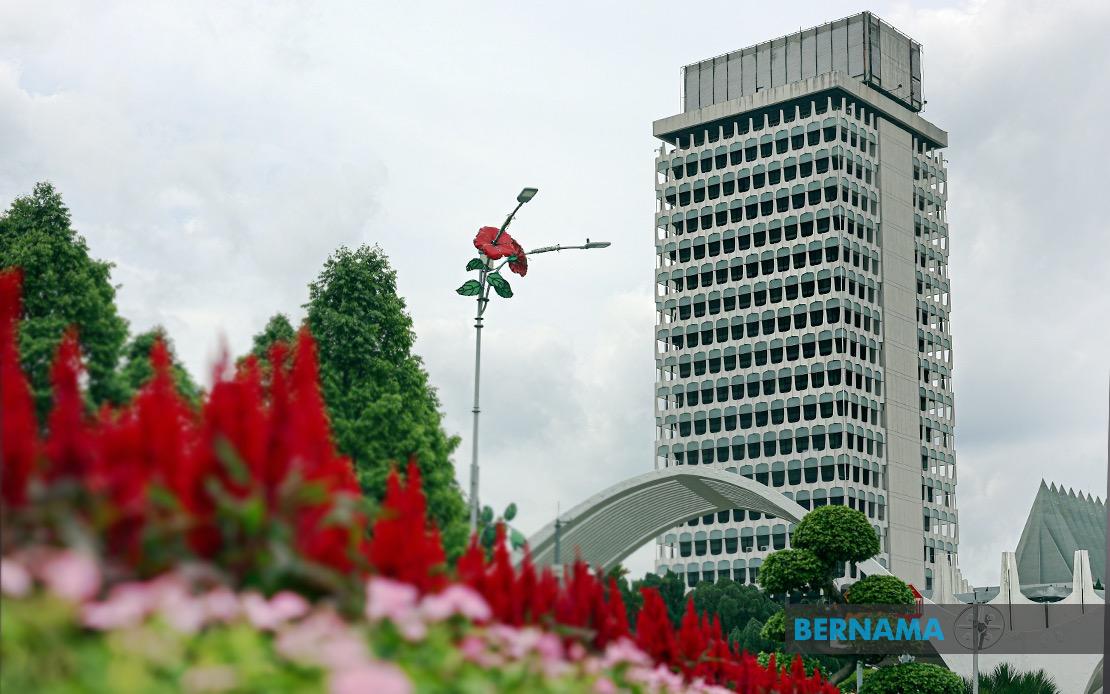
Parliament's doors open Monday for a parliamentary sitting scheduled to run until July 16, marking the second meeting of the fifth session of the 15th Dewan Rakyat. The reconvening legislature faces a demanding legislative calendar dominated by several high-stakes proposals, most prominently the re-tabled Constitution (Amendment) Bill 2026, which would impose a ten-year ceiling on a sitting prime minister's tenure.
The constitutional amendment establishing term limits for Malaysia's chief executive represents a significant governance initiative, though its pathway remains uncertain after failing to garner the required two-thirds parliamentary majority during the previous session. This setback underscores the political arithmetic challenges facing reformers, as strengthening executive term limits demands supermajority support across the fractious parliament. The return of this bill signals a determined legislative push despite previous parliamentary resistance, reflecting ongoing debates about executive power concentration and democratic accountability within Malaysia's Westminster-derived system.
Equally prominent on the agenda is the Constitution (Amendment) Bill (No. 2) 2026, which proposes bifurcating the offices of Attorney General and Public Prosecutor. Currently unified under a single constitutional position, this separation seeks to establish institutional independence between the nation's chief legal officer and its prosecutorial authority. The measure's referral to the Parliamentary Special Select Committee during the previous session indicates a measured approach to institutional reform, allowing parliamentary experts to scrutinise the proposal's technical implications for Malaysia's legal architecture and governance structure.
Transport Minister Anthony Loke has flagged the Road Transport Act 1987 (Amendment) Bill as a priority, with the legislation scheduled for introduction on the session's opening day and debate the following afternoon. The proposed amendments, spanning eleven substantive areas across forty-two distinct clauses, directly target street racing—an increasingly visible public menace that claims lives and destabilises communities, particularly in urban centres. Beyond prosecuting illegal racing syndicates, the amendments specifically aim to dismantle the financing and coordination networks of "tonto" gangs, criminal organisations that orchestrate high-speed street competitions and weaponise highway infrastructure for illicit purposes.
These transport reforms carry particular resonance for Malaysia, where young drivers increasingly participate in organised racing activities that stretch law enforcement resources and threaten innocent motorists. By strengthening enforcement mechanisms and expanding the legislative toolkit available to traffic authorities, the amendments represent a structural response to what has become a persistent public safety challenge. The breadth of the amendments—touching upon vehicle registration, licensing, penalties, and investigative authority—suggests a comprehensive legislative strategy rather than piecemeal enforcement adjustments.
The parliamentary agenda also encompasses the Cybercrime Bill 2026, addressing an increasingly pressing national security concern as digital crime expands in sophistication and scope. Cybercrime legislation in Malaysia's context must balance security imperatives against civil liberties and free expression, making this bill's parliamentary reception significant for the nation's evolving digital governance framework. As Southeast Asia's digital economy accelerates, robust yet proportionate cybercrime frameworks become essential infrastructure for protecting both individuals and economic interests.
Beyond specific legislation, the sitting is expected to devote substantial attention to Malaysia's exposure to global energy market disruptions stemming from the ongoing West Asian conflict. This geopolitical dimension carries substantial implications for the Malaysian economy, as energy price volatility directly impacts domestic electricity costs, transportation expenses, and industrial competitiveness. Parliamentary discussion of these linkages provides a platform for government accountability regarding energy security strategy and any contingency measures undertaken to mitigate external supply shocks.
Dewan Rakyat Speaker Tan Sri Johari Abdul has issued a pointed appeal to all parliamentarians, irrespective of government or opposition affiliation, to prioritise substantive legislative work over partisan theatre. His emphasis on fact-based, data-driven debate represents an implicit critique of parliamentary proceedings that have occasionally descended into polemical exchanges detached from policy specifics. The speaker's invocation of democratic accountability and public interest serves as a reminder that parliament's legitimacy depends upon delivering tangible policy responses to the electorate's material concerns—cost of living pressures, educational quality, healthcare access, employment opportunities, and community infrastructure.
The speaker's remarks acquire particular weight given the concurrent Johor State Election, which threatens to splinter parliamentary attention and incentivise MPs to prioritise state-level campaigning over federal legislative responsibilities. Johari's stern reminder that parliamentary attendance constitutes a binding duty reflects institutional anxiety about quorum and the quality of legislative deliberation when members treat the Dewan Rakyat as a secondary political theatre. For Malaysian democracy to function effectively, representatives must resist the temptation to instrumentalise parliament for factional advantage.
The timing of parliamentary business coincides with broader Malaysia's political recalibration following recent elections and coalition adjustments. The government's determination to revisit constitutional amendments despite previous defeats suggests sustained commitment to governance reform, though it simultaneously reveals parliamentary fragmentation that complicates supermajority requirements. This dynamic will likely characterise the sitting's atmosphere—simultaneous pursuit of ambitious institutional reforms alongside procedural challenges in securing the parliamentary majorities necessary for advancement.
Complementing the Dewan Rakyat's activities, the upper house Dewan Negara is scheduled to convene for a separate ten-day sitting commencing July 20 and concluding August 4. This staggered bicameral calendar enables the senate to scrutinise legislation passed by the lower chamber while maintaining institutional separation. The Dewan Negara's composition, featuring both elected and appointed members, traditionally serves as a moderating chamber where regional interests and specialised expertise inform legislative refinement.
For Malaysian voters and regional observers, this parliamentary session encapsulates the ongoing tension between reform ambitions and institutional constraints that characterise contemporary Malaysian democracy. The re-tabling of constitutional amendments, introduction of security and transport legislation, and speaker-level appeals for legislative seriousness suggest a parliament wrestling with modernisation pressures while navigating fractious political coalition dynamics. Ultimately, the sitting's productivity will depend upon whether parliamentarians heed calls for substantive engagement or succumb to partisan incentives that undermine legislative effectiveness.

%22%2F%3E%3C%2Fpattern%3E%3C%2Fdefs%3E%3Crect%20width%3D%22100%25%22%20height%3D%22100%25%22%20fill%3D%22url(%23ph2hy9vg)%22%2F%3E%3Crect%20width%3D%22100%25%22%20height%3D%22100%25%22%20fill%3D%22url(%23ph2hy9vp)%22%2F%3E%3Ctext%20x%3D%2250%25%22%20y%3D%2250%25%22%20text-anchor%3D%22middle%22%20dominant-baseline%3D%22central%22%20fill%3D%22rgba(255%2C255%2C255%2C0.95)%22%20font-family%3D%22Georgia%2C%20'Times%20New%20Roman'%2C%20serif%22%20font-weight%3D%22700%22%20font-size%3D%22272%22%20letter-spacing%3D%22-0.02em%22%3EAnwar%3C%2Ftext%3E%3C%2Fsvg%3E)