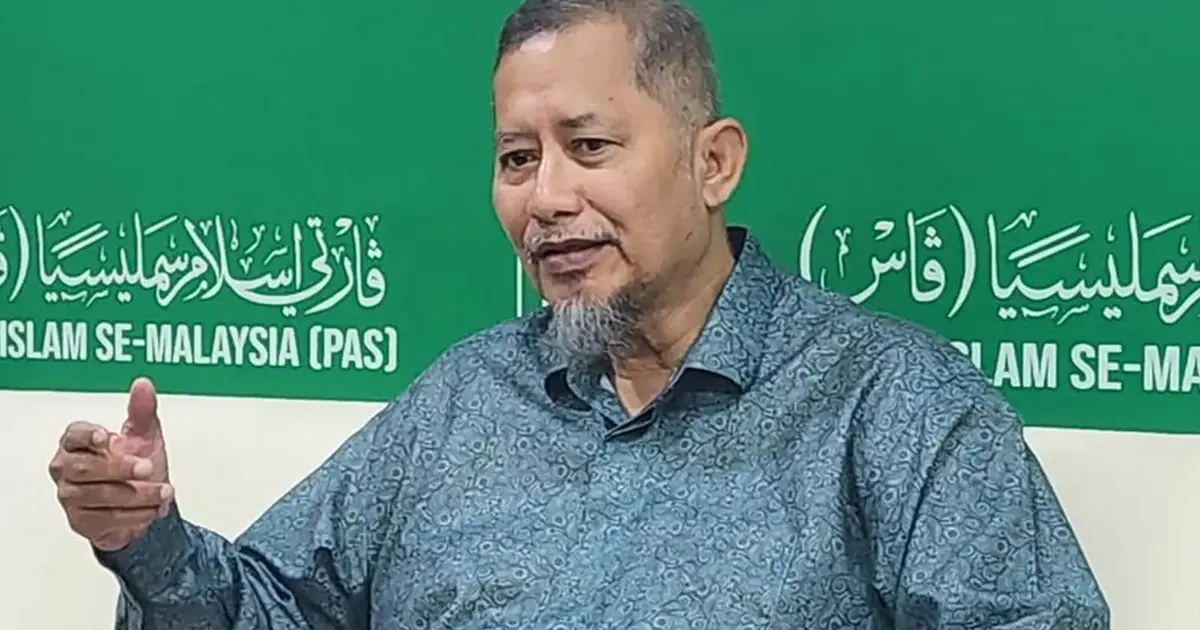
PAS has thrown down a political gauntlet, with party treasurer Iskandar Abdul Samad asserting that the Islamic-rooted party would triumph over Bersatu should the two rival coalition partners find themselves in direct electoral confrontation. The statement underscores rising tensions within the Perikatan Nasional alliance, a coalition that has grown increasingly fractious since the 2022 general election, with both parties competing for the same voter demographic and political space.
Iskandar's assertion carries significance given the delicate positioning of both parties within Malaysia's fractured political landscape. PAS has established itself as the dominant Islamic party in many peninsular constituencies, particularly in the east coast, where it commands formidable grassroots machinery and traditional support networks. The treasurer's confidence appears anchored in this electoral dominance, suggesting that should PN voters be forced to choose between the two parties in any hypothetical contest, they would predominantly favour PAS.
The backdrop to this statement reflects deeper strategic calculations within Perikatan Nasional. Since its formation, the coalition has struggled to maintain cohesion, with competing ambitions between PAS and Bersatu creating periodic tensions. Bersatu, under the leadership of Muhyiddin Yassin, has attempted to position itself as a party capable of drawing both Malay-Muslim and non-Muslim support, yet it remains perpetually overshadowed by PAS's stronger organizational presence and ideological clarity. This imbalance has generated friction, particularly as both parties eye the same constituencies and voter pools.
From a regional perspective, the PAS-Bersatu rivalry mirrors broader patterns across Southeast Asia where coalitions often contain latent competitive tensions. Unlike the more institutionalised political systems of Western democracies, Malaysian coalition politics frequently oscillates between cooperation and conflict, dependent on electoral calculations and leadership dynamics. The willingness of PAS to publicly articulate confidence in electoral superiority signals that cost-benefit analyses within the coalition may be shifting, suggesting leaders believe they no longer require Bersatu's participation or support.
Iskandar's statement also reflects PAS's consolidation of religious credentials within Malay-Muslim political discourse. Over the past decade, PAS has successfully repositioned itself as the authentic voice of Islamic politics in Malaysia, particularly after managing to reconcile tensions that previously divided the Islamic movement. Bersatu, by contrast, emerged from the internal fracturing of the Malaysian United Indigenous Party and lacks the religious legitimacy that PAS has cultivated through decades of Islamic movement leadership. This ideological and organisational advantage translates into concrete electoral potential.
The treasurer's comments are strategically timed against a backdrop of persistent discussions about potential electoral realignments in Malaysian politics. Various observers have speculated whether existing coalitions might reconfigure ahead of state elections or the next general election. If PAS genuinely believes it would prevail over Bersatu in direct competition, this suggests the party may be contemplating scenarios where the current coalition architecture dissolves or fundamentally restructures. Such contingency planning is standard among Malaysian political parties, even while they maintain formal alliance commitments.
Electoral arithmetic provides further context to PAS's confidence. In the 2022 general election, PAS secured significantly more parliamentary seats than Bersatu, controlling substantial representation across multiple states. The party's performance in local elections and by-elections has consistently demonstrated its mobilization capacity among target demographics. Bersatu's electoral performance, whilst respectable, has not matched PAS's consistent penetration of Malay-Muslim constituencies. These objective metrics likely inform Iskandar's publicly stated assessment.
However, the treasurer's remarks also risk destabilising the PN coalition at a sensitive moment. Malaysian political coalitions require careful management of internal rivalries, and public assertions of superiority by one partner can generate reciprocal positioning from others. Such statements, when made by senior officials, often signal internal discussions that previous accommodations may no longer hold. Coalition partners monitor such declarations carefully as indicators of shifting alliance dynamics and future political behaviour.
The implications for Malaysian politics extend beyond PAS-Bersatu relations. These tensions occur within a broader context where Pakatan Harapan maintains government at federal level, with several important state governments under either PH or PN control. Any reorganisation within PN could trigger cascading effects across these state administrations and potentially alter the trajectory of national politics. Bersatu's response to PAS's confidence assertions will provide important signals about whether the coalition remains viable or faces imminent structural challenges.
Looking forward, Iskandar's statement establishes a marker in ongoing internal coalition negotiations. Whether intended as tough bargaining rhetoric or genuine strategic positioning, it reflects the precarious equilibrium that characterises Perikatan Nasional. The comments suggest PAS possesses sufficient confidence in its electoral standing to contemplate scenarios where previous alliance commitments might dissolve. For Malaysian voters and political observers, such statements warrant close attention as potential indicators of imminent coalition reconfiguration.


%22%2F%3E%3C%2Fpattern%3E%3C%2Fdefs%3E%3Crect%20width%3D%22100%25%22%20height%3D%22100%25%22%20fill%3D%22url(%23ph2hy9vg)%22%2F%3E%3Crect%20width%3D%22100%25%22%20height%3D%22100%25%22%20fill%3D%22url(%23ph2hy9vp)%22%2F%3E%3Ctext%20x%3D%2250%25%22%20y%3D%2250%25%22%20text-anchor%3D%22middle%22%20dominant-baseline%3D%22central%22%20fill%3D%22rgba(255%2C255%2C255%2C0.95)%22%20font-family%3D%22Georgia%2C%20'Times%20New%20Roman'%2C%20serif%22%20font-weight%3D%22700%22%20font-size%3D%22272%22%20letter-spacing%3D%22-0.02em%22%3EAnwar%3C%2Ftext%3E%3C%2Fsvg%3E)