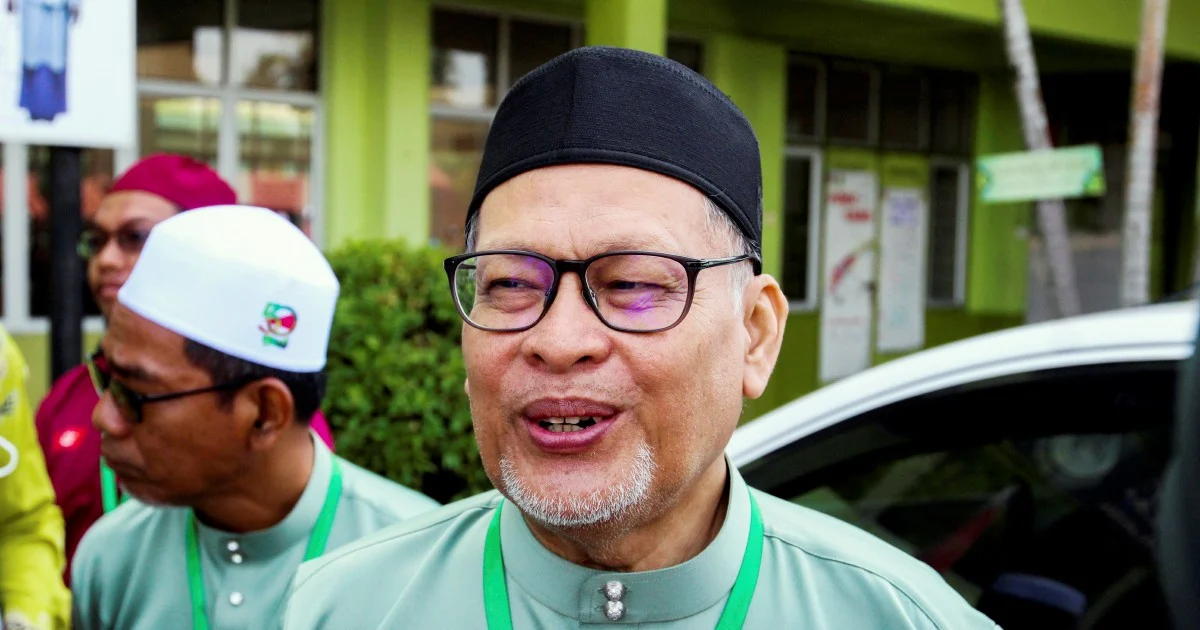
The Islamic Party of Malaysia (PAS) has scheduled an afternoon meeting in Kota Baru to address the immediate fallout from its ended cooperation with Bersatu, with particular focus on the future of an executive councillor post currently held by the latter party in the Kelantan state government. The urgent gathering signals the complexity of managing coalition dynamics in Malaysia's political landscape, where partnership arrangements often intersect with state-level governance structures and ministerial portfolios.
The termination of PAS-Bersatu cooperation represents a significant realignment in Peninsular Malaysian politics. The two parties, which had worked together across several state governments, have severed their arrangement, creating immediate questions about how existing power-sharing agreements will be reconfigured. The Kelantan situation exemplifies the practical challenges when such partnerships dissolve—existing executive positions cannot simply be left vacant, and reassigning them involves navigating not only inter-party negotiations but also the sensitivities of state governance.
Kelantan, governed by PAS since 2008 under Menteri Besar Ahmad Yakob (who took office in 2023), has long been a stronghold of the Islamic party. The state's political structure reflects a coalition that has shifted over the years, with various partners holding executive councillor positions as part of broader electoral and governance agreements. The presence of a Bersatu representative in this role would have been agreed upon as part of a larger political understanding between the parties, making the current impasse particularly delicate.
The decision to end cooperation with Bersatu reflects broader tensions within Malaysia's political ecosystem. Bersatu, led by Muhyiddin Yassin, has pursued an increasingly independent trajectory, attempting to position itself as a kingmaker in various state and federal configurations. PAS, meanwhile, has strengthened its political dominance, particularly in states where it holds significant influence. The divergence in their strategic interests appears to have made continued partnership untenable, prompting the formal separation.
For PAS leadership in Kelantan, the immediate challenge lies in determining how to proceed with the executive councillor position. Options range from requesting Bersatu's resignation and reallocation to another coalition partner, to negotiating terms for Bersatu's continued participation under modified arrangements. Each option carries political costs and implications for the Kelantan government's stability and perceived legitimacy.
This development carries implications beyond Kelantan's borders. Several other state governments across Malaysia feature similar power-sharing arrangements involving multiple coalition partners. The PAS-Bersatu separation may establish precedent for how other partnerships handle the dissolution of working relationships, particularly regarding retention or reallocation of executive positions. State governments in Terengganu, Pahang, and potentially others may need to revisit their own coalition agreements in light of this rupture.
For regional observers, the PAS-Bersatu split underscores the fluid nature of Malaysian coalition politics. Unlike Westminster systems where coalition arrangements are typically negotiated before government formation, Malaysian political coalitions operate with considerable flexibility and frequent adjustments. This fluidity enables rapid political recalibrations but also creates uncertainty regarding governmental stability and policy continuity.
The timing of this formal meeting suggests PAS intends to move decisively on the Kelantan situation rather than allowing uncertainty to persist. Party leadership will likely seek consensus on a path forward that maximizes PAS's political authority in the state while minimizing the perception of instability. The outcome will signal to other coalition partners—and to federal political actors—how PAS manages such transitions.
Bersatu's response to PAS's unilateral action will be revealing. If the party accepts the loss of the Kelantan executive position without significant protest, it may indicate limited leverage or priority regarding state-level positions. Conversely, if Bersatu attempts to negotiate retention or acceptable terms, it could trigger protracted negotiations that complicate Kelantan's governance during a sensitive period. The party has invested political capital in maintaining presence across state governments, making any forced withdrawal potentially damaging to its broader electoral narrative.
Sectors affected by Kelantan's executive branch, including education, economic development, Islamic affairs, and local government, will be watching closely. The reassignment of the executive councillor portfolio may affect policy priorities and resource allocation in these areas, depending on which PAS figure or alternate coalition partner assumes the position. Continuity and effective governance during this transition period will be critical for maintaining public confidence in state administration.
The broader context involves PAS's positioning ahead of potential federal political developments. By consolidating control in states where it dominates, PAS strengthens its negotiating position nationally. Removing Bersatu representation from Kelantan serves this consolidation strategy, even as it risks further fragmenting the non-opposition political landscape.
Malaysian observers should note that such coalition adjustments, while common in recent years, reflect the underlying instability of Malaysia's current political system. Without clear constitutional or party-system frameworks governing coalition formation and dissolution, such transitions depend largely on bilateral negotiations and political leverage, creating uncertainty and occasional paralysis in governance. The Kelantan resolution will offer insights into how state-level actors navigate these challenges and what mechanisms they employ to manage transitions.


%22%2F%3E%3C%2Fpattern%3E%3C%2Fdefs%3E%3Crect%20width%3D%22100%25%22%20height%3D%22100%25%22%20fill%3D%22url(%23ph2hy9vg)%22%2F%3E%3Crect%20width%3D%22100%25%22%20height%3D%22100%25%22%20fill%3D%22url(%23ph2hy9vp)%22%2F%3E%3Ctext%20x%3D%2250%25%22%20y%3D%2250%25%22%20text-anchor%3D%22middle%22%20dominant-baseline%3D%22central%22%20fill%3D%22rgba(255%2C255%2C255%2C0.95)%22%20font-family%3D%22Georgia%2C%20'Times%20New%20Roman'%2C%20serif%22%20font-weight%3D%22700%22%20font-size%3D%22272%22%20letter-spacing%3D%22-0.02em%22%3EAnwar%3C%2Ftext%3E%3C%2Fsvg%3E)