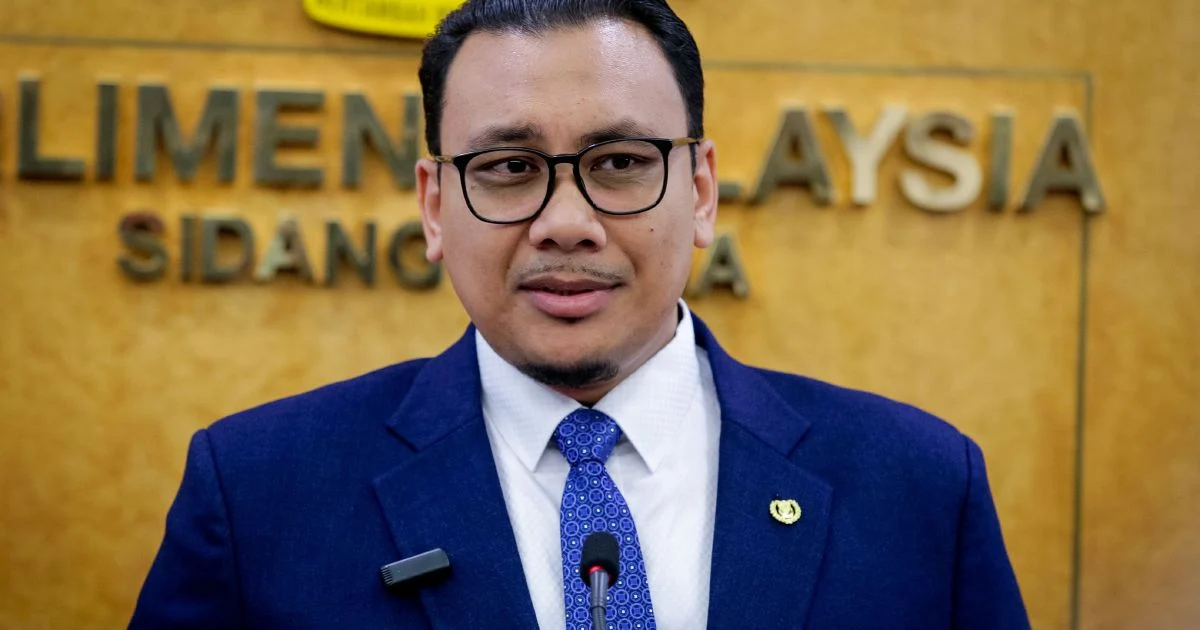
The head of PAS Youth, Afnan Hamimi Taib Azamudden, has taken the step of engaging legal counsel to move forward with formal action following an inflammatory social media publication. The post in question, which circulated on Facebook and has been attributed to a senior figure within the Bersatu party, allegedly contained disparaging comments directed at Afnan's father alongside broader aspersions cast on his family members.
This development reflects an escalating pattern of personal attacks that have begun to characterise Malaysian political discourse, particularly as feuds between coalition partners intensify on digital platforms. The decision to pursue formal legal remedies signals that Afnan intends to defend his family's reputation through the courts rather than engaging in reciprocal exchanges on social media, a choice that suggests a more formal approach to what might otherwise descend into protracted online altercations.
The incident highlights the blurred boundaries between political criticism and personal vilification that increasingly mark interactions between figures from different political factions. While vigorous policy debates and partisan disagreements form a normal part of democratic discourse, allegations targeting family members rather than political positions or governance records venture into territory that raises questions about standards of civility and accountability in public life.
For context, relationships within Malaysia's complex coalition politics have grown fractious in recent months. The governing alliance continues to navigate substantial policy and personnel disagreements, with various party leaders occasionally employing inflammatory rhetoric through traditional and social media channels. What distinguishes this particular instance is the alleged focus on family members, which legal frameworks in Malaysia treat differently from partisan political commentary.
The involvement of a Bersatu representative in the alleged post carries significance given that party's positioning within the broader political landscape. Bersatu maintains a delicate balance within coalition arrangements, and such incidents can create friction that reverberates through formal party structures and broader alliance coordination. The fact that the matter has escalated to legal advisors suggests both parties view the stakes as substantial enough to warrant formal court procedures rather than informal resolution.
Social media platforms, particularly Facebook, have become increasingly significant as venues for political messaging in Malaysia. The ease with which posts can reach large audiences, combined with the relative anonymity and absence of editorial oversight that characterise these spaces, has created an environment where inflammatory language spreads rapidly. Political figures across the spectrum have weaponised these platforms, though the consequences when they target personal and familial dimensions rather than political substance remain an evolving area of legal interpretation.
The legal road ahead presents several procedural complexities. Malaysian defamation law provides remedies for individuals whose reputation has been damaged through false or malicious publication, but establishing the threshold of actionable harm—particularly distinguishing between legitimate political criticism and personal insult—requires careful legal reasoning. Courts must balance the need to protect individuals and families from baseless attacks against protecting the space for robust political debate that democracies require.
From a broader perspective, this incident underscores how digital communication has transformed political conflict in Malaysia and across Southeast Asia. Traditional constraints on political speech—editorial gatekeeping, resource limitations on large-scale distribution, and general social norms around propriety—have largely dissolved online. This shift has created new challenges for political leaders who must now contend with a media ecosystem where unverified claims and personal attacks can achieve massive circulation within minutes.
The decision by Afnan Hamimi Taib Azamudden to pursue formal legal remedies rather than responding through counter-messaging or party institutional channels may establish a precedent. If successful, such action could encourage other political figures to seek judicial redress when facing similar attacks. Conversely, it might also prompt courts to develop clearer jurisprudence regarding where legitimate political discourse ends and actionable personal vilification begins.
For Malaysian observers of politics, this development illustrates the extent to which coalition governance has introduced strain into relationships that require significant daily coordination. When leaders resort to family-directed attacks through social media rather than addressing substantive disagreements through established political channels, it suggests underlying tensions that formal coalition structures may struggle to contain. The resolution of this legal matter could influence whether such incidents become more or less common within Malaysia's evolving political culture.


%22%2F%3E%3C%2Fpattern%3E%3C%2Fdefs%3E%3Crect%20width%3D%22100%25%22%20height%3D%22100%25%22%20fill%3D%22url(%23ph2hy9vg)%22%2F%3E%3Crect%20width%3D%22100%25%22%20height%3D%22100%25%22%20fill%3D%22url(%23ph2hy9vp)%22%2F%3E%3Ctext%20x%3D%2250%25%22%20y%3D%2250%25%22%20text-anchor%3D%22middle%22%20dominant-baseline%3D%22central%22%20fill%3D%22rgba(255%2C255%2C255%2C0.95)%22%20font-family%3D%22Georgia%2C%20'Times%20New%20Roman'%2C%20serif%22%20font-weight%3D%22700%22%20font-size%3D%22272%22%20letter-spacing%3D%22-0.02em%22%3EAnwar%3C%2Ftext%3E%3C%2Fsvg%3E)