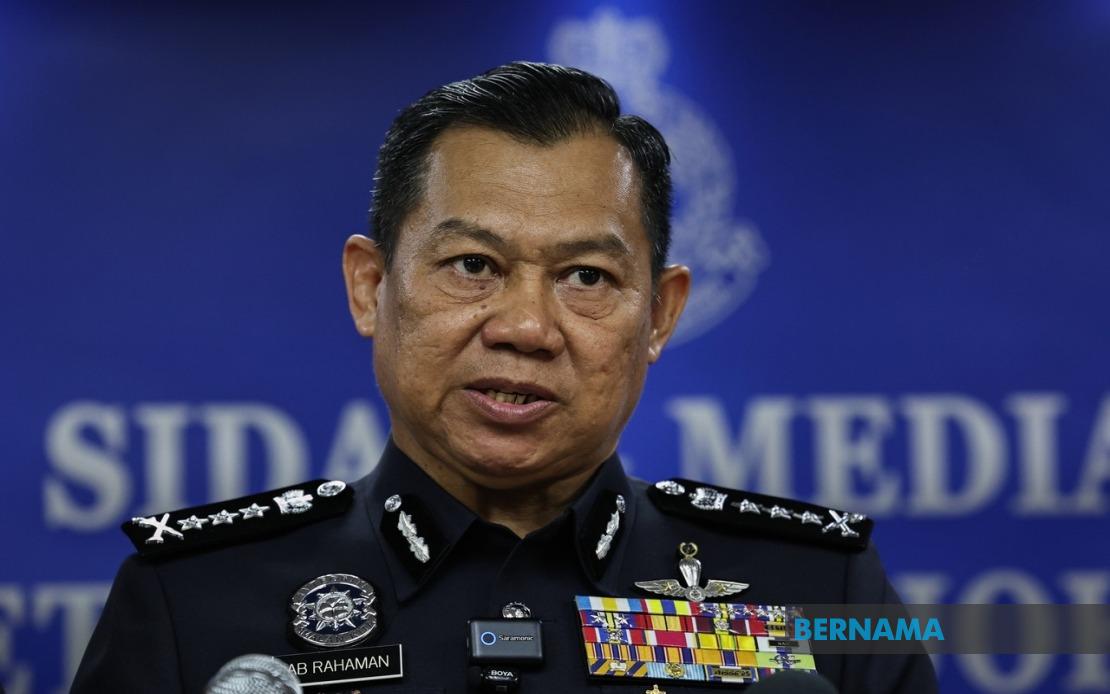
The Royal Malaysia Police (PDRM) is mobilising nearly 12,000 personnel to manage security arrangements for the forthcoming Johor State Election, marking a comprehensive deployment that reflects the scale of resources required to oversee a major electoral event. According to Johor Police Chief Datuk Ab Rahaman Arsad, the 11,926-strong contingent will be distributed across multiple phases timed to the progression of the electoral process, with flexibility built in to respond to operational requirements as they emerge during the campaign and voting period.
The strategic phasing approach outlined by Datuk Ab Rahaman represents standard practice in Malaysian elections, where police presence intensifies at critical junctures—from the nomination period through to polling day and result tallying. This graduated deployment model allows the force to concentrate resources where they are needed most while maintaining flexibility to address unforeseen security challenges. The announcement reflects lessons learned from previous state elections across Malaysia, where coordinated policing prevented electoral violence and maintained the integrity of the voting process.
Beyond the main PDRM contingent, Johor's police command will benefit from reinforcements totalling 755 additional officers and personnel drawn from specialized federal units. The Internal Security and Public Order Department (KDNKA) is contributing personnel from the General Operations Force, the Federal Reserve Unit, PDRM's Air Unit, and the Marine Police Force. This multi-agency composition ensures that election security is handled not merely by uniformed constables, but by trained specialists equipped to handle complex scenarios ranging from crowd control to rapid response operations.
The General Operations Force component of the deployment carries particular significance given its expertise in counter-insurgency and riot management, capabilities developed over decades of internal security operations. The Federal Reserve Unit brings additional trained manpower for rapid deployment and protective duties. The inclusion of air and marine units indicates contingency planning for scenarios that might require aerial surveillance or riverine security measures, demonstrating the sophistication of planning required for state-level elections in Malaysia's diverse geography.
For Malaysian observers, the scale of the deployment underscores the security infrastructure that underpins electoral democracy in the country. Johor, as Malaysia's second-largest state by population and a critical economic region, naturally commands substantial police attention during elections. The allocation of nearly 12,000 personnel reflects both the state's demographic significance and the police's commitment to preventing violence, intimidation, or disruption that could compromise electoral credibility.
The election security operation also carries implications for public order beyond the polling stations themselves. Campaign rallies, candidate movements, and the informal activities surrounding election day can generate flashpoints if not carefully managed. The phased deployment allows the PDRM to concentrate presence at campaign venues, transportation hubs, and gathering points where large crowds converge. The involvement of the Marine Police Force suggests particular attention to river crossings and waterfront areas where informal political activities might occur, especially in communities where water access is crucial to daily life.
From a regional perspective, Malaysia's approach to election security has attracted international attention as a model of professional policing that maintains order without undermining democratic participation. The 11,926-personnel deployment for a single state election demonstrates the resources democracies must commit to protect the integrity of their electoral systems. For Southeast Asian neighbours, Malaysia's institutional capacity in this area reflects decades of electoral practice and political maturation, though the region's newer democracies often lack comparable resources.
The decision to deploy such numbers also reflects changing security perceptions across Malaysia. Elections are no longer viewed as ceremonial events requiring minimal police presence; instead, they are recognized as moments of heightened social tension when political emotions run high and the potential for violence—however remote in most cases—demands serious preparation. This evolution in security thinking has accompanied Malaysia's political development over the past two decades, particularly as electoral competition has intensified and winner-take-all dynamics have made election outcomes more consequential for losing parties and their supporters.
The flexibility built into the deployment plan—with adjustments made according to operational needs—provides the police with essential room to adapt in real time. This approach contrasts with rigid, predetermined deployments that cannot respond to emerging circumstances. By maintaining this adaptive capacity, the PDRM can concentrate resources on actual problems rather than maintaining uniform presence across all areas regardless of risk assessment. This intelligence-led policing methodology represents professional best practice and helps explain why major electoral violence remains rare in Malaysia despite intense political competition.
For ordinary Johor voters, the police presence during the election will be almost invisible if security preparations succeed. Heavy-handed policing that intimidates voters or impedes their participation would constitute a failure of the security operation. The success of the 11,926-personnel deployment will be measured not by dramatic confrontations or arrests, but by the absence of disruption—allowing citizens to vote freely, candidates to campaign safely, and officials to administer the election without compromise. This paradox of successful security operations—that their most visible measure is nothing happening—often goes unrecognized by the public, yet it represents the ultimate objective of the police preparation.

%22%2F%3E%3C%2Fpattern%3E%3C%2Fdefs%3E%3Crect%20width%3D%22100%25%22%20height%3D%22100%25%22%20fill%3D%22url(%23ph2hy9vg)%22%2F%3E%3Crect%20width%3D%22100%25%22%20height%3D%22100%25%22%20fill%3D%22url(%23ph2hy9vp)%22%2F%3E%3Ctext%20x%3D%2250%25%22%20y%3D%2250%25%22%20text-anchor%3D%22middle%22%20dominant-baseline%3D%22central%22%20fill%3D%22rgba(255%2C255%2C255%2C0.95)%22%20font-family%3D%22Georgia%2C%20'Times%20New%20Roman'%2C%20serif%22%20font-weight%3D%22700%22%20font-size%3D%22272%22%20letter-spacing%3D%22-0.02em%22%3EAnwar%3C%2Ftext%3E%3C%2Fsvg%3E)