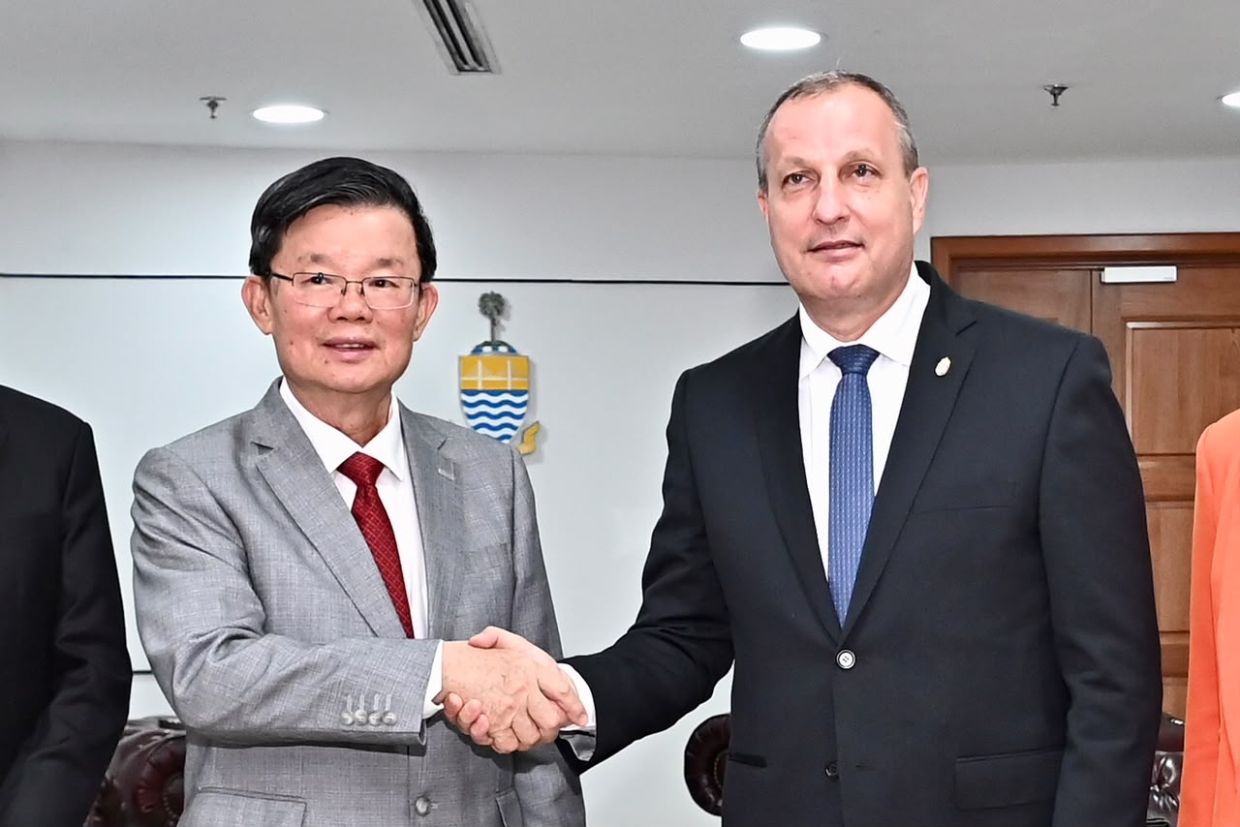
Penang is positioning itself to strengthen economic and cultural bonds with Hungary, signalling a strategic shift towards tapping Eastern European expertise in emerging sectors. Following recent discussions between state leadership and a visiting Hungarian diplomatic delegation, the island state has identified multiple avenues for meaningful cooperation that align with its long-term development goals and sustainability agenda. The visit, headlined by Hungarian Ambassador to Malaysia Dr Sándor Sipos, underscores growing recognition that knowledge exchange and technical partnerships with European nations can accelerate Penang's transition towards a high-tech, environmentally conscious economy.
Chief Minister Chow Kon Yeow framed the engagement as a natural fit between two regions committed to balancing progress with heritage protection. Speaking after his meeting with Ambassador Sipos and accompanying officials, Chow outlined a vision where Penang draws on Hungary's considerable institutional strengths across multiple domains. The ambassador's visit provided a structured platform to move beyond diplomatic pleasantries, with substantive conversations spanning higher education collaboration, technological innovation, water security solutions, renewable energy deployment and the preservation of cultural assets. These discussions recognised that modern regional development requires cross-border knowledge transfer, particularly in sectors where resource constraints and environmental pressures demand creative, proven solutions from global partners.
The education sector emerged as a cornerstone of proposed cooperation. Hungary currently extends 40 fully funded scholarship places annually to Malaysian students, a programme that represents a meaningful investment in developing human capital across the country. Ambassador Sipos indicated strong interest in widening Penang's participation in this scheme, suggesting that state educational institutions and talented individuals have remained underrepresented relative to other regions. For Penang, this presents an opportunity to build a pipeline of professionals with advanced training in fields where the state seeks to develop comparative advantage, from research and development to green engineering and digital innovation. Chow explicitly acknowledged the value of these educational pathways as bridges connecting Malaysia's emerging talent with international networks and cutting-edge methodologies.
Water management and renewable energy emerged as particularly salient collaboration points given Hungary's experience managing complex water infrastructure across the Danube region and its progress in transitioning towards cleaner energy sources. Penang, facing periodic water stress and mounting pressure to reduce carbon intensity, stands to benefit from technical knowledge and operational best practices developed in comparable European contexts. The discussions also encompassed heritage conservation and cultural exchange, reflecting both regions' commitment to preserving their distinctive identities whilst modernising infrastructure and governance systems. This dual focus—sustainable development paired with cultural stewardship—suggests Penang is pursuing a model of growth that transcends purely economic metrics.
State executive councillor Gooi Zi Sen leveraged the diplomatic visit to advance sports cooperation, a sector often overlooked in international partnerships but significant for youth development and social cohesion. Gooi indicated the Penang State Sports Council would investigate specific sports disciplines where bilateral exchanges and training partnerships with Hungary could elevate local standards and create pathways for emerging athletes. This initiative reflects broader recognition that international cooperation need not remain confined to boardrooms and research laboratories; it can extend into grassroots development programmes that directly affect young people's opportunities and aspirations. Sports cooperation also serves a soft-power function, building public awareness and goodwill through shared sporting endeavours.
The invitation for expanded business and investment discussions signals that Penang is actively courting Hungarian companies and investors. The state has positioned itself as a regional hub for semiconductor manufacturing, pharmaceutical research and digital innovation, sectors where Central European expertise and capital could prove complementary. Trade discussions during the delegation's visit likely addressed regulatory frameworks, intellectual property protections and sectoral opportunities where Hungarian firms might establish operations or forge joint ventures with local counterparts. For Penang, attracting investment and partnerships from developed European economies strengthens its competitive positioning against other Southeast Asian states and diversifies its investor base beyond traditional sources.
Community engagement and youth development discussions with state executive councillor Goh Choon Aik rounded out the visit's agenda, suggesting both governments recognise that sustainable partnerships require institutional depth and multiple points of connection. Rather than limiting engagement to government-to-government interaction, the emphasis on academic institutions, business communities and civil society organisations points towards a more resilient, multifaceted relationship less vulnerable to political fluctuations. This architecture also increases the probability that collaborative initiatives will generate tangible benefits flowing to ordinary citizens through improved educational opportunities, employment prospects and access to innovative solutions addressing everyday challenges.
The timing of this engagement reflects broader geopolitical realities. As Southeast Asian nations navigate great-power competition and seek to diversify their international partnerships, deepening ties with economically developed, technologically sophisticated European partners offers strategic value. Hungary, despite its Central European location, maintains robust capabilities across higher education, water infrastructure, renewable energy and cultural preservation—precisely the domains Penang has identified as priorities. The partnership thus represents neither a rejection of existing relationships nor a dramatic realignment, but rather a pragmatic expansion of Penang's diplomatic and economic portfolio to capture opportunities that can accelerate its development agenda.
Chow's optimism about translating discussions into concrete projects suggests both parties are committed to moving beyond aspirational statements towards binding institutional arrangements. Academic twinning agreements, researcher exchange programmes, technology transfer frameworks and investment facilitation mechanisms represent concrete next steps. The state government's openness to international collaboration, coupled with Hungary's demonstrated commitment to Malaysian engagement through its substantial scholarship programme, creates favourable conditions for such arrangements to materialise. Over the coming years, the success of this partnership will be measured not by press releases and diplomatic courtesy calls, but by tangible outcomes: Penang students graduating from Hungarian universities and bringing knowledge home, joint research projects yielding innovations, Hungarian companies establishing operations in the state, and local sporting athletes benefiting from international training partnerships. These measurable results will determine whether this budding relationship becomes a significant factor in Penang's long-term competitive positioning.


%22%2F%3E%3C%2Fpattern%3E%3C%2Fdefs%3E%3Crect%20width%3D%22100%25%22%20height%3D%22100%25%22%20fill%3D%22url(%23ph2hy9vg)%22%2F%3E%3Crect%20width%3D%22100%25%22%20height%3D%22100%25%22%20fill%3D%22url(%23ph2hy9vp)%22%2F%3E%3Ctext%20x%3D%2250%25%22%20y%3D%2250%25%22%20text-anchor%3D%22middle%22%20dominant-baseline%3D%22central%22%20fill%3D%22rgba(255%2C255%2C255%2C0.95)%22%20font-family%3D%22Georgia%2C%20'Times%20New%20Roman'%2C%20serif%22%20font-weight%3D%22700%22%20font-size%3D%22272%22%20letter-spacing%3D%22-0.02em%22%3EAnwar%3C%2Ftext%3E%3C%2Fsvg%3E)