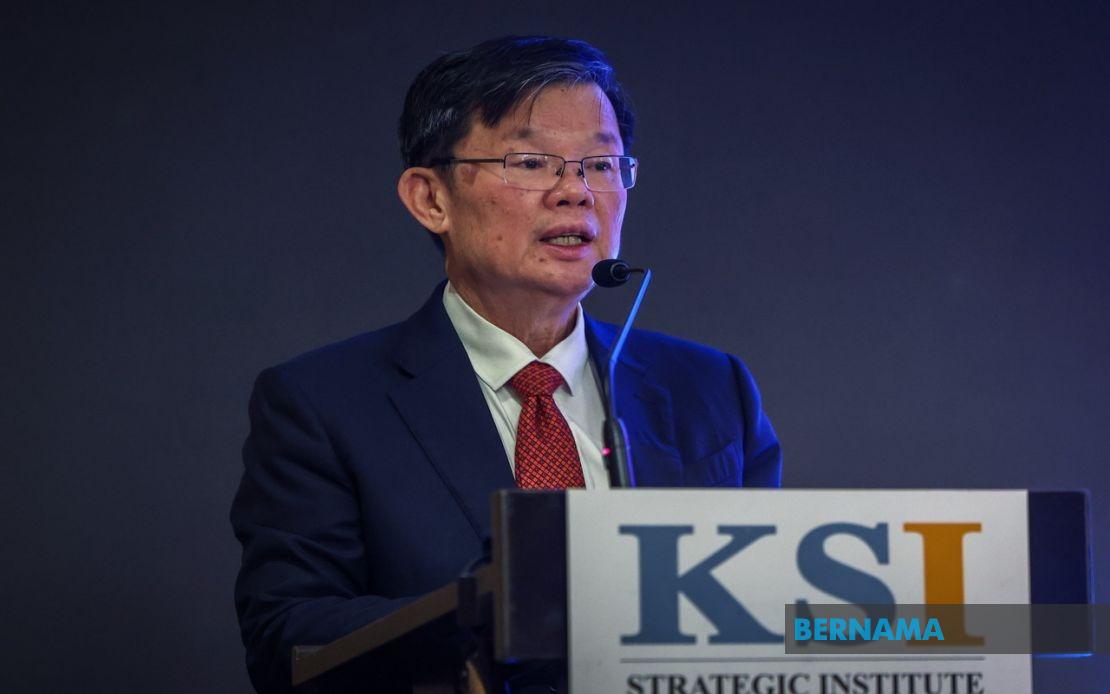
Penang Pakatan Harapan intends to dramatically expand its slate of women candidates in the forthcoming state election, though the party hierarchy acknowledges that identifying adequate numbers of qualified and motivated contenders remains a significant hurdle, according to remarks by coalition chairman and Chief Minister Chow Kon Yeow. Speaking at the World Women Economic and Business Summit 2026 in George Town on June 15, Chow articulated the party's commitment to pursuing the long-standing aspiration of achieving at least 30 per cent female representation in political office and decision-making structures across Penang.
The challenge facing Penang PH reflects a deeper structural issue within Malaysia's political ecosystem. While the nation established the 30 per cent women's representation target in 2009, actual progress toward this benchmark has stalled considerably. At the federal level, women comprise merely 13.5 per cent of Members of Parliament, while at the state legislature tier the figure stands at just 12 per cent. These figures underscore the persistence of gender imbalances in Malaysia's political leadership despite more than a decade of stated commitment to reform. The gap between aspiration and reality has widened rather than narrowed, prompting fresh calls for substantive institutional change.
Chow's candid acknowledgement that recruitment difficulties persist reveals the nuanced nature of the problem. The issue is not simply that political parties lack the will to nominate women, but rather that relatively few qualified women volunteers themselves to enter the candidate selection process. This reluctance stems from multiple interconnected factors—the demanding nature of political campaigns, the personal and professional sacrifices required, lingering social stigma in certain communities, and the absence of adequate support systems for aspiring female politicians. These barriers operate cumulatively, creating a situation where supply-side constraints limit parties' capacity to field more female candidates regardless of stated policy commitments.
Paradoxically, Chow noted that Malaysian women have achieved remarkable progress across numerous professional and economic domains. In education, business, engineering, and the public service, women have broken through historically male-dominated sectors and earned recognition for their contributions. This disparity—where women excel in corporate boardrooms and academic settings yet remain substantially underrepresented in elected office—suggests that political participation carries distinctive deterrents not present in other career trajectories. The barriers to political entry appear qualitatively different from those encountered in other professions, requiring tailored interventions rather than generic diversity initiatives.
The Penang chief minister's remarks during his summit address outlined several institutional reforms that could ameliorate the situation. Political parties should, he suggested, institutionalise the 30 per cent target directly into their formal candidate selection procedures, moving beyond rhetorical commitment to binding structural requirement. Additionally, parties ought to guarantee meaningful female representation on their internal decision-making committees—a measure that would both symbolise commitment and create visible role models for prospective candidates. Enhanced access to mentoring programmes and resource allocation for emerging women leaders represents another avenue through which parties could reduce the friction costs of political entry for female candidates.
Penang PH's position on this question carries particular significance within the Malaysian political context. The state has long positioned itself as a laboratory for progressive policy experimentation, and its approach to women's political representation carries implications beyond its borders. As one of the nation's most developed and economically vibrant states, Penang's success or failure in broadening female political participation will inevitably influence how other state-level coalitions approach similar challenges. Should the party successfully expand its female candidate slate, it would establish a replicable model; conversely, continued shortfalls might reinforce fatalistic assumptions about the impossibility of rapid change.
The recruitment challenge also reflects generational considerations that merit deeper examination. Younger Malaysian women, particularly those with university education and professional experience, often possess greater ambitions for political involvement than their predecessors. Yet they simultaneously face heightened expectations regarding work-life balance and family obligations. The political world has been slow to accommodate these shifting priorities, continuing to operate according to schedules and demands calibrated for candidates without substantial childcare responsibilities. Without fundamental restructuring of how political participation operates—including flexible arrangements for campaigning and parliamentary duties—parties will struggle to compete with corporate and academic institutions for talented female professionals.
Chow's statement also carries implications for the broader Pakatan Harapan coalition operating at national level. If Penang, widely regarded as the coalition's administrative stronghold, struggles to field adequate numbers of qualified female candidates, this suggests systemic weaknesses that extend throughout the alliance. The federal coalition's own track record on women's representation has attracted criticism, particularly given PH's reformist positioning. The Penang experience demonstrates that good intentions and stated commitment prove insufficient without accompanying structural mechanisms and cultural shifts within party organisations.
Moving forward, the question for Penang PH and Malaysian political parties generally is whether they will move beyond passive recruitment—waiting for women to volunteer—toward proactive development strategies. This might entail identifying promising women in local government, grassroots activism, and professional networks, then actively cultivating their interest in electoral politics through mentoring, financial support, and realistic pathways to winnable seats. Several democracies have demonstrated that deliberate talent pipeline development can substantially accelerate women's political representation within a single electoral cycle. Whether Malaysian parties will embrace such transformative approaches remains an open question that will likely determine whether the 30 per cent target remains perpetually aspirational or becomes an achievable reality.
The World Women Economic and Business Summit 2026 provided an opportune forum for Chow to articulate these challenges and potential solutions before an audience of business leaders, entrepreneurs, and policymakers. The venue underscores an important connection: economic empowerment of women and their political representation are mutually reinforcing objectives. Women with economic independence and professional standing bring distinct perspectives and priorities to political decision-making, while female politicians tend to champion policies that facilitate women's economic participation. This virtuous cycle remains incomplete in Malaysia so long as women remain substantially underrepresented in elected office.


%22%2F%3E%3C%2Fpattern%3E%3C%2Fdefs%3E%3Crect%20width%3D%22100%25%22%20height%3D%22100%25%22%20fill%3D%22url(%23ph2hy9vg)%22%2F%3E%3Crect%20width%3D%22100%25%22%20height%3D%22100%25%22%20fill%3D%22url(%23ph2hy9vp)%22%2F%3E%3Ctext%20x%3D%2250%25%22%20y%3D%2250%25%22%20text-anchor%3D%22middle%22%20dominant-baseline%3D%22central%22%20fill%3D%22rgba(255%2C255%2C255%2C0.95)%22%20font-family%3D%22Georgia%2C%20'Times%20New%20Roman'%2C%20serif%22%20font-weight%3D%22700%22%20font-size%3D%22272%22%20letter-spacing%3D%22-0.02em%22%3EAnwar%3C%2Ftext%3E%3C%2Fsvg%3E)