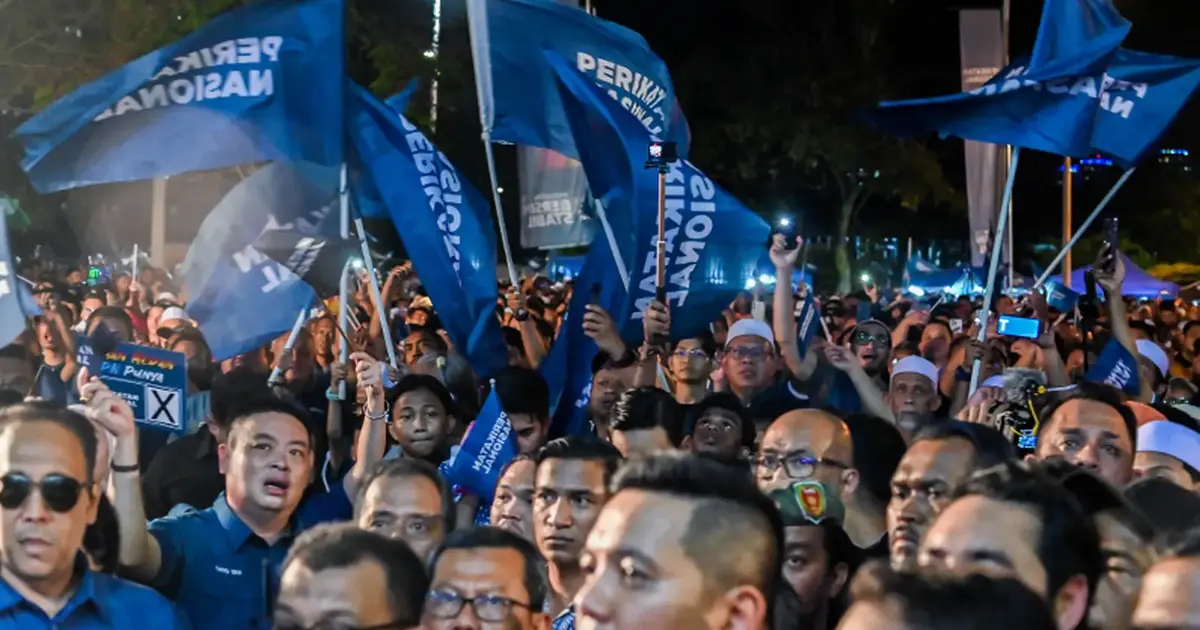
The Perikatan Nasional coalition stands at a critical juncture as escalating tensions between its two major components, the Pan-Malaysian Islamic Party (PAS) and the Malaysian United Indigenous Party (Bersatu), risk tearing the opposition alliance apart. Yusri Ibrahim, chief researcher at the Ilham Centre, has sounded an alarm about the coalition's structural vulnerability, characterizing the conflict as having entered a particularly damaging phase that could ultimately prove fatal to the bloc's cohesion and electoral prospects.
The deterioration of relations between PAS and Bersatu represents far more than a typical disagreement between coalition partners. According to Ilham Centre's assessment, the dispute has metamorphosed from conventional political rivalry into what Yusri describes as a 'guerrilla war' phase—suggesting a shift towards sustained, fragmented attacks rather than open confrontation. This characterization implies that both parties are no longer engaging in straightforward negotiations or public debates but instead engaging in tactical manoeuvres designed to weaken their rival's position within the alliance structure.
Understanding the roots of this conflict requires examining the distinct trajectories and interests of both parties within the PN framework. Bersatu, led by former Prime Minister Mahathir Mohamad until recently, has historically positioned itself as a Malay nationalist force while maintaining a more secular governance philosophy. PAS, conversely, represents a more religiously oriented approach to Malay-Muslim politics, emphasizing Islamic governance principles. These ideological differences, long dormant beneath the surface of strategic cooperation, have now erupted into open competition for dominance within the coalition.
The timing of this escalation carries significant implications for Malaysian politics heading into the critical period before the next general election. A fractured PN would dramatically alter the political landscape, potentially benefiting the ruling Barisan Nasional coalition by dividing opposition forces. For Malaysian voters concerned about alternative governance options, such fragmentation represents a troubling development that could reduce political choice and accountability mechanisms. The opposition's inability to present a unified challenge to incumbents weakens democratic competition and voter leverage in holding government accountable.
Regionally, Malaysia's coalition politics mirror broader Southeast Asian patterns where multi-ethnic and multi-ideological alliances struggle with internal cohesion. The PN experience provides cautionary lessons for other nations attempting to forge cross-factional opposition fronts. Thailand, Indonesia, and the Philippines have all witnessed similar dissolution of opposition coalitions when underlying ideological and personal rivalries override the cement of shared opposition goals. Malaysia's particular constitutional framework and electoral system amplify these tensions, as coalition fragmentation directly translates into diminished parliamentary representation.
For ordinary Malaysians, the practical consequences of PN disintegration extend beyond abstract political mathematics. Coalition collapse typically triggers realignments, defections, and the formation of new alliances that prioritize short-term advantage over programmatic governance. When politicians focus energies on internal factional warfare rather than developing coherent policy platforms, citizen interests often become secondary concerns. The 'guerrilla war' characterization suggests precisely such a dynamic—one where both PAS and Bersatu deploy resources toward mutual destruction rather than constructive opposition governance planning.
The Ilham Centre's analysis reflects growing professional concern among Malaysia's political observers that PN may lack the institutional maturity and shared commitment necessary to survive sustained internal pressure. Unlike established coalitions rooted in decades of partnership and institutional development, Perikatan Nasional emerged relatively recently as a tactical alignment among disparate entities. This newness means fewer established mechanisms for conflict resolution, fewer shared traditions of compromise, and less accumulated political capital to draw upon during crises.
PAS's strength in East Malaysian states and its influence among rural constituencies contrasts sharply with Bersatu's urban organizational capacity and accumulated administrative experience from their period in federal government. These complementary strengths should theoretically encourage cooperation, yet competition for resources and influence has apparently overwhelmed collaborative impulses. Each party now appears to view PN primarily as a platform for advancing their individual interests rather than as a collective venture requiring mutual sacrifice.
The trajectory from the current 'guerrilla war' phase toward potential outright coalition collapse likely depends on several factors, including whether senior leadership intervenes decisively to enforce discipline, whether grassroots members demand reconciliation, and whether external events—such as government scandals or economic crises—redirect both parties toward renewed opposition unity. History suggests that opposition coalitions often reconstitute themselves after temporary breakdowns, yet the damage from prolonged internal conflict typically endures through subsequent electoral cycles.
For policymakers and civil society observers monitoring Malaysian politics, the PN situation underscores broader institutional fragility within the nation's opposition structures. A healthy democracy requires robust alternatives to government, yet repeated coalition collapses suggest systemic constraints that transcend individual personality clashes. Whether Malaysia can develop opposition coalitions capable of sustained internal cooperation while maintaining strategic effectiveness against incumbents remains an open question with far-reaching consequences for democratic governance and voter choice.


%22%2F%3E%3C%2Fpattern%3E%3C%2Fdefs%3E%3Crect%20width%3D%22100%25%22%20height%3D%22100%25%22%20fill%3D%22url(%23ph2hy9vg)%22%2F%3E%3Crect%20width%3D%22100%25%22%20height%3D%22100%25%22%20fill%3D%22url(%23ph2hy9vp)%22%2F%3E%3Ctext%20x%3D%2250%25%22%20y%3D%2250%25%22%20text-anchor%3D%22middle%22%20dominant-baseline%3D%22central%22%20fill%3D%22rgba(255%2C255%2C255%2C0.95)%22%20font-family%3D%22Georgia%2C%20'Times%20New%20Roman'%2C%20serif%22%20font-weight%3D%22700%22%20font-size%3D%22272%22%20letter-spacing%3D%22-0.02em%22%3EAnwar%3C%2Ftext%3E%3C%2Fsvg%3E)