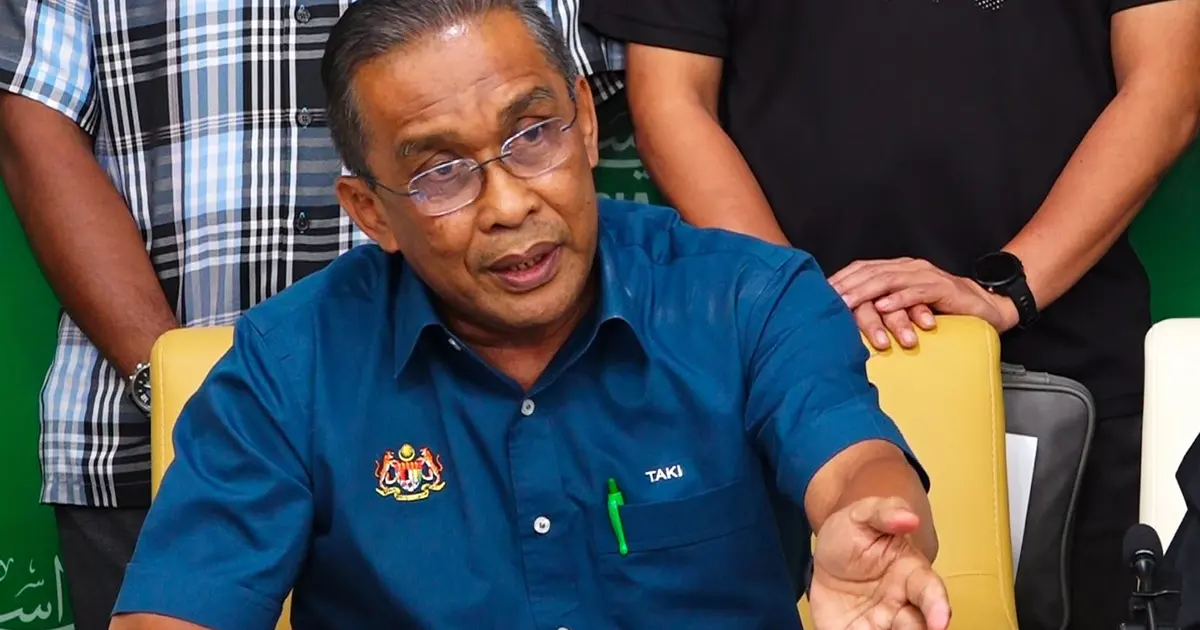
Perikatan Nasional's chief whip Takiyuddin Rahman has formally notified the speaker of the Dewan Rakyat that the opposition bloc has secured consensus among its parliamentary contingent for Hamzah to assume the position of opposition leader with immediate effect. According to Takiyuddin's notification, a total of 61 MPs representing the opposition alliance have given their backing to the former Bersatu deputy president for this critical parliamentary role, bringing an end to deliberations over the leadership structure of the opposition benches in the lower house.
The elevation of Hamzah through this formal parliamentary procedure represents a consolidation of opposition unity at a delicate moment in Malaysia's political landscape. With the number of opposition MPs standing at 61 out of 222 total seats in Parliament, this contingent has historically struggled to present a unified front on major legislative matters. The agreement reached among all opposition MPs to support a single individual for the opposition leader position suggests a breakthrough in coordination efforts that have been fractious in previous parliamentary sessions.
Hamzah's appointment carries particular significance given his profile within Malaysian politics. As the former deputy president of Bersatu, one of the constituent parties within the PN coalition, he brings experience navigating the complex dynamics of multi-party alliances. His selection also reflects the dominant position that Perikatan Nasional maintains within the broader opposition grouping, given that PN remains the largest opposition bloc following the outcome of recent electoral contests.
The position of opposition leader in Parliament carries substantial ceremonial and procedural importance, though it operates within clearly defined constitutional parameters. The individual holding this role serves as the principal spokesperson for the opposition during parliamentary debates, leads opposition strategy on major legislation, and enjoys certain privileges and recognition within the chamber. In Malaysia's Westminster-derived system, the opposition leader traditionally plays a vital check on executive power and represents the interests of non-government MPs in legislative proceedings.
The formal notification process undertaken by Takiyuddin underscores the procedural nature of parliamentary conventions in Malaysia. Rather than being a matter determined through binding legislation, the opposition leader designation functions as an internal parliamentary arrangement that requires speaker acknowledgment. This system allows flexibility for opposition coalitions to reorganise their leadership without requiring constitutional amendment or special legislation, though it does depend on maintaining sufficient numerical support to justify the claim to represent the opposition bloc.
For regional observers watching Malaysian politics, the successful coordination of 61 diverse MPs around a single leadership candidate demonstrates the possibility of constructive opposition politics despite the fractionalised nature of Malaysia's political party system. The opposition in Malaysia comprises multiple parties with distinct ideological orientations and regional bases, making unified positions on significant matters genuinely challenging to achieve. That all opposition MPs could agree on a single leader suggests either substantial consensus on Hamzah's suitability or pragmatic recognition that internal division serves nobody's interests.
The timing of this leadership announcement occurs against the backdrop of Malaysia's ongoing political evolution following previous electoral realignments. Opposition coalitions have historically faced sustainability challenges, with component parties frequently shifting allegiances or withdrawing from arrangements. The current consolidation around Hamzah's leadership may reflect lessons learned from past fractionalisation and a determination to present a more coherent parliamentary presence through the remainder of the current parliamentary term.
Hamzah's background within Bersatu provides particular context for understanding his elevation to opposition leader. Bersatu, founded by former Prime Minister Mahathir Mohamad and later reshaped under different leadership, has itself undergone significant internal realignments and coalition changes. Hamzah's position as former deputy president meant he commanded respect within a significant section of the party, though Bersatu's subsequent political movements had created complex dynamics that Hamzah's appointment to opposition leader may help to navigate.
The broader implications for Malaysian politics centre on whether a more unified opposition can effectively fulfil its traditional parliamentary function. Malaysia's system relies fundamentally on the opposition providing scrutiny of government legislation, articulating alternative policy positions, and defending parliamentary privilege and minority rights. An opposition fragmented across multiple leadership claims or lacking clarity on its principal spokespersons inevitably diminishes these functions. Conversely, a consolidated opposition with clear leadership can amplify its voice and constrain executive overreach through more coordinated questioning and amendment proposals.
For the government benches, the clarification of opposition leadership structures provides a definite interlocutor for engagement and negotiation. Parliament functions most effectively when both government and opposition have clear representative structures with which to coordinate procedural matters and schedule parliamentary business. The speaker's acknowledgment of Hamzah as opposition leader therefore serves both coalitions by establishing transparent lines of communication and recognised spokespersons.
Moving forward, observers will examine whether this opposition consensus can extend to substantive policy positions and coordinated legislative strategies. The designation of an opposition leader represents only the first step toward creating a genuinely unified opposition presence in Parliament. The more challenging work involves developing common positions on complex economic, social, and governance matters where the opposition's constituent parties may hold divergent views. Hamzah's effectiveness as opposition leader will be measured not merely by his parliamentary procedural status but by his success in building working relationships that translate opposition coordination into tangible legislative impact.


%22%2F%3E%3C%2Fpattern%3E%3C%2Fdefs%3E%3Crect%20width%3D%22100%25%22%20height%3D%22100%25%22%20fill%3D%22url(%23ph2hy9vg)%22%2F%3E%3Crect%20width%3D%22100%25%22%20height%3D%22100%25%22%20fill%3D%22url(%23ph2hy9vp)%22%2F%3E%3Ctext%20x%3D%2250%25%22%20y%3D%2250%25%22%20text-anchor%3D%22middle%22%20dominant-baseline%3D%22central%22%20fill%3D%22rgba(255%2C255%2C255%2C0.95)%22%20font-family%3D%22Georgia%2C%20'Times%20New%20Roman'%2C%20serif%22%20font-weight%3D%22700%22%20font-size%3D%22272%22%20letter-spacing%3D%22-0.02em%22%3EAnwar%3C%2Ftext%3E%3C%2Fsvg%3E)