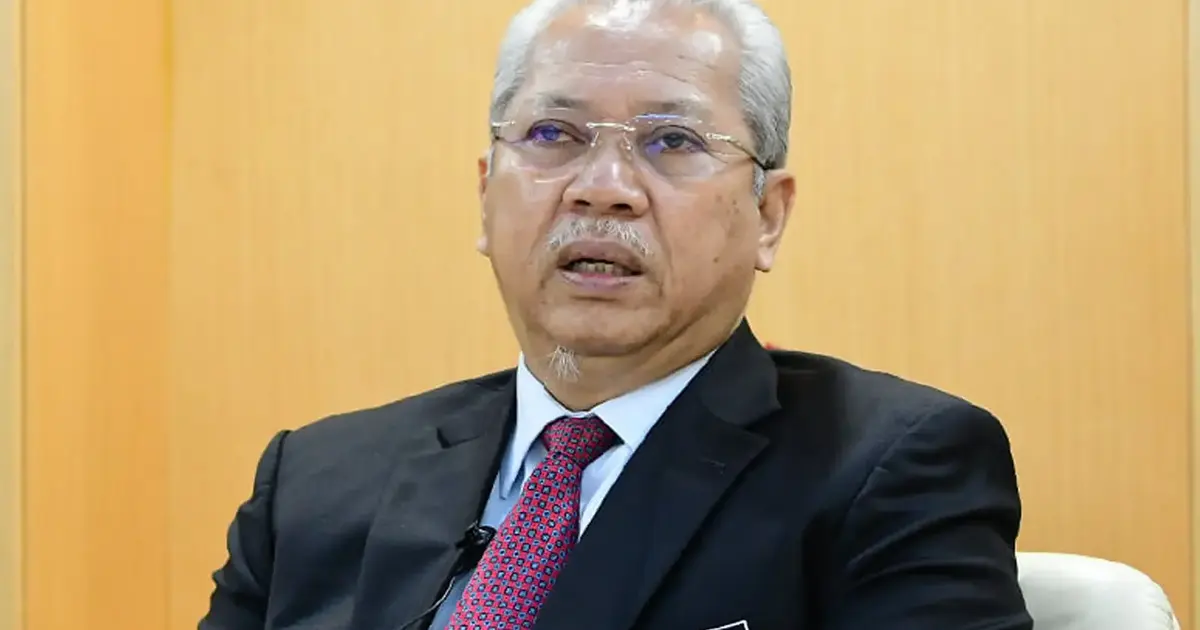
Perikatan Nasional faces a critical juncture as the coalition prepares to iron out longstanding tensions that have threatened its electoral prospects in two crucial state contests. Information chief Annuar Musa indicated that the Supreme Council meeting convened for Monday will serve as the pivotal forum to resolve mounting uncertainties surrounding Bersatu's continued participation in the alliance and the contentious question of logo deployment in upcoming campaigns.
The coalition has been navigating treacherous political waters as internal disagreements threaten to destabilise pre-election preparations for Johor and Negeri Sembilan. These disputes, which have simmered beneath the surface of public discourse, represent deeper fractures within Perikatan Nasional's structure and raise fundamental questions about the durability of the bloc. The Monday meeting represents an opportunity to settle these matters before electoral activities accelerate, though observers note that such high-level interventions often mask rather than resolve underlying tensions.
Bersatu's status within the coalition has become particularly contentious, with various stakeholders holding divergent views on the party's rights and obligations. The uncertainty has created complications for campaign logistics and has muddied messaging at a time when clear, unified direction would benefit all partner parties. That Annuar Musa felt compelled to state explicitly that only the Supreme Council possesses the authority to make determinations on these matters suggests that lower-level negotiations have reached an impasse, necessitating intervention from the coalition's highest decision-making body.
The logo dispute carries symbolic and practical significance extending beyond mere branding considerations. In Malaysian electoral contests, visual identity plays a crucial role in voter recognition and campaign coherence. The question of which logo appears on ballots and campaign materials directly affects the parties' ability to mobilise supporters effectively. For Bersatu, in particular, clarification on logo usage becomes essential for maintaining visibility and reinforcing its distinct identity within the broader coalition framework.
Johor and Negeri Sembilan represent strategically significant battlegrounds where Perikatan Nasional aims to strengthen its parliamentary representation. Both states have proven to be competitive electoral environments, and internal squabbling over seat allocations threatens to dilute the coalition's competitive advantage. Clear resolution of these allocation disputes becomes imperative to prevent demoralisation among grassroots activists and to ensure efficient deployment of campaign resources across contested constituencies.
Seat allocation frameworks in Malaysian coalition politics often become flashpoints because they directly determine individual parties' capacity to expand their legislative representation. Parties invariably view their allocated seats as reflections of their relative standing within the alliance hierarchy. Disagreements over distributions can escalate quickly, particularly when parties perceive themselves as undervalued relative to their organisational capacity or electoral track record. For Perikatan Nasional, managing these perceptions requires transparent criteria and credible justification for allocation decisions.
The timing of Monday's meeting suggests that coalition leadership recognises the urgency of providing clarity before campaigning intensifies. Prolonged ambiguity regarding fundamental issues such as logo rights and seat distributions would inevitably leak into public discourse, amplifying perceptions of internal weakness at precisely the moment when the coalition needs to project unity and confidence to voters. Malaysian political observers have frequently noted that electoral contests are won or lost not merely through policy platforms but through demonstrating organisational competence and cohesion.
Annuar Musa's public statement regarding the Supreme Council's exclusive authority suggests an attempt to centralise decision-making and prevent bilateral negotiations between coalition partners from fragmenting further. By emphasising that only the council can adjudicate these matters, he sends a signal that ad-hoc arrangements or side agreements carry no legitimacy. This approach, while potentially frustrating to individual parties seeking preferential treatment, serves the broader objective of establishing binding precedents that all parties must respect.
The resolution of these disputes will reveal much about the relative power dynamics within Perikatan Nasional and the coalition's fundamental stability. If the Monday meeting successfully addresses all outstanding issues, it may restore confidence among party activists and demonstrate effective coalition management. Conversely, if contentions remain unresolved or if compromises appear to benefit certain partners disproportionately, tensions may persist throughout the campaign period, undermining electoral performance in both states.
For Malaysian voters and political analysts, the outcome of Monday's proceedings carries implications extending beyond Johor and Negeri Sembilan. How Perikatan Nasional manages internal disputes signals broader questions about its capacity to govern effectively should it achieve federal power. Coalition stability, institutional decision-making processes, and equitable resource distribution among partners all become visible through examining how crises such as this are navigated. The Supreme Council meeting therefore represents more than a procedural formality—it constitutes a test of whether Perikatan Nasional possesses the organisational maturity required of a serious governing coalition.


%22%2F%3E%3C%2Fpattern%3E%3C%2Fdefs%3E%3Crect%20width%3D%22100%25%22%20height%3D%22100%25%22%20fill%3D%22url(%23ph2hy9vg)%22%2F%3E%3Crect%20width%3D%22100%25%22%20height%3D%22100%25%22%20fill%3D%22url(%23ph2hy9vp)%22%2F%3E%3Ctext%20x%3D%2250%25%22%20y%3D%2250%25%22%20text-anchor%3D%22middle%22%20dominant-baseline%3D%22central%22%20fill%3D%22rgba(255%2C255%2C255%2C0.95)%22%20font-family%3D%22Georgia%2C%20'Times%20New%20Roman'%2C%20serif%22%20font-weight%3D%22700%22%20font-size%3D%22272%22%20letter-spacing%3D%22-0.02em%22%3EAnwar%3C%2Ftext%3E%3C%2Fsvg%3E)