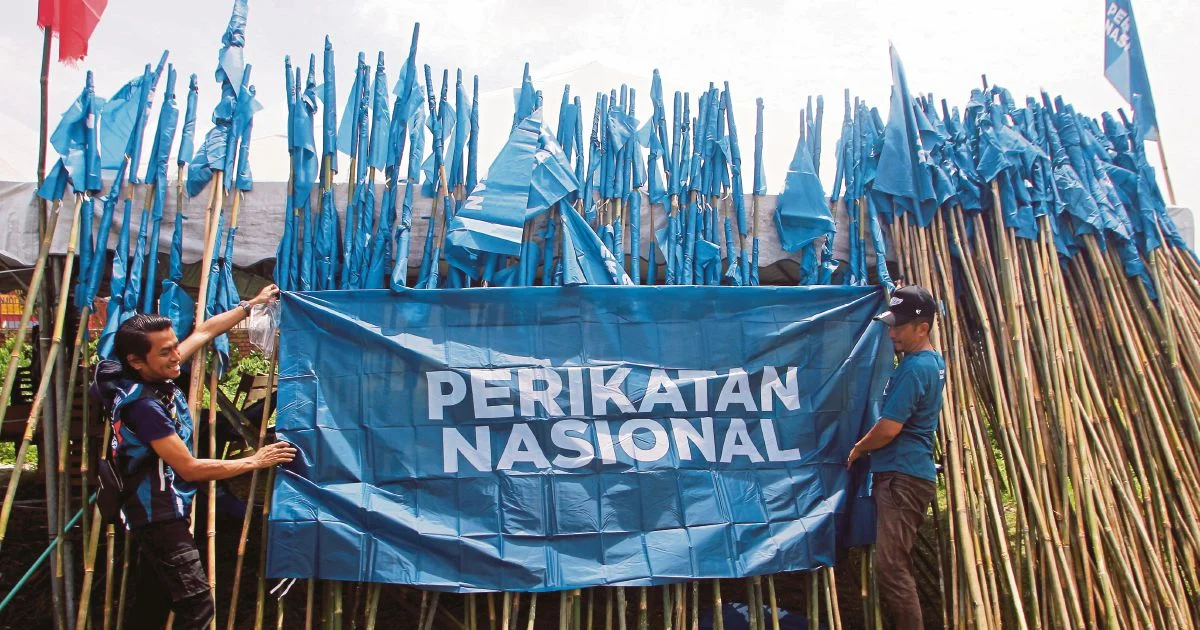
Malaysia's Perikatan Nasional coalition is preparing for a significant showdown at the leadership level, with the Supreme Council scheduled to gather on June 22 in what observers view as a critical moment for the opposition bloc's internal coherence. The Kota Baru-based meeting will tackle a backlog of contentious matters that have accumulated within the coalition, with particular emphasis on establishing clear protocols governing the shared use of the PN emblem and determining which candidates receive official coalition backing in upcoming electoral contests.
The decision to convene the senior decision-making body reflects the growing urgency of resolving structural ambiguities within the coalition. Perikatan Nasional, formed from the convergence of several political entities including PAS, BERSATU, and GERAKAN, has operated with varying degrees of coordination across its constituent parties. The absence of crystallised rules surrounding logo deployment and candidate selection has created friction, with individual member parties sometimes operating at cross-purposes during campaign periods. These operational gaps have become increasingly untenable as Malaysia approaches electoral cycles at both state and federal levels.
The logo controversy sits at the heart of the upcoming deliberations. Within opposition coalitions, the ability to deploy a unified symbolic identity carries considerable weight in voter recognition and messaging coherence. Yet different member parties within PN have occasionally sought to emphasise their individual brands rather than the collective coalition identity, creating confusion among supporters and complicating campaign logistics. The Supreme Council must establish binding guidelines that balance each party's legitimate interest in maintaining organisational visibility with the coalition's need for a recognisable, unified public face. Without such clarity, campaign materials proliferate in fragmented fashion, undermining the coordination advantages that coalitions theoretically provide.
Candidate endorsement procedures present an equally thorny challenge. When multiple parties within a coalition operate across the same electoral terrain, competition for nomination slots becomes inevitable. The PN member parties have historically nominated their own candidates without always consulting coalition partners, resulting in situations where multiple PN-affiliated candidates contest the same seat. Such outcomes weaken the coalition's overall competitiveness against governing Barisan Nasional and its partners, particularly in tightly contested constituencies where vote consolidation proves decisive. The June 22 meeting aims to establish mechanisms ensuring that candidate deployment reflects strategic coalition-wide calculations rather than individual party ambitions alone.
For Malaysian electoral observers, these internal coalition dynamics hold significance beyond mere procedural housekeeping. The opposition's ability to present a coherent, disciplined front increasingly determines the viability of alternating government power. At the 2022 general election, PN captured substantial parliamentary representation despite earlier splits in the opposition landscape. However, that electoral achievement has not translated into smooth coalition governance. The persistence of unresolved logo and candidate issues suggests that the coalition leadership has deferred difficult questions of authority and resource allocation within the broader institutional structure. The June 22 meeting represents an attempt to move beyond ad-hoc decision-making toward systematised governance arrangements.
The timing of this summit also reflects broader Malaysian political currents. State elections loom in several peninsular states during the latter half of 2023 and into 2024, with federal elections potentially occurring within the same window. Coalition partners cannot afford the luxury of ambiguity during such concentrated electoral activity. Voters expect clarity regarding which candidates carry coalition backing and which operate as independent entities. Campaign machinery functions most effectively when all constituent parties operate from shared playbooks and unified messaging platforms. The Supreme Council gathering will attempt to establish such standardised frameworks before the electoral calendar accelerates further.
Regional context matters as well. Across Southeast Asia, opposition coalitions have frequently foundered upon precisely the rocks that now threaten PN's coherence—disagreements over leadership, resource distribution, and strategic direction. Thailand's fractious opposition blocs and Indonesia's occasionally dysfunctional opposition coalitions offer cautionary examples of how internal disputes can transform electoral potential into parliamentary disappointment. Malaysia's opposition has an opportunity to learn from these regional experiences by establishing governance structures sufficiently robust to survive the pressures of competing electoral campaigns.
The June 22 meeting will require difficult compromises. Some parties may need to accept reduced autonomy over logo usage and candidate decisions in favour of coalition-wide strategic coordination. Others may harbour concerns about larger or more influential member parties using centralised procedures to marginalise smaller partners' electoral prospects. Navigating these tensions demands leadership willing to subordinate short-term party advantages to long-term coalition interests. Whether the Supreme Council possesses such vision remains uncertain, though the convening itself signals recognition that the current arrangement proves unsustainable.
Resolution of these governance questions will substantially shape Malaysia's electoral landscape. A well-coordinated PN coalition with unified branding and strategic candidate placement could significantly alter the current political balance. Conversely, failure to establish clear protocols threatens to reproduce the fragmentation and mutual undermining that has historically weakened opposition efforts. The Malaysian electorate is watching to determine whether the opposition can finally demonstrate the institutional discipline necessary for governing alternatives to emerge.

%22%2F%3E%3C%2Fpattern%3E%3C%2Fdefs%3E%3Crect%20width%3D%22100%25%22%20height%3D%22100%25%22%20fill%3D%22url(%23ph2hy9vg)%22%2F%3E%3Crect%20width%3D%22100%25%22%20height%3D%22100%25%22%20fill%3D%22url(%23ph2hy9vp)%22%2F%3E%3Ctext%20x%3D%2250%25%22%20y%3D%2250%25%22%20text-anchor%3D%22middle%22%20dominant-baseline%3D%22central%22%20fill%3D%22rgba(255%2C255%2C255%2C0.95)%22%20font-family%3D%22Georgia%2C%20'Times%20New%20Roman'%2C%20serif%22%20font-weight%3D%22700%22%20font-size%3D%22272%22%20letter-spacing%3D%22-0.02em%22%3EAnwar%3C%2Ftext%3E%3C%2Fsvg%3E)