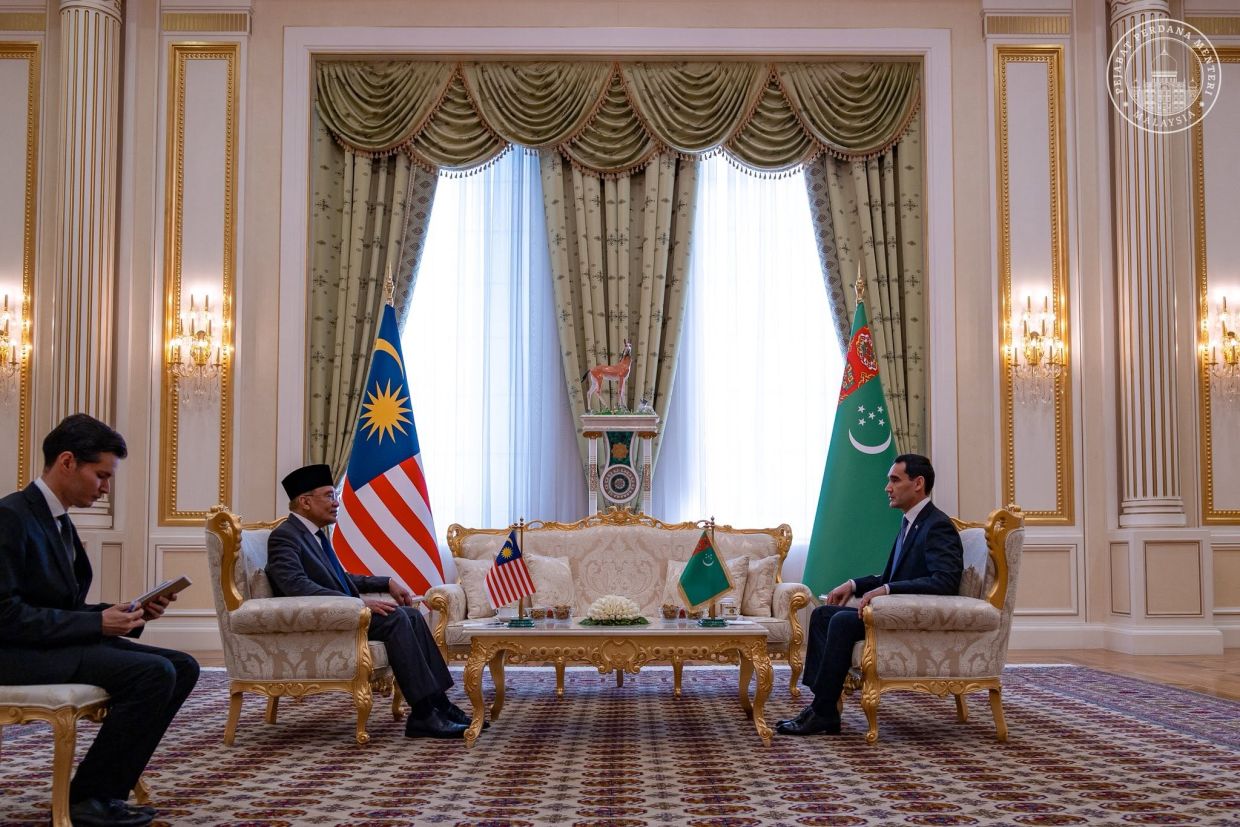
Prime Minister Datuk Seri Anwar Ibrahim and Turkmenistan President Serdar Berdimuhamedov jointly oversaw the formalisation of a strategic partnership between national oil and gas company Petronas and Turkmenistan authorities during an official ceremony, signalling a significant escalation in economic and energy cooperation between the two countries. The agreement was signed as Malaysia and Turkmenistan mark three decades of collaborative work within the energy sector, a relationship that has formed the bedrock of bilateral engagement and continues to shape regional energy dynamics in Central Asia.
The partnership represents more than a commercial transaction; it embodies the maturation of Malaysia's influence as a trusted energy sector partner on the international stage. According to the Prime Minister's Office, the accord reinforces diplomatic ties while simultaneously fostering measurable economic advancement, human capital development, and technological exchange. The dual benefit structure—strengthening both Malaysia-Turkmenistan relations while enabling knowledge transfer—reflects contemporary approaches to strategic partnerships that extend beyond resource extraction into capacity building and institutional development.
A particularly significant dimension of this partnership lies in its focus on Turkmenistan's vast natural gas reserves, among the world's most substantial. The agreement explicitly carves out opportunities for deeper Malaysian involvement in developing these hydrocarbon resources, positioning Petronas to leverage its operational expertise and technical capabilities in one of Central Asia's most energy-rich territories. For Malaysia, gaining preferential access to such reserves carries implications for long-term energy security and the potential for reliable gas supply partnerships that could benefit regional markets across Southeast Asia.
The strategic accord underscores Malaysia's competitive standing in global energy markets and its capacity to execute sophisticated projects across diverse geopolitical contexts. Officials emphasised that Malaysian expertise, workforce capabilities, and technological innovation demonstrate sufficient sophistication to compete internationally, contributing not only to Malaysia's own economic development but also to international energy security frameworks. This positioning is particularly relevant as global energy transitions accelerate and nations reassess supply chain vulnerabilities and partnership diversity.
The MADANI government's endorsement of this development reflects a deliberate strategy to expand Malaysia's economic footprint beyond Southeast Asia into emerging markets with substantial growth potential. Officials signalled that the partnership creates pathways for broader investment cooperation spanning multiple sectors beyond energy, suggesting a holistic approach to bilateral relations that optimises mutual economic benefit across diverse industries and opportunities.
Prime Minister Anwar's two-day visit to Ashgabat commenced with formal reception ceremonies at the Presidential Palace, followed by comprehensive bilateral discussions with the Turkmen delegation. Such high-level engagement typically precedes or accompanies major commercial agreements, lending diplomatic weight to the Petronas partnership signing and signalling governmental commitment to deepening ties at multiple institutional levels.
From a trade perspective, Turkmenistan's position as Malaysia's fourth-largest trading partner among Central Asian nations demonstrates the significance of this relationship within regional commerce. During 2025, bilateral trade reached RM75.80 million, with Malaysian exports comprising RM75.50 million of this total, representing a nine per cent year-on-year increase. While these figures remain modest relative to Malaysia's total international trade, the growth trajectory and composition—dominated by Malaysian exports—suggest expanding market receptivity for Malaysian goods and services within Turkmenistan's economy.
Petrolas's historical commitment to Turkmenistan provides substantial foundation for expanded engagement. The company has accumulated RM52.73 billion in cumulative investments across Turkmen operations since establishing its presence in 1996, representing nearly three decades of operational continuity, technical deployment, and financial exposure. This substantial investment history indicates deep institutional knowledge of the operating environment, regulatory frameworks, and commercial dynamics, positioning the company advantageously for scaling operations under the new strategic framework.
The broader context for this partnership encompasses shifting global energy dynamics and Central Asia's re-emergence as a strategically important region. Turkmenistan's gas reserves have attracted renewed attention as European energy markets diversify away from Russian supply sources and Asian economies simultaneously expand their energy consumption profiles. Malaysia's repositioning as a reliable energy sector partner in this space creates diplomatic advantages and commercial opportunities that extend beyond immediate bilateral relations into wider regional and international networks.
For Malaysian business interests more broadly, the Petronas partnership signals government commitment to facilitating corporate expansion into high-potential markets, particularly where natural resource extraction and energy infrastructure development create sustained commercial demand. The agreement's emphasis on technology transfer and knowledge exchange suggests a model that could be replicated across other sectors and geographies, creating templates for future Malaysian corporate engagement in emerging economies.
Looking forward, successful execution of this strategic partnership could serve multiple objectives: securing Malaysia's energy supply options, generating substantial returns on Petronas investments, enhancing bilateral trade and investment flows, and strengthening Malaysia's diplomatic positioning within Central Asia. The emphasis on natural gas development particularly aligns with global trends toward cleaner energy transitions and positions both nations to benefit from long-term demand for gas resources that serve as bridging fuels during the broader shift toward renewable energy systems.
The partnership's timing coincides with Malaysia's broader diplomatic outreach throughout Central Asia and reflects strategic recognition that emerging markets in this region offer substantial untapped opportunities for Malaysian companies willing to invest in understanding local contexts and building sustained operational presence. As Malaysia calibrates its international engagement strategy, deepening ties with resource-rich Central Asian economies provides diversification benefits and reduces dependence on traditional Southeast Asian markets.

%22%2F%3E%3C%2Fpattern%3E%3C%2Fdefs%3E%3Crect%20width%3D%22100%25%22%20height%3D%22100%25%22%20fill%3D%22url(%23ph2hy9vg)%22%2F%3E%3Crect%20width%3D%22100%25%22%20height%3D%22100%25%22%20fill%3D%22url(%23ph2hy9vp)%22%2F%3E%3Ctext%20x%3D%2250%25%22%20y%3D%2250%25%22%20text-anchor%3D%22middle%22%20dominant-baseline%3D%22central%22%20fill%3D%22rgba(255%2C255%2C255%2C0.95)%22%20font-family%3D%22Georgia%2C%20'Times%20New%20Roman'%2C%20serif%22%20font-weight%3D%22700%22%20font-size%3D%22272%22%20letter-spacing%3D%22-0.02em%22%3EAnwar%3C%2Ftext%3E%3C%2Fsvg%3E)