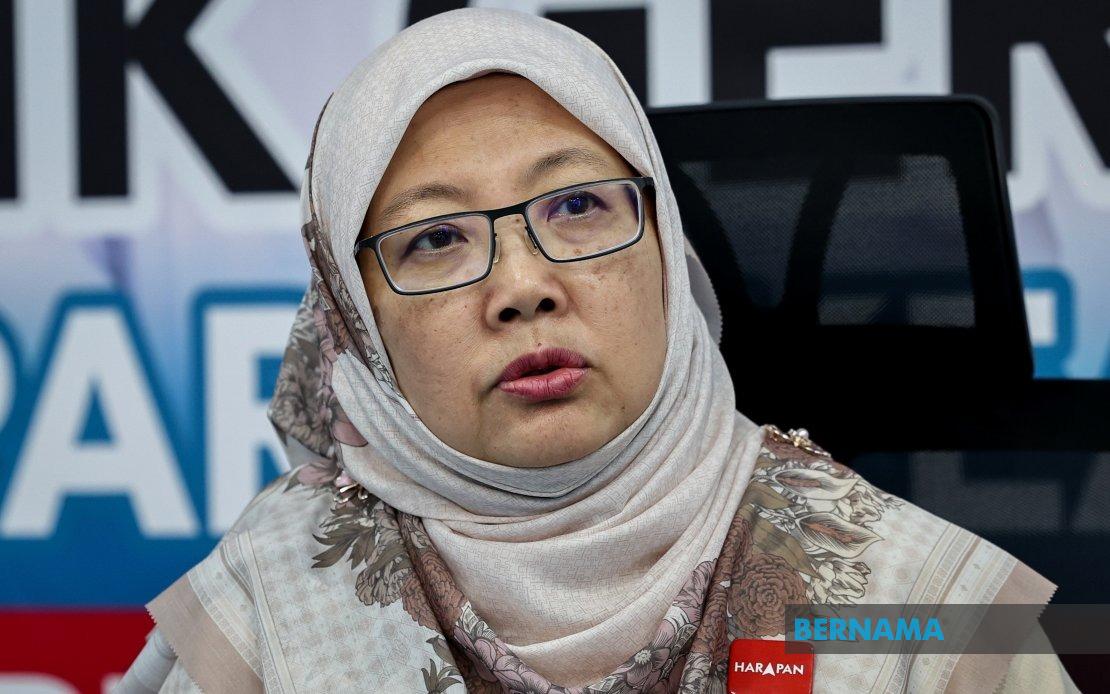
Pakatan Harapan has made a formal commitment to respect the constitutional powers vested in the Sultan of Johor regarding the appointment of the state's chief executive officer, according to statements issued by the coalition ahead of the forthcoming Johor state election. The pledge comes as part of a broader effort by the opposition alliance to emphasise constitutional governance and institutional respect, marking a deliberate departure from contentious personnel debates that have dominated recent political discourse in the state.
Johor PKR chairman Datuk Seri Dr Zaliha Mustafa articulated the coalition's position clearly, affirming that PH would continue to honour the Johor State Constitution 1895 in its entirety should voters entrust the coalition with government formation. This represents a substantive statement on institutional hierarchy, reinforcing the traditional role of the state monarchy in executive leadership selection—a matter that carries particular weight in Johor, where the Sultan's constitutional and symbolic authority remains exceptionally strong within Malaysian federalism.
The timing of PH's declaration carries strategic significance, emerging in response to pressure from the incumbent Menteri Besar Datuk Onn Hafiz Ghazi, who had publicly urged the opposition to announce its preferred candidate for the top state position before electoral polling began. Such pre-election candidate announcements have become increasingly common in Malaysian politics, yet they remain controversial among those who argue that constitutional prerogatives should not be circumvented by political convenience or media management.
Dr Zaliha's statement revealed an important tactical calculation: that contesting the election primarily on policy grounds rather than personality would strengthen PH's broader appeal. She emphasised that the coalition possessed numerous accomplished and experienced administrators capable of governing Johor effectively, thereby deflecting the pressure to personalise the campaign around a single individual. This approach acknowledges that Johor voters are increasingly concerned with tangible governance outcomes rather than pre-ordained leadership succession.
The substance of PH's policy platform, as articulated through Dr Zaliha's remarks, centres on bread-and-butter economic concerns affecting ordinary Johoreans. Improving living standards, generating high-quality employment opportunities, and positioning Johor's economy for sustainable growth form the core of the coalition's campaign messaging. These themes resonate particularly strongly in Johor, where manufacturing, port operations, and services sectors employ hundreds of thousands and remain sensitive to state-level regulatory decisions and infrastructure investment.
For Malaysian readers and observers, the constitutional dimensions of this debate warrant attention. The Johor State Constitution 1895 represents one of the oldest governing instruments in the federation, predating even the Federal Constitution and reflecting the sultanate's historical autonomy. By explicitly committing to honour this document, PH signals respect for federalism's constitutional architecture and the special position of Johor's royal institution—matters that transcend party politics and touch upon institutional legitimacy itself.
The position also distinguishes PH from approaches that might appear to circumvent royal prerogative, a distinction that carries electoral weight particularly among Johor's more traditionally-minded electorate who regard the Sultan's constitutional role as fundamental to the state's identity and governance stability. Respect for established institutions can become a decisive electoral factor when mobilised as a governance pledge, especially in states with strong monarchical traditions.
From a broader Southeast Asian perspective, Johor's political dynamics hold significance because the state represents one of Malaysia's most economically consequential jurisdictions and a crucial gateway between the federation and Singapore. Governmental effectiveness in Johor thus has implications extending beyond state boundaries, affecting regional trade, investment flows, and cross-border relations. PH's emphasis on policy substance rather than personalised politics reflects recognition that Johor's economic challenges demand serious administrative attention.
The contest between incumbent and challenger over campaign focus reveals underlying tensions within Malaysian democracy regarding the relationship between party politics and constitutional monarchy. While PH's approach privileges institutional respect, it simultaneously reflects strategic confidence that the party possesses sufficient policy alternatives and leadership depth to win voter approval without pre-announcing a single candidate. This posture contrasts with approaches that view advance candidate announcement as essential for voter clarity and democratic accountability.
Dr Zaliha's framing of PH's position also acknowledges a practical reality: that naming a Menteri Besar candidate before election results are known carries risks should the designated individual prove unable or unsuitable for the constitutional appointment process. By maintaining flexibility while committing to constitutional process, PH preserves both institutional dignity and political options. This represents a calibrated approach to the delicate balance between party democracy and constitutional governance that increasingly characterises Malaysian electoral politics.
The broader implications for Malaysian federalism deserve consideration. As states exercise greater autonomy in governance matters and electoral competition intensifies, questions about how parties should engage with constitutional monarchical powers will recur. PH's Johor commitment suggests one model: explicit deference to constitutional process combined with substantive policy competition. This approach could establish a precedent for how opposition coalitions navigate state-level elections in Malaysia's constitutionally-monarchical system.
For voters in Johor, PH's position invites assessment based on the quality and specificity of policy proposals advanced during the campaign rather than confidence in predetermined leadership arrangements. This places responsibility on the coalition to articulate detailed, credible plans for addressing the state's economic challenges, infrastructure needs, and social priorities. The election will ultimately serve as a referendum not primarily on who should be Menteri Besar, but whether PH's proposed governance vision merits electoral endorsement over the incumbent coalition's track record.

%22%2F%3E%3C%2Fpattern%3E%3C%2Fdefs%3E%3Crect%20width%3D%22100%25%22%20height%3D%22100%25%22%20fill%3D%22url(%23ph2hy9vg)%22%2F%3E%3Crect%20width%3D%22100%25%22%20height%3D%22100%25%22%20fill%3D%22url(%23ph2hy9vp)%22%2F%3E%3Ctext%20x%3D%2250%25%22%20y%3D%2250%25%22%20text-anchor%3D%22middle%22%20dominant-baseline%3D%22central%22%20fill%3D%22rgba(255%2C255%2C255%2C0.95)%22%20font-family%3D%22Georgia%2C%20'Times%20New%20Roman'%2C%20serif%22%20font-weight%3D%22700%22%20font-size%3D%22272%22%20letter-spacing%3D%22-0.02em%22%3EAnwar%3C%2Ftext%3E%3C%2Fsvg%3E)