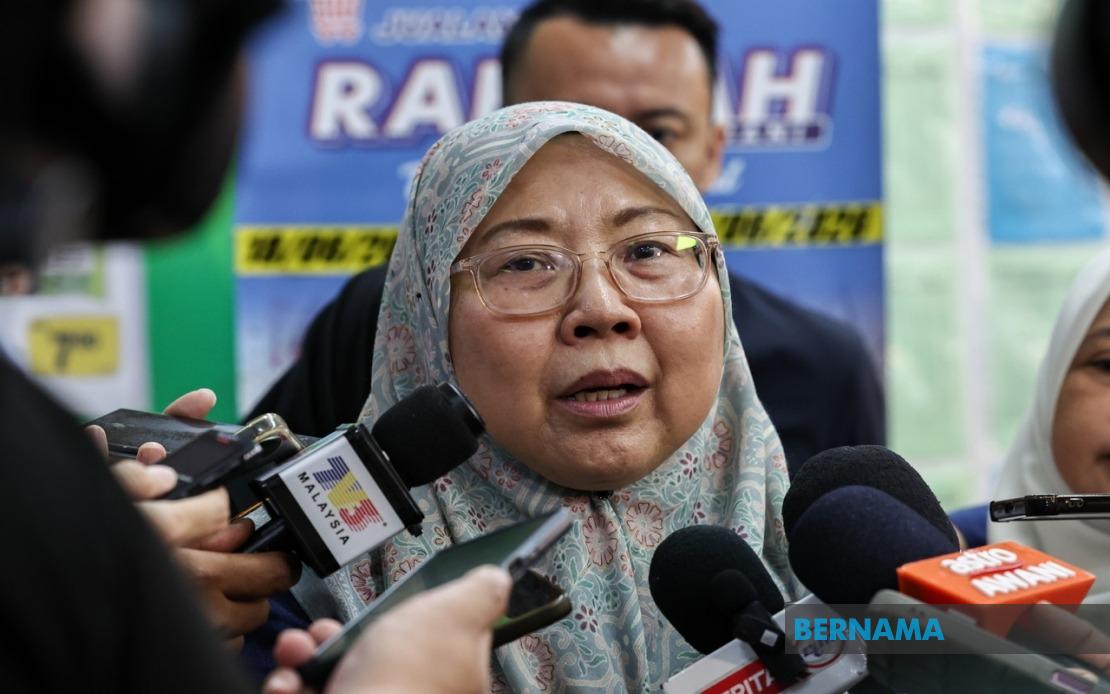
PKR has moved to the final stages of assembling its campaign teams for simultaneous state elections in Johor and Negeri Sembilan, with party secretary-general Datuk Dr Fuziah Salleh announcing that the candidate selection process is 99 per cent complete. The formal unveiling of the party's full roster is anticipated within the coming days, marking the culmination of months of internal consultation and negotiation across the reform coalition.
The party's strategy reflects a deliberate balancing act aimed at appealing across demographic lines. PKR will contest 20 state seats in Johor and 16 seats in Negeri Sembilan, with leadership promising a judicious blend of seasoned party veterans and political newcomers. The incoming cohort will include enhanced representation of female candidates and younger aspirants, though the exact proportion of fresh faces remains undisclosed pending the formal announcement. This composition signals PKR's attempt to project both stability through experienced representatives and dynamism through emerging voices.
For Malaysian readers, the timing carries significance given the shifting political landscape in both states. Johor, historically a Barisan Nasional fortress with its 56-seat legislature, saw BN hold 40 seats before dissolution on June 1. Pakatan Harapan controlled 12 seats, with smaller representation from Perikatan Nasional and MUDA. The Election Commission has scheduled nomination day for June 27, with polling set for July 11. Negeri Sembilan presents a more competitive terrain, with the 36-seat assembly previously divided between PH's 17 seats, BN's 14, and PN's five. That state will vote on August 1, following nominations on July 18.
Underlying these candidate announcements are the mechanical complexities of coalition politics, particularly within the Pakatan Harapan framework. A constituency-level dispute between PKR and its component ally Amanah over the Puteri Wangsa seat in Johor has emerged as the most visible stumbling block. Johor Amanah's vice chairman Dr Zuhan Zain has contested PKR's claims to the seat, arguing that Amanah holds legitimate interests despite its transfer to MUDA during the 2022 state election. Rather than definitively resolving the matter at organisational level, PKR has elevated the dispute to the coalition's highest decision-making bodies, a procedurally cautious approach that preserves both parties' positions while delaying public confrontation.
This approach reflects broader patterns of tension within Pakatan Harapan, which has struggled to maintain unity across competing territorial and ideological claims. The coalition's fortunes vary dramatically by state: in Johor, it faces an uphill battle against entrenched BN dominance, while in Negeri Sembilan, the previous seat distribution suggests a more evenly contested environment. Managing these divergent electoral landscapes while maintaining coalition cohesion requires careful choreography of candidate announcements and seat allocations.
Another significant issue occupies PKR's disciplinary apparatus: the status of Subang MP Wong Chen, who has provoked internal controversy by publicly challenging the party to expel him following a disciplinary investigation. This unusual confrontation, wherein a party official demands his own removal, signals deeper ideological or organisational friction within the party. PKR has now referred the matter to its formal Disciplinary Board for adjudication, effectively removing the matter from public discourse while maintaining procedural legitimacy. How the board handles this challenge will carry implications for party discipline and internal debate norms.
The two state elections will constitute the most significant electoral tests for Pakatan Harapan since the 2023 general election, offering voters a direct comparison of coalition governance in different contexts. Johor's election particularly matters symbolically: as the birthplace of UMNO and a perennial BN stronghold, any gains by the opposition would signal shifting voter sentiment in traditionally conservative heartland territories. Negeri Sembilan, conversely, represents terrain where PH has demonstrated competitive capability, and losses there would suggest erosion of the coalition's support.
From a Southeast Asian perspective, these elections contribute to Malaysia's broader democratic rhythm, demonstrating the ongoing vitality of competitive politics despite occasional concerns about institutional stability. The candidate announcement process itself, with its emphasis on transparency timelines and coalition coordination, reflects institutional maturation in how Malaysian political organisations manage succession and renewal across multiple levels simultaneously.
The candidacy announcements also carry implications for political entrepreneurship and renewal within PKR specifically. The promised integration of younger and female candidates suggests the party recognises demographic shifts in voter composition and seeks representation that reflects such changes. Whether these new entrants ultimately compete effectively against experienced BN incumbents will partly determine whether the candidate strategy translates into electoral success. Previous elections have shown that candidate quality and local credibility matter enormously, particularly in rural constituencies where personal networks and community standing carry decisive weight.
As the announcement day approaches, both Pakatan Harapan and its rivals will scrutinise the final candidate lists for clues about strategic priorities, relative strength in specific constituencies, and potential flashpoints. The resolution of the Puteri Wangsa dispute and the Wong Chen disciplinary matter through formal channels suggests PKR leadership is attempting to project organisational discipline while managing component party sensitivities. However, unresolved tensions risk emerging during the campaign phase if aggrieved factions believe decisions were taken unfairly. The coming weeks will clarify whether PKR's internal processes generate sufficient buy-in for a cohesive electoral campaign.


%22%2F%3E%3C%2Fpattern%3E%3C%2Fdefs%3E%3Crect%20width%3D%22100%25%22%20height%3D%22100%25%22%20fill%3D%22url(%23ph2hy9vg)%22%2F%3E%3Crect%20width%3D%22100%25%22%20height%3D%22100%25%22%20fill%3D%22url(%23ph2hy9vp)%22%2F%3E%3Ctext%20x%3D%2250%25%22%20y%3D%2250%25%22%20text-anchor%3D%22middle%22%20dominant-baseline%3D%22central%22%20fill%3D%22rgba(255%2C255%2C255%2C0.95)%22%20font-family%3D%22Georgia%2C%20'Times%20New%20Roman'%2C%20serif%22%20font-weight%3D%22700%22%20font-size%3D%22272%22%20letter-spacing%3D%22-0.02em%22%3EAnwar%3C%2Ftext%3E%3C%2Fsvg%3E)