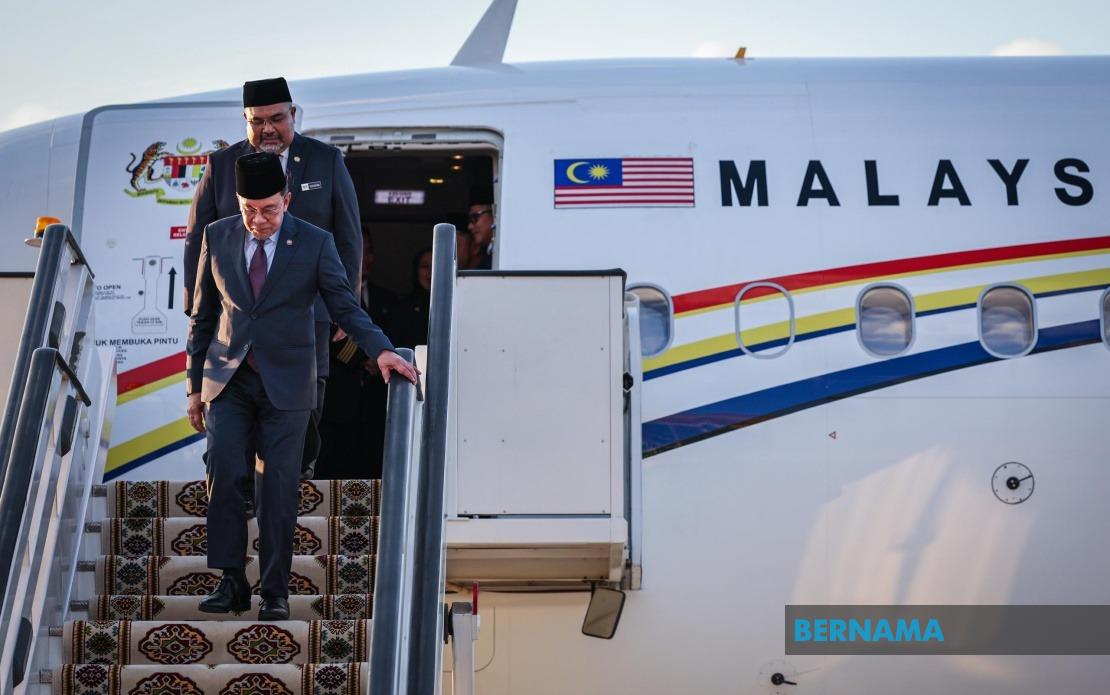
Prime Minister Datuk Seri Anwar Ibrahim touched down in Ashgabat on Tuesday evening after completing a working visit to Russia's Tatarstan region, marking a significant expansion of Malaysia's diplomatic engagement across Central Asia. The aircraft arrived at Ashgabat International Airport at 8 pm local time, carrying the Prime Minister alongside a delegation that included Minister of Investment, Trade and Industry Datuk Seri Johari Abdul Ghani and Minister of Economy Akmal Nasrullah Mohd Nasir, signalling the economic emphasis of this particular engagement.
The two-day official visit, running through June 19, comes at the formal invitation of Turkmenistan President Serdar Berdimuhamedov and fulfils a reciprocal obligation following Berdimuhamedov's trip to Malaysia in December 2024. For Malaysia, this represents a historic moment—Anwar's arrival marks the first occasion an incumbent Prime Minister has made an official visit to Turkmenistan, though Malaysian leaders have made four previous visits to the Central Asian nation. The delegation's composition, emphasising trade and investment portfolios, underscores Kuala Lumpur's intent to deepen commercial ties with this energy-rich neighbour.
Turkmenistan, despite its geographic remoteness from Southeast Asia, occupies a strategically important position in Malaysia's Central Asian strategy. In 2025, the country ranked as Malaysia's fourth-largest trading partner within Central Asia, a standing that reflects the economic substance beneath the diplomatic courtesies. Bilateral trade totalled RM75.80 million, with Malaysian exports reaching RM75.50 million—a nine per cent increase year-on-year, suggesting growing momentum in commercial activity. These figures, while modest in global terms, demonstrate the trajectory of an expanding relationship and the potential for deepened commercial partnerships in the coming years.
The investment dimension of Malaysia-Turkmenistan relations assumes particular significance given Petronas's substantial presence in the country. National oil company Petroliam Nasional Bhd has accumulated investments totalling RM52.73 billion in Turkmenistan since 1996, making the energy sector the cornerstone of bilateral economic engagement. This three-decade investment history reflects the strategic importance both nations place on energy cooperation and provides a foundation upon which Anwar's visit can build, potentially discussing expansion opportunities and addressing any operational or policy considerations affecting these substantial interests.
The schedule for Wednesday, June 19, encapsulates the formal architecture of diplomatic engagement. Proceedings commence with a welcoming ceremony at the Presidential Palace, where Berdimuhamedov will formally receive Anwar. The centrepiece of the visit—a one-on-one meeting between the two leaders—will afford both governments opportunity for substantive discussion on bilateral matters, regional developments, and strategic priorities. The planned bilateral talks will explore avenues for enhanced cooperation across economic, energy, and political dimensions, while the signing of a joint statement and exchange of agreements will crystallise commitments and establish frameworks for future collaboration.
Beyond the governmental formalities, Anwar's itinerary incorporates cultural and community dimensions that reflect Malaysia's broader approach to Central Asian engagement. His attendance at Friday prayers at the Turkmenbashi Ruhy Mosque, commonly referred to as the Gypjak Mosque, symbolises respect for Turkmen religious and cultural practices while affirming Malaysia's identity as a Muslim-majority nation. Similarly, his scheduled meeting with Malaysian diaspora members and friends of Malaysia cultivates people-to-people connections that sustain long-term diplomatic relationships beyond government-to-government transactions. These softer elements of diplomatic engagement often prove crucial in building sustained bilateral rapport.
The Malaysia-Turkmenistan Forum, to be jointly officiated by both leaders at the Chamber of Commerce and Industry of Turkmenistan, represents a key platform for private sector engagement. Such forums typically facilitate business networking, investment discussions, and commercial relationship-building between Malaysian and Turkmen enterprises. Anwar's participation signals government commitment to supporting commercial expansion and demonstrates that bilateral relations extend meaningfully beyond state-to-state interactions. For Malaysian companies seeking opportunities in Central Asian energy, logistics, and trading sectors, presidential-level endorsement of such forums provides valuable validation and encourages private sector participation.
Anwar's dual role as Prime Minister and Finance Minister adds particular weight to this visit. His personal presence in Ashgabat underscores Malaysian government commitment to deepening economic ties and signals that investment and trade expansion in Turkmenistan enjoys top-level priority. This dual portfolio positioning enables Anwar to address both governance and financial dimensions of bilateral relations simultaneously, facilitating more integrated discussions on investment frameworks, trade protocols, and financial cooperation mechanisms. For Turkmen officials, engaging with Malaysia's chief executive and finance minister in tandem simplifies decision-making processes and accelerates potential agreement-reaching.
Central Asia remains relatively peripheral to Malaysian foreign policy attention, which typically concentrates on Southeast Asian regional dynamics, major global powers, and Middle Eastern affairs. Nevertheless, Turkmenistan's strategic position along ancient silk road networks, combined with its considerable hydrocarbon reserves and geographic bridge between East and West, justifies sustained Malaysian engagement. The Caspian region's energy resources remain geopolitically significant, and Malaysia's decades-long Petronas involvement positions the nation as an established stakeholder in regional energy development rather than a newcomer seeking quick entry.
This visit emerges during broader Malaysian efforts to establish balanced relationships across multiple regions and power centres. Recent visits to Russia's Tatarstan region complement this Central Asian push, while maintaining Malaysia's historical emphasis on Southeast Asian leadership and engagement with major global powers including China, the United States, and India. By conducting high-level visits across Central Asia, Anwar's government demonstrates commitment to multidirectional foreign policy that prioritises Malaysian interests across diverse geographic and geopolitical contexts rather than concentrating attention narrowly on traditional partners.
The timing of this visit, following Berdimuhamedov's December 2024 Malaysian sojourn, reflects accelerating diplomatic tempo and suggests both nations perceive mutual benefit in closer engagement. For Malaysia, expanded Central Asian relationships offer alternative trade routes, investment diversification, and potential partnerships in energy security. For Turkmenistan, Malaysia represents a respected Southeast Asian voice, Petronas expertise in energy development, and a gateway to broader Asian markets. These complementary interests provide the foundation for sustained bilateral engagement extending well beyond Anwar's current visit.

%22%2F%3E%3C%2Fpattern%3E%3C%2Fdefs%3E%3Crect%20width%3D%22100%25%22%20height%3D%22100%25%22%20fill%3D%22url(%23ph2hy9vg)%22%2F%3E%3Crect%20width%3D%22100%25%22%20height%3D%22100%25%22%20fill%3D%22url(%23ph2hy9vp)%22%2F%3E%3Ctext%20x%3D%2250%25%22%20y%3D%2250%25%22%20text-anchor%3D%22middle%22%20dominant-baseline%3D%22central%22%20fill%3D%22rgba(255%2C255%2C255%2C0.95)%22%20font-family%3D%22Georgia%2C%20'Times%20New%20Roman'%2C%20serif%22%20font-weight%3D%22700%22%20font-size%3D%22272%22%20letter-spacing%3D%22-0.02em%22%3EAnwar%3C%2Ftext%3E%3C%2Fsvg%3E)