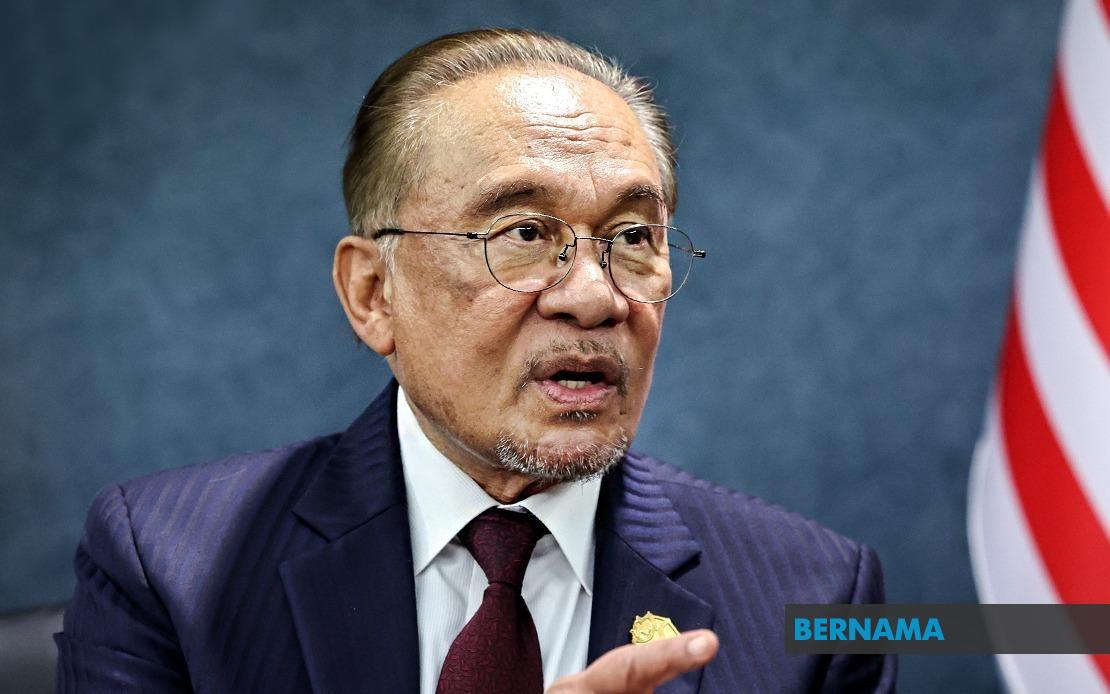
Prime Minister Datuk Seri Anwar Ibrahim delivered an address at the ASEAN-Russia Business Forum in Kazan, the capital of Russia's Republic of Tatarstan, participating in ceremonies surrounding the ASEAN-Russia Commemorative Summit. The forum, held at Kazan IT Park and hosted in conjunction with broader commemorative activities, brought together senior business figures and government representatives from across the ten-member ASEAN bloc alongside Russian counterparts. Anwar, who carries the dual responsibility of Finance Minister, was welcomed by Ilya Nachvin, Minister of Digitalisation of Public Administration, Information Technologies and Communications of the Republic of Tatarstan.
The timing of the summit holds particular symbolic weight, coinciding with the 35th anniversary of formalised dialogue between ASEAN and Russia, a milestone reflecting three decades of diplomatic evolution and deepening ties across multiple domains. This commemorative gathering underscores the significance both regional groupings place on their relationship, which has progressively broadened since its inception in 1991 when preliminary dialogue channels first opened. The elevation of ties to a Strategic Partnership in 2018, following Russia's designation as a full ASEAN Dialogue Partner in 1996, demonstrates a sustained commitment to cooperation spanning political and security matters, economic collaboration, and cultural exchange.
Kazan itself carries historic resonance as a venue for this engagement, positioned at the junction of the Volga and Kazanka rivers approximately 800 kilometres east of Moscow. The city, home to roughly 1.3 million residents, frequently earns characterisation as Russia's "third capital" following Moscow and St Petersburg, reflecting its status as a major urban and cultural centre. More significantly for an ASEAN gathering, Kazan functions as a principal custodian of Islamic heritage within Russia, with a millennium-spanning history woven through with Muslim cultural expression and architectural landmarks. This positioning as a bridge between the Russian and Muslim-majority worlds made it a particularly apt selection for discussions between Moscow and a regional bloc containing significant Muslim populations.
Beyond ceremonial engagements, the forum structure reflected substantive economic interests underlying the partnership. Anwar subsequently attended the ASEAN-Russia Commemorative Summit Gala Dinner held at the Tatar State Academic Theater, where he also participated in a courtesy call with Russian President Vladimir Putin. These interactions emphasised the highest echelon of diplomatic engagement, positioning the relationship within frameworks of strategic importance to both sides rather than routine bilateral courtesy.
The economic dimensions underlying this engagement merit close examination for Malaysian policymakers and business communities. During 2024, aggregate trade between ASEAN and Russia reached USD18.1 billion, demonstrating substantial commercial flows despite geopolitical complexities affecting global commerce. Russian foreign direct investment into ASEAN economies totalled USD92.97 million, equivalent to RM367.90 million, indicating Moscow's recognition of growth opportunities within Southeast Asia's dynamic markets. While the FDI figure remains relatively modest compared to flows from other major economies, the directional trend and commitment to participation in regional economic structures carries implications for diversification of investment sources.
For Malaysia specifically, the Russia relationship occupies noteworthy standing within the broader European trading architecture. Russia ranked as Malaysia's ninth-largest European trading partner in 2025, with bilateral commerce valued at RM8.72 billion, or USD2.04 billion in annualised terms. This positioning reflects sustained commercial engagement across sectors and demonstrates Russia's continued economic relevance to Malaysian businesses despite international tensions affecting other trading relationships. The bilateral trade composition reveals distinct comparative advantages: Malaysia directs electrical and electronic products, machinery components, equipment parts, and processed food exports toward Russian markets, while relying on Russian suppliers for petroleum products, mineral resources, chemicals, and chemical-based manufacturing inputs.
This trade structure carries strategic implications extending beyond simple commercial exchange. Malaysia's reliance on Russian petroleum and mineral inputs highlights the interdependencies characterising modern global commerce, where sanctions regimes or supply disruptions carry tangible consequences for downstream manufacturers and consumers. Concurrently, Malaysian export strengths in electronics and machinery components reflect the country's positioning within global technology and manufacturing supply chains, offering Russian buyers value-added products rather than raw materials alone. The food products component adds a consumer-facing dimension, reaching Russian households and reflecting growing dietary preferences within Russian markets for Southeast Asian cuisine and agricultural products.
ASEAN's strategic approach toward Russia, facilitated through frameworks like the commemorative summit, serves broader regional interests in maintaining diverse diplomatic relationships and preserving engagement across ideological or geopolitical divides. Malaysia's active participation through Anwar's presence and participation in high-level discussions signals its commitment to ASEAN cohesion in managing external relations. This proves particularly significant given Malaysia's historical role within ASEAN as a diplomatic interlocutor and voice for balanced engagement with major powers. The emphasis on dialogue and partnership frameworks rather than alignment with particular blocs reflects ASEAN's foundational principle of non-alignment and flexible diplomacy.
The business forum component carries additional significance by focusing attention on commercial opportunities and economic cooperation rather than security competition or geopolitical rivalries. By creating structured platforms for business-to-business engagement and government facilitation of commercial connections, both ASEAN and Russia signal commitment to sustaining economic relationships despite the broader international environment. For Malaysian enterprises, such forums provide visibility into Russian market opportunities, regulatory environments, and partnership possibilities with Russian counterparts. Similarly, Russian investors gain exposure to ASEAN's growth dynamics and investment climate.
Looking forward, the commemorative summit's focus on partnership evolution raises questions about trajectory and scope expansion. The 35-year anniversary provides opportunity for stakeholders to assess whether existing cooperation mechanisms adequately address contemporary challenges—whether climate transition, digital economy transformation, or supply chain resilience following pandemic and geopolitical disruptions. For Malaysia and other ASEAN members, the Russia relationship exists within a portfolio of great power engagement that includes China, the United States, India, Japan, and European Union members. Managing these multiple relationships while maintaining ASEAN centrality and coherence represents an ongoing diplomatic challenge addressed partly through forums like the commemorative summit.
The economic data indicates room for expansion in ASEAN-Russia cooperation, with trade and investment flows remaining modest relative to the regions' combined economic output and populations. Initiatives promoting sectoral cooperation, investment incentives, or value-chain integration could unlock greater mutual benefit. For Malaysian stakeholders particularly, deeper engagement in energy security, manufacturing partnerships, and technology collaboration could enhance economic resilience and diversify risk. The prime ministerial attendance and high-level participation underscore Malaysia's commitment to exploring these possibilities within the ASEAN framework, positioning the country as an active contributor to regional diplomatic and commercial engagement strategies.

%22%2F%3E%3C%2Fpattern%3E%3C%2Fdefs%3E%3Crect%20width%3D%22100%25%22%20height%3D%22100%25%22%20fill%3D%22url(%23ph2hy9vg)%22%2F%3E%3Crect%20width%3D%22100%25%22%20height%3D%22100%25%22%20fill%3D%22url(%23ph2hy9vp)%22%2F%3E%3Ctext%20x%3D%2250%25%22%20y%3D%2250%25%22%20text-anchor%3D%22middle%22%20dominant-baseline%3D%22central%22%20fill%3D%22rgba(255%2C255%2C255%2C0.95)%22%20font-family%3D%22Georgia%2C%20'Times%20New%20Roman'%2C%20serif%22%20font-weight%3D%22700%22%20font-size%3D%22272%22%20letter-spacing%3D%22-0.02em%22%3EAnwar%3C%2Ftext%3E%3C%2Fsvg%3E)