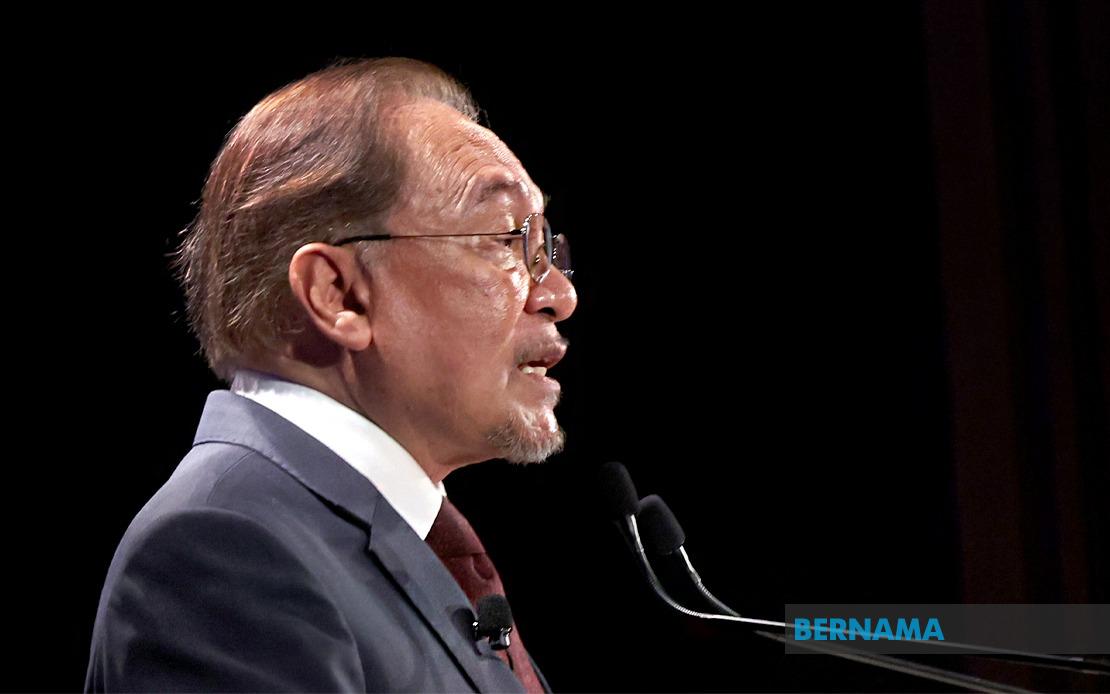
Prime Minister Datuk Seri Anwar Ibrahim's final day in Turkmenistan on June 19 is set to be consumed by a succession of high-level bilateral engagements within the capital city of Ashgabat, the Central Asian nation positioned along the Caspian Sea's eastern shoreline. The itinerary reflects the strategic importance Kuala Lumpur places on deepening its relationship with a key energy partner and emerging trade hub in a region where Malaysian interests have been steadily expanding.
The morning session will commence with a formal reception ceremony orchestrated by Turkmenistan President Serdar Berdimuhamedov at the Presidential Palace, followed by a one-on-one consultation between the two leaders. This private meeting typically allows for candid discussions on sensitive matters before broader bilateral negotiations commence. The structured approach of commencing with an exclusive dialogue demonstrates the diplomatic protocol both nations observe when engaging at the highest executive level.
Following the private audience, the two leaders will progress to a full bilateral meeting where substantive negotiations will occur. During this engagement, both governments are anticipated to execute a joint communiqué alongside several pivotal bilateral instruments. The scope of anticipated cooperation spans multiple economic and strategic domains, including merchandise trade and capital flows, hydrocarbon extraction and refining, agricultural production and commodity trading, renewable and conventional energy sectors, tourism infrastructure development, educational partnerships, information technology advancement, and scientific research collaboration. The breadth of these engagement areas underscores Malaysia's intent to position itself as a multifaceted partner rather than one focused solely on energy commerce.
Regional geopolitics will also feature prominently in discussions, with both capitals expected to exchange perspectives on developments affecting the Association of Southeast Asian Nations and the broader Central Asian landscape. For Malaysia, such exchanges are invaluable in articulating ASEAN's position on critical regional matters whilst simultaneously understanding Turkmenistan's strategic calculations in an increasingly multipolar environment. The discussions will likely touch upon trade corridors, regional stability, and shared interests in combating transnational challenges.
A sequence of multilateral agreements will be formalised during the official ceremonies. An Air Services Agreement between the two nations' aviation authorities will facilitate enhanced connectivity, potentially opening new commercial flight routes and reducing travel friction for business communities and tourists. Concurrently, the foreign ministries of both countries will execute a memorandum of understanding to strengthen institutional collaboration through their diplomatic academic institutions. Additionally, Malaysia's Ministry of Transport will sign an accord with Turkmenistan's state transport authority, signalling intentions to expand cooperation in logistics, infrastructure, and maritime commerce.
Scientific collaboration will receive formal recognition through an MoU binding Malaysia's Academy of Sciences with its Turkmenistan counterpart. This instrument facilitates researcher exchanges, joint research initiatives, and knowledge dissemination in fields ranging from materials science to biotechnology. Given the Central Asian nation's significant mineral wealth and energy resources, scientific partnerships offer pathways for Malaysian institutions to access unique research opportunities whilst contributing expertise in technology transfer and industrial applications.
Oil and gas represents perhaps the most commercially consequential dimension of the bilateral relationship. Multiple documents addressing this sector will be exchanged, reflecting Petronas' substantial presence within Turkmenistan's hydrocarbon economy. The national oil company's cumulative investment exceeding RM52.73 billion since 1996 positions it as one of the largest foreign investors in the country. These agreements will likely address operational frameworks, revenue-sharing arrangements, and future exploration or development initiatives within Turkmenistan's energy zones.
The ceremonial components will include a state luncheon hosted by President Berdimuhamedov at the Presidential Palace, offering an occasion for informal relationship-building alongside formal diplomatic discourse. Following lunch, Prime Minister Anwar will undertake Friday prayers at the Turkmenbashi Ruhy Mosque, a gesture that acknowledges Turkmenistan's Islamic heritage and demonstrates respect for local customs and religious practices, an important dimension of diplomatic engagement in Muslim-majority nations.
The Malaysia-Turkmenistan Forum, jointly inaugurated by both leaders at the Chamber of Commerce and Industry of Turkmenistan, will convene business delegations from both nations. This platform permits entrepreneurs, investors, and industry stakeholders to identify partnership opportunities, exchange market insights, and forge commercial relationships beyond governmental channels. For Malaysian enterprises seeking entry into Central Asian markets, such forums provide invaluable intelligence and networking infrastructure.
Turkmenistan's 2025 position as Malaysia's fourth-largest trading partner among Central Asian economies demonstrates the relationship's economic substance. Bilateral commerce totalling RM75.80 million, predominantly composed of Malaysian exports valued at RM75.50 million, reflects a 9 per cent year-on-year increase, indicating strengthening commercial momentum. This growth trajectory suggests that both governments' diplomatic investments are translating into tangible economic outcomes.
Ashgabat itself represents a remarkable urban achievement, holding the Guinness World Record for the world's highest concentration of white marble-clad structures, with over 500 buildings adorned in this distinctive material. The city's monumental architecture, featuring extensive gold-leaf embellishments and exceptionally wide, immaculately maintained thoroughfares, projects an image of prosperity and modernisation. This physical landscape serves as a backdrop for bilateral engagement and subtly communicates Turkmenistan's development aspirations to visiting dignitaries.
Prime Minister Anwar's delegation encompasses Minister of Investment, Trade and Industry Datuk Seri Johari Abdul Ghani and Minister of Economy Akmal Nasrullah Mohd Nasir, alongside supporting officials from the Prime Minister's Office and Foreign Ministry. The composition of this entourage reflects Malaysia's integrated approach to foreign economic engagement, with representation from investment promotion and economic management portfolios alongside diplomatic and protocol expertise. This concluding press conference with Malaysian media will provide opportunity to articulate key outcomes and message these developments to domestic constituencies invested in Malaysia's Central Asian strategy.

%22%2F%3E%3C%2Fpattern%3E%3C%2Fdefs%3E%3Crect%20width%3D%22100%25%22%20height%3D%22100%25%22%20fill%3D%22url(%23ph2hy9vg)%22%2F%3E%3Crect%20width%3D%22100%25%22%20height%3D%22100%25%22%20fill%3D%22url(%23ph2hy9vp)%22%2F%3E%3Ctext%20x%3D%2250%25%22%20y%3D%2250%25%22%20text-anchor%3D%22middle%22%20dominant-baseline%3D%22central%22%20fill%3D%22rgba(255%2C255%2C255%2C0.95)%22%20font-family%3D%22Georgia%2C%20'Times%20New%20Roman'%2C%20serif%22%20font-weight%3D%22700%22%20font-size%3D%22272%22%20letter-spacing%3D%22-0.02em%22%3EAnwar%3C%2Ftext%3E%3C%2Fsvg%3E)