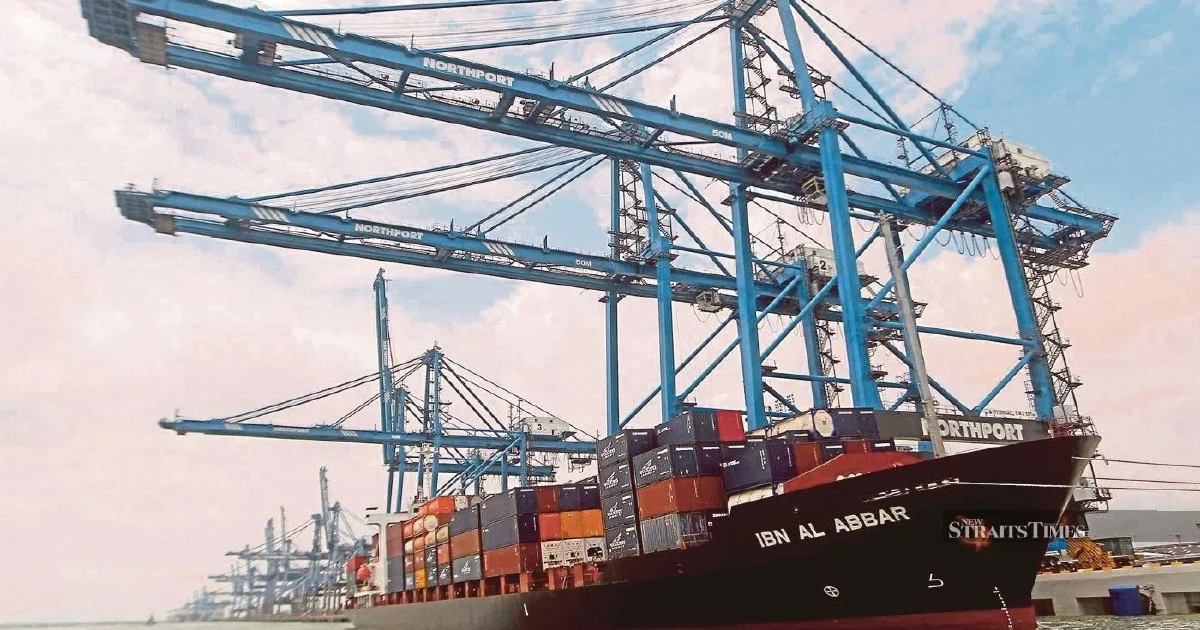
Malaysia's ambitions to expand its premier container handling facility could accelerate significantly this year, Transport Minister Anthony Loke said, contingent upon resolving land acquisition complexities with the Selangor state government. Speaking in Port Klang, Loke expressed confidence that the Port Klang 3 initiative remains fundamentally sound and capable of advancing to the construction phase imminently, assuming bureaucratic hurdles surrounding property acquisition are overcome promptly.
The Port Klang 3 development represents a substantial investment in upgrading the nation's maritime infrastructure. As Southeast Asia's bustling shipping hub contends with growing containerised trade flows, particularly following the region's emergence as a manufacturing and logistics epicentre, port capacity expansion has become strategically imperative. The proposed facility would substantially augment the throughput capabilities of Klang Port, currently straining under record containerised cargo volumes that have intensified following global supply chain rebalancing.
Loke's comments underscore the technical readiness of the project and its alignment with broader infrastructure development ambitions outlined in successive national economic blueprints. The initiative has undergone extensive planning, environmental assessment, and feasibility analysis. Project architects and port authorities have completed preliminary engineering work and financial structuring. These preparatory stages typically consume years of methodical groundwork; their completion signals that the venture has transitioned from conceptual phases into immediate pre-construction readiness.
However, the minister's conditional language reveals that land-related impediments currently occupy centre stage in project sequencing. Port expansion projects in Malaysia frequently encounter complications involving title verification, stakeholder compensation, and inter-agency coordination. Selangor state authorities maintain jurisdiction over terrestrial property matters adjacent to and supporting port operations. Reconciling federal port authority requirements with state-level land governance frameworks demands sustained negotiation and mutual accommodation between multiple government entities.
These land challenges are not anomalous within Malaysia's port development trajectory. Precedent exists in various port projects where acquisition complexities substantially delayed construction commencement despite technical and financial readiness. The Port Klang 3 development would require securing adjoining parcels for terminal facilities, operational infrastructure, and supporting logistics networks. Some properties may involve private stakeholders requiring acquisition or compensation arrangements, further complicating timelines and necessitating administrative patience.
For Malaysia's shipping industry and port-dependent manufacturers, accelerating Port Klang 3 realisation carries substantial consequences. Container volumes transiting through Malaysia reflect the nation's positioning within regional trade networks and its competitiveness as a transshipment destination. Port capacity constraints translate directly into operational inefficiencies, vessel waiting times, and elevated logistics costs that ultimately compress profit margins across manufacturing, trading, and distribution sectors. Regional competitors in Singapore, Thailand, and Indonesia continuously invest in port infrastructure; Malaysia's capacity limitations risk gradually eroding market share to better-equipped rivals.
The timing of Loke's announcement carries economic significance given Malaysia's broader infrastructure development objectives. The government has prioritised infrastructure spending as a means of stimulating domestic demand and attracting foreign direct investment. Port Klang 3 aligns with this policy framework while simultaneously addressing operational bottlenecks that constrain existing economic activity. Construction commencement would generate employment in project implementation, engineering, and logistics sectors whilst supplying contract opportunities for domestic businesses and suppliers.
Singapore's port authorities, operating Southeast Asia's busiest container terminal complex, process approximately 37 million TEU annually through multiple facilities, underscoring the commercial significance of adequate capacity. Port Klang's volumes have climbed steadily but remain constrained by existing infrastructure limitations. Port Klang 3 would expand system capacity and potentially enhance Malaysia's attractiveness to shipping lines contemplating service routing decisions and transshipment hub assignments, generating broader economic ripple effects across trading enterprises and logistics providers dependent upon efficient port operations.
International shipping dynamics compound the urgency of Malaysian port expansion. The Strait of Malacca constitutes one of global commerce's critical arteries, with approximately one-third of world maritime trade traversing these waters annually. Containerised cargo shipments linking Asian manufacturers to global markets disproportionately concentrate through Malaysian port facilities. Supply chain vulnerabilities exposed during recent international disruptions have prompted multinational enterprises to reconsider logistics strategies and regional hub positioning, potentially benefiting Malaysian ports capable of offering reliable, efficient handling services backed by adequate infrastructure.
The minister's cautious optimism reflects practical realism regarding project execution challenges inevitable within Malaysia's complex governance environment. Government investment projects frequently encounter delays despite technical soundness and financial viability, primarily through land acquisition difficulties, environmental approval processes, and inter-agency coordination complexities. Loke's emphasis on resolving land matters suggests that project managers have identified this as the critical path item most substantially constraining progress. Prioritising this particular obstruction could theoretically unleash downstream activities and enable rapid construction advancement once resolved.
Stakeholders monitoring port development should anticipate continued dialogue between federal transport authorities and Selangor state government during coming weeks and months. The resolution pace of land disputes will fundamentally determine whether Port Klang 3 commences construction within the current calendar year as Loke suggested, or experiences deferral into subsequent years. Shipping lines, logistics operators, and manufacturing enterprises dependent upon port capacity efficiency maintain significant interest in acceleration timelines. Conversely, private landholders affected by acquisition proceedings and environmental stakeholders warrant consideration throughout negotiation processes shaping final project parameters.


%22%2F%3E%3C%2Fpattern%3E%3C%2Fdefs%3E%3Crect%20width%3D%22100%25%22%20height%3D%22100%25%22%20fill%3D%22url(%23ph2hy9vg)%22%2F%3E%3Crect%20width%3D%22100%25%22%20height%3D%22100%25%22%20fill%3D%22url(%23ph2hy9vp)%22%2F%3E%3Ctext%20x%3D%2250%25%22%20y%3D%2250%25%22%20text-anchor%3D%22middle%22%20dominant-baseline%3D%22central%22%20fill%3D%22rgba(255%2C255%2C255%2C0.95)%22%20font-family%3D%22Georgia%2C%20'Times%20New%20Roman'%2C%20serif%22%20font-weight%3D%22700%22%20font-size%3D%22272%22%20letter-spacing%3D%22-0.02em%22%3EAnwar%3C%2Ftext%3E%3C%2Fsvg%3E)