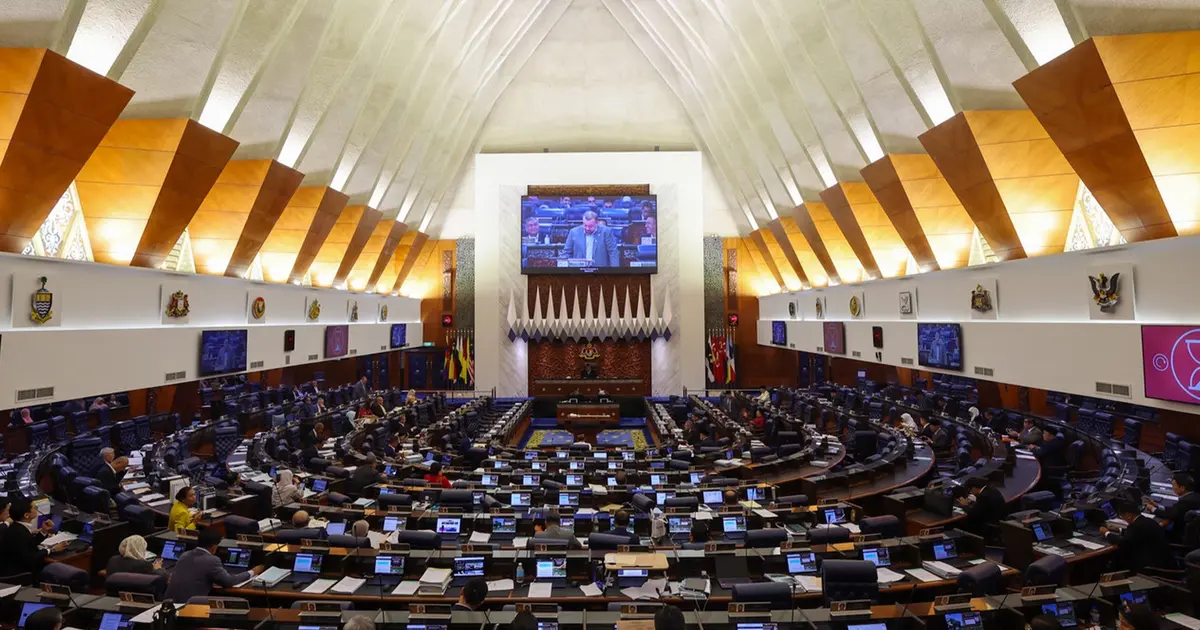
Malaysia's parliament is set to reconvene with legislation designed to fundamentally reshape the nation's highest political office once again on the agenda. Among four major bills scheduled for consideration during the upcoming Dewan Rakyat sitting beginning Monday, the constitutional measure imposing a 10-year ceiling on prime ministerial terms stands out as perhaps the most consequential for the country's democratic framework. The proposal represents a continued effort by lawmakers to institutionalise limits on executive power, an initiative that gained considerable traction following recent political upheaval but ultimately stumbled at a critical procedural juncture.
The prime ministerial tenure cap has become a focal point in contemporary Malaysian political discourse, reflecting broader anxieties about governance and the concentration of executive authority. Proponents argue that restricting any single individual to a decade in office would prevent excessive personalisation of power and encourage institutional continuity and predictability. The mechanism would theoretically ensure regular leadership transitions, potentially mitigating the risks of entrenched patronage networks and unchecked executive discretion that observers have attributed to previous administrations. By establishing a clear constitutional boundary, the bill would transform what currently remains a customary understanding into binding legal architecture.
During the previous parliamentary session when this identical measure was first introduced, lawmakers fell short of achieving the supermajority required to amend Malaysia's constitution. Constitutional amendments in Malaysia demand a two-thirds affirmative vote in the Dewan Rakyat, a demanding threshold designed to ensure substantive consensus rather than narrow partisan advantage. This procedural requirement reflected the framers' intention to prevent fundamental law from shifting with each electoral cycle, safeguarding constitutional stability against the tides of political competition. The earlier setback does not necessarily signal a lack of merit but rather highlights the mathematical and political complexities of securing such extraordinary majorities when the government's parliamentary position, coalition dynamics, and cross-party positions remain fluid.
The reintroduction of this legislation indicates sustained commitment from its sponsors to persist despite the initial reversal. Parliamentary dynamics have potentially shifted since the bill's previous consideration, with possible changes in member alignment, public sentiment, or coalition positioning that might alter the numerical prospects this time. The fact that supporters deemed the issue sufficiently important to advance it anew demonstrates confidence that conditions for passage may have improved, or at least that the political moment warrants another sustained push toward constitutional reform.
Beyond the prime ministerial term limit measure, parliament will address three additional bills of constitutional and legislative significance. While details of these companion measures remain less publicised than the headline tenure-cap proposal, their combined treatment suggests a comprehensive parliamentary agenda focused on institutional architecture and governance frameworks. Such clustering of major bills within a single sitting reflects either deliberate scheduling to concentrate debate on structural issues or the practical accumulation of pending legislation awaiting floor consideration.
The timing carries particular resonance for Malaysian observers tracking long-standing debates about executive accountability and institutional checks. Previous decades witnessed sustained criticism that prime ministers could potentially govern indefinitely absent death, retirement, or electoral defeat, concentrating patronage and decision-making authority across extended periods. This structural reality contributed to anxieties about governance quality, institutional independence, and the vulnerability of checks and balances to erosion through executive-led norm-breaking. By comparison, tenure-limited executive positions exist in many comparable democracies, including neighbouring Thailand and Indonesia, lending international precedent to the Malaysian reform effort.
For regional observers across Southeast Asia, Malaysia's constitutional amendment process carries broader significance. The region contains several democracies grappling with similar questions about executive limits, institutional balance, and governance durability. How Malaysia resolves the tension between supermajority requirements and substantive reform might offer instructive lessons for other nations navigating analogous constitutional challenges. The requirement for such overwhelming consensus, while protective against hasty change, can also create gridlock when reform commands majority but not supermajority support.
The failure to secure passage previously does not automatically doom the current effort, particularly if parliamentary arithmetic has shifted or if proponents have refined their legislative strategy. However, the two-thirds hurdle remains formidable, requiring careful coalition management and potentially bipartisan support from opposition benches. The nature of Malaysia's electoral system, where governing coalitions sometimes command narrow majorities, often makes such constitutional thresholds genuinely demanding rather than merely procedural.
Stakeholders across Malaysia's political spectrum will scrutinise proceedings closely as parliament reconvenes. Supporters of the term limit view passage as essential modernisation, while opponents may argue that constitutional rigidity regarding executive tenure could constrain democratic flexibility or that the threshold already reflects constitutional wisdom in protecting stability. The debate itself, regardless of outcome, will illuminate contemporary Malaysian thinking about power distribution, institutional design, and the balance between democratic adaptation and constitutional continuity in a maturing democracy.

%22%2F%3E%3C%2Fpattern%3E%3C%2Fdefs%3E%3Crect%20width%3D%22100%25%22%20height%3D%22100%25%22%20fill%3D%22url(%23ph2hy9vg)%22%2F%3E%3Crect%20width%3D%22100%25%22%20height%3D%22100%25%22%20fill%3D%22url(%23ph2hy9vp)%22%2F%3E%3Ctext%20x%3D%2250%25%22%20y%3D%2250%25%22%20text-anchor%3D%22middle%22%20dominant-baseline%3D%22central%22%20fill%3D%22rgba(255%2C255%2C255%2C0.95)%22%20font-family%3D%22Georgia%2C%20'Times%20New%20Roman'%2C%20serif%22%20font-weight%3D%22700%22%20font-size%3D%22272%22%20letter-spacing%3D%22-0.02em%22%3EAnwar%3C%2Ftext%3E%3C%2Fsvg%3E)