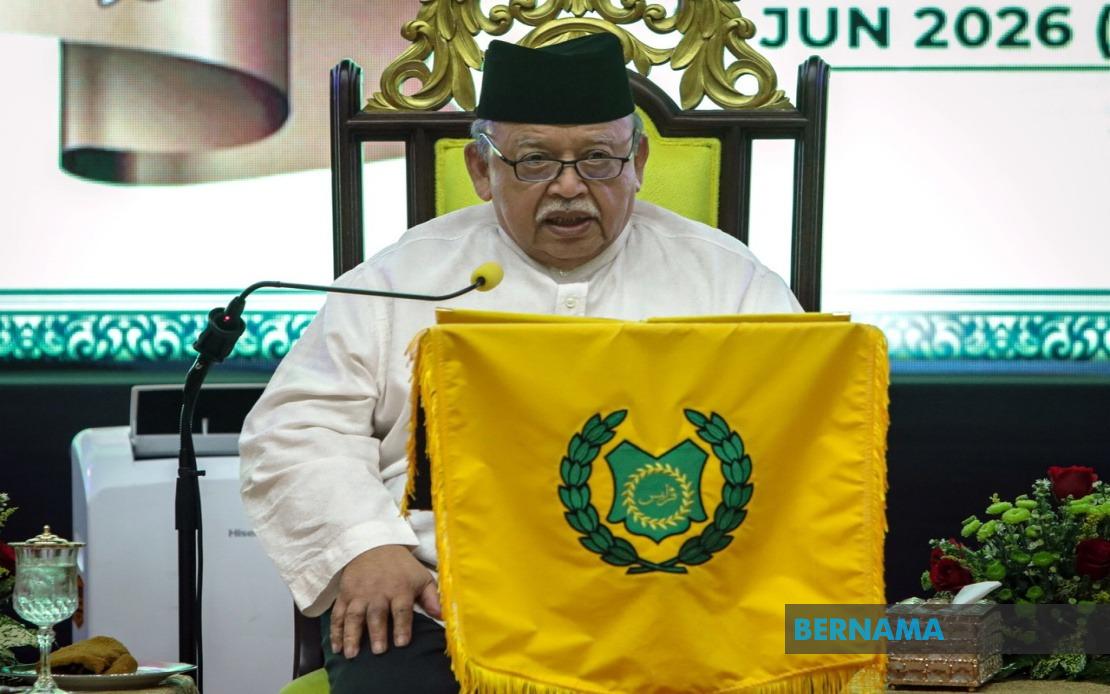
The Raja of Perlis, Tuanku Syed Sirajuddin Jamalullail, has delivered a forceful message about the foundations necessary for national progress, calling on Malaysians to ground their efforts in sincerity, ethical conduct, and a commitment to combating all manifestations of corruption. Speaking at the state-level Maal Hijrah 1448H/2026M celebration in Kangar on June 18, the Ruler articulated a vision of development that extends far beyond infrastructure and economic metrics, positioning character and integrity as essential pillars for societal advancement.
Tuanku Syed Sirajuddin's remarks represent a significant intervention in Malaysia's ongoing national conversation about what constitutes genuine progress. He argued that a state cannot achieve meaningful development unless its population demonstrates intellectual capacity, maintains strong moral principles, observes standards of civility, and sustains a sense of common purpose. This formulation challenges narrow definitions of progress that rely predominantly on quantifiable indicators of physical or economic growth, a perspective increasingly relevant in Southeast Asia as nations grapple with the consequences of rapid development that has sometimes proceeded without adequate attention to institutional quality or social cohesion.
Central to the Ruler's message is his reconceptualisation of what authentic MADANI progress entails. He insisted that true advancement cannot be assessed solely through the lens of physical infrastructure projects or GDP statistics. Instead, he proposed a holistic framework encompassing intellectual advancement, cultural refinement, the maturity of public discourse, and the robustness of ethical standards within society. This multidimensional approach aligns with contemporary governance literature emphasising that sustainable development requires institutional strength, human capital development, and a culture of accountability—elements often overlooked in conventional development indices.
The emphasis on viewing work as worship within an Islamic framework provides a particular Malaysian context to these universal principles of integrity and accountability. By connecting professional responsibility and ethical conduct to religious devotion, Tuanku Syed Sirajuddin offers religious grounding for anti-corruption efforts and institutional reforms, a message that resonates within Malaysia's Muslim-majority society whilst remaining applicable across religious communities. This approach recognises that in the Malaysian context, appeals anchored in religious values often carry particular weight in shaping public behaviour and institutional culture.
The Ruler specifically advocated for strengthening an authentic comprehension of Islam rooted in the Quran and Sunnah, positioning this alongside the preservation of sophisticated and civilised political discourse. This dual emphasis reflects an understanding that Malaysia's plural democracy requires both religious grounding and secular institutional maturity. The suggestion that these elements must develop in tandem rather than competition addresses a persistent tension in Malaysian public life between religious and secular frameworks of authority and legitimacy.
Tuanku Syed Sirajuddin also highlighted the necessity of developing the ummah—the Muslim community—across multiple dimensions: religious understanding, political participation, economic opportunity, and social welfare. This comprehensive vision moves beyond narrowly focused approaches to Islamic governance or economic policy, instead proposing that development must be integrated and multifaceted. For Malaysian policymakers, this framework suggests that siloed approaches to religious affairs, economic policy, or political reform may prove insufficient without coordination and coherence across these domains.
Particularly significant was the Ruler's explicit call for Malaysians to cultivate courage, intelligence, and self-reliance as defining characteristics of the Perlis people and, by extension, the Malaysian identity. These virtues represent active rather than passive dispositions, suggesting that communities must become agents of change rather than subjects of it. This rhetorical shift from dependency to autonomy carries implications for how Malaysians approach contemporary challenges, from technological disruption to global economic volatility.
The warning against remaining passive observers in the face of technological advancement and artificial intelligence reflects wider regional concerns about Malaysia's competitive positioning. Nations across Southeast Asia grapple with how to harness technological change without being overwhelmed by it, and Tuanku Syed Sirajuddin's exhortation that Malaysians become initiators and leaders rather than merely respondents to these transformations articulates an important strategic imperative. This message proves particularly timely given Malaysia's ongoing efforts to develop its digital economy and artificial intelligence capabilities.
Tuanku Syed Sirajuddin's remarks about confronting social transformation and international economic shifts acknowledge that governance in contemporary Malaysia must address forces beyond any single nation's borders. Regional trade dynamics, global technological disruption, and transnational social currents all shape the context within which Malaysian policy operates. His call for preparedness and proactive engagement reflects recognition that reactive governance approaches prove inadequate in such environments.
The presentation of the Perlis Tokoh Maal Hijrah award to Datuk Izham Mahmud of Yayasan Tuanku Syed Putra provided a concrete instantiation of these abstract principles, honouring someone whose work exemplifies the integration of religious commitment, social contribution, and institutional development that the Ruler advocated. Such recognition ceremonies serve not merely ceremonial functions but communicate values and priorities, signalling which contributions society particularly esteems.
The attendance of the Raja Muda and Raja Puan Muda of Perlis underscored that these messages about integrity and development constitute institutionalised commitments rather than momentary pronouncements. The presence of the royal family's next generation reinforces continuity of these principles across generations, a particularly important signal in monarchical systems where institutional stability and succession certainty support broader social confidence.
For observers across Southeast Asia and within Malaysia, Tuanku Syed Sirajuddin's remarks provide a royal endorsement for governance approaches emphasising institutional quality, human development, and ethical conduct as prerequisites for prosperity. In an era where many governments prioritise rapid economic expansion or infrastructure development, the Ruler's insistence on character, knowledge, and integrity as foundational elements of progress offers a different framework—one suggesting that sustainable advancement requires simultaneous development of human and institutional capabilities alongside physical and economic assets.

%22%2F%3E%3C%2Fpattern%3E%3C%2Fdefs%3E%3Crect%20width%3D%22100%25%22%20height%3D%22100%25%22%20fill%3D%22url(%23ph2hy9vg)%22%2F%3E%3Crect%20width%3D%22100%25%22%20height%3D%22100%25%22%20fill%3D%22url(%23ph2hy9vp)%22%2F%3E%3Ctext%20x%3D%2250%25%22%20y%3D%2250%25%22%20text-anchor%3D%22middle%22%20dominant-baseline%3D%22central%22%20fill%3D%22rgba(255%2C255%2C255%2C0.95)%22%20font-family%3D%22Georgia%2C%20'Times%20New%20Roman'%2C%20serif%22%20font-weight%3D%22700%22%20font-size%3D%22272%22%20letter-spacing%3D%22-0.02em%22%3EAnwar%3C%2Ftext%3E%3C%2Fsvg%3E)