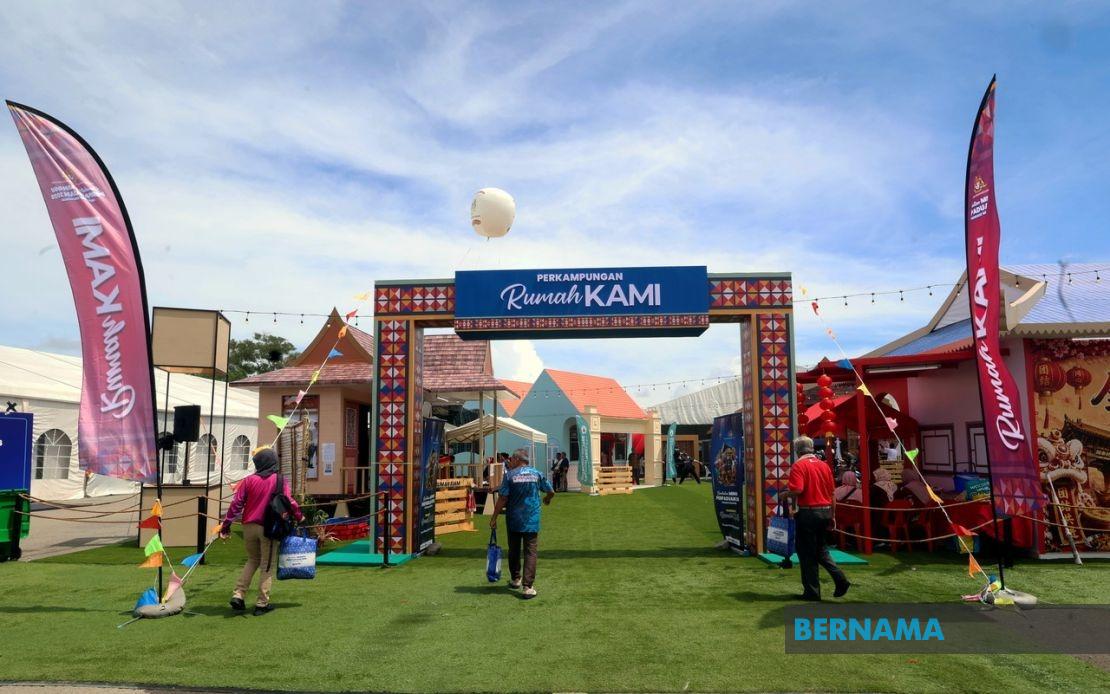
Kota Kinabalu's National Unity Week 2026 has shattered previous attendance records, drawing 284,448 visitors across four days in mid-June and demonstrating unprecedented public appetite for celebrating Malaysia's multifaceted cultural landscape. The June 11-14 event represents the strongest turnout since the Ministry of National Unity launched this national programme three years ago, signalling a meaningful shift in how Malaysians are engaging with platforms dedicated to intercommunal understanding and shared identity.
National Unity Minister Datuk Aaron Ago Dagang attributed the surge in attendance to a deepening recognition among Malaysians of how the country's rich tapestry of traditions, customs and ethnic identities serves as a foundation for social stability and collective strength. The minister's remarks underscore a strategic pivot within government messaging: unity is no longer presented merely as a political imperative but as an organic expression of Malaysian society's intrinsic diversity. This framing matters in a region where questions of national cohesion remain sensitive across Southeast Asia.
Three exhibition spaces emerged as clear crowd-drawers, each offering distinct entry points for visitors to engage with Malaysia's pluralistic heritage. The Ethnic Village presented immersive displays of daily life among the country's principal communities, allowing attendees to move beyond superficial stereotypes and witness authentic cultural practices. This hands-on approach proved particularly effective in translating abstract notions of unity into tangible, lived experiences that visitors could observe and absorb firsthand.
The Ethnic Houses exhibition highlighted the distinctive architectural styles and material cultures of communities including the Bajau, Melanau, Banjar, Kedayan and Portuguese—groups whose contributions to Malaysia's national fabric are often underrepresented in mainstream discourse. By dedicating exhibition space to these communities, the Ministry created a corrective narrative that acknowledges minority heritage not as peripheral but as integral to the national mosaic. For Malaysian audiences increasingly attuned to questions of representation and inclusion, such gestures carry symbolic weight.
The Negara Bangsa and Raja Kita Exhibition proved unexpectedly successful in capturing young visitors' imagination, suggesting that historical narratives about the nation's origins and constitutional monarchy can resonate powerfully when presented in contemporary, engaging formats. This finding has implications for how educators and policymakers might reimagine civic education, moving away from rote memorisation towards participatory learning experiences that make history feel immediate and personally relevant.
Datuk Aaron's comments regarding the limitations of one-off cultural events reveal a candid acknowledgment of where past unity initiatives have fallen short. The minister explicitly cautioned against treating National Unity Week as a standalone showcase, instead framing it as a node within a broader ecosystem of integration efforts that must span generations. This represents a departure from superficial multiculturalism and towards what might be termed structural unity—embedding intercommunal engagement across institutions, education systems and public life.
The ministry's commitment to expanding platforms for cross-community interaction addresses a genuine gap in Malaysian civil society. Beyond festivals and exhibitions, meaningful unity requires sustained opportunities for ordinary Malaysians of different backgrounds to work together, learn from one another and build trust in everyday settings. The challenge lies in translating this aspiration into concrete programming that reaches beyond urban centres and coastal cities.
The government's emphasis on alignment with the MADANI administration's vision of a united nation speaks to broader political priorities at the federal level. By anchoring cultural celebration to official development narratives, the Ministry positions unity not as a grassroots phenomenon but as a top-down policy objective requiring government stewardship. Whether this framing energises or constrains organic community-level initiatives remains an open question for observers of Malaysian civil society.
The call for multiparty commitment—spanning government, private enterprise, civil society and individual citizens—distributes responsibility for national cohesion while also potentially diluting accountability. Nonetheless, the explicit invitation to non-state actors reflects recognition that unity cannot be manufactured by government decree alone. Corporations, NGOs and community leaders bear genuine responsibility for fostering inclusive environments and challenging divisive narratives within their respective spheres.
For regional observers, Malaysia's investment in visible, well-attended cultural programming carries implications for how other Southeast Asian nations approach diversity management. With migration, urbanisation and digital connectivity straining social fabrics across the region, Malaysia's model—combining historical consciousness with contemporary inclusivity—offers both lessons and cautionary tales. The record attendance suggests demand exists for spaces where diverse identities can coexist comfortably, yet questions persist about whether four-day exhibitions genuinely shift attitudes or merely provide pleasant cultural consumption for the already-convinced.
Looking ahead, the Ministry's pledge to sustain National Unity Week annually signals confidence in the model's resonance but also underscores the arduous work required to translate visitor enthusiasm into tangible social change. Maintaining momentum across subsequent years while deepening rather than repeating the content will determine whether this initiative becomes a genuine vehicle for integration or settles into comfortable ritual.
The record turnout ultimately reflects something encouraging: Malaysians demonstrating through their presence that they value opportunities to encounter their nation's diversity in structured, celebratory environments. Whether this appetite for cultural exchange extends into the decisions Malaysians make in schools, workplaces and neighbourhoods will determine whether National Unity Week's success translates into the sustained, multi-generational commitment the ministry rightfully insists is essential.


%22%2F%3E%3C%2Fpattern%3E%3C%2Fdefs%3E%3Crect%20width%3D%22100%25%22%20height%3D%22100%25%22%20fill%3D%22url(%23ph2hy9vg)%22%2F%3E%3Crect%20width%3D%22100%25%22%20height%3D%22100%25%22%20fill%3D%22url(%23ph2hy9vp)%22%2F%3E%3Ctext%20x%3D%2250%25%22%20y%3D%2250%25%22%20text-anchor%3D%22middle%22%20dominant-baseline%3D%22central%22%20fill%3D%22rgba(255%2C255%2C255%2C0.95)%22%20font-family%3D%22Georgia%2C%20'Times%20New%20Roman'%2C%20serif%22%20font-weight%3D%22700%22%20font-size%3D%22272%22%20letter-spacing%3D%22-0.02em%22%3EAnwar%3C%2Ftext%3E%3C%2Fsvg%3E)