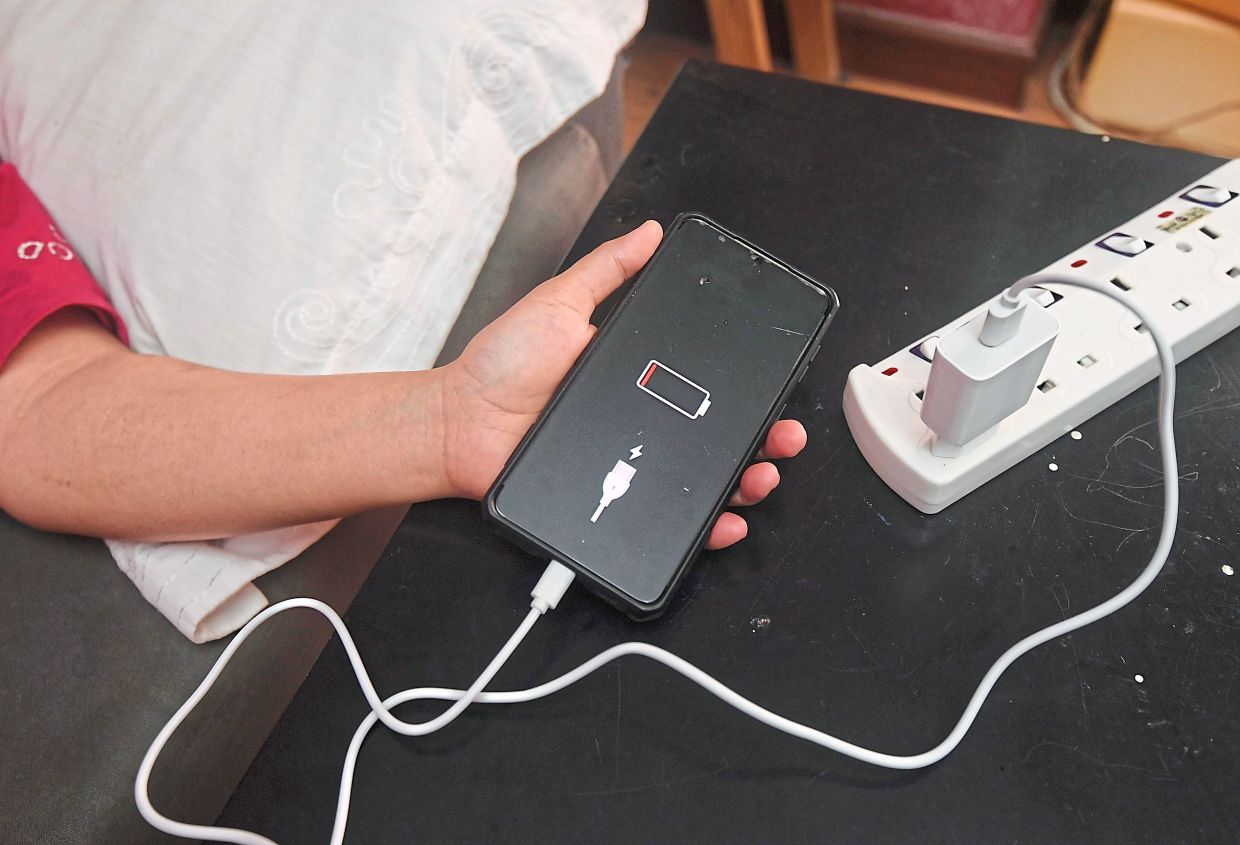
A concerning trend in residential fire incidents across Malaysia has emerged, with the Department of Fire and Rescue Services (JBPM) revealing that unsafe device charging practices have destroyed nearly RM14.2 million worth of property in just 59 documented cases spanning 2023 to 2025. The findings underscore a growing public safety challenge as Malaysians increasingly rely on smartphones, laptops, tablets and other electronic devices in their daily lives, yet often neglect basic precautions when powering these items.
The geographic distribution of these incidents reveals stark disparities across the nation. Sarawak has borne the heaviest financial burden, with approximately RM9.7 million in losses traced to 11 fire incidents—a figure that dwarfs other states and suggests either particularly severe blazes or a concentration of high-value property losses in the East Malaysian state. Kelantan follows with RM1.14 million across 17 cases, while Sabah accounts for RM806,800 from three incidents. The remaining losses are scattered across Selangor, Penang, Johor, Putrajaya, Melaka, Terengganu and Perak, each contributing smaller but still significant amounts to the overall tally. Remarkably, JBPM noted that six states—Kedah, Negri Sembilan, Pahang, Perlis, Kuala Lumpur and Labuan—recorded no such incidents during this period, though this may reflect varying reporting standards or population densities rather than an absence of risk.
What makes these statistics particularly troubling is that not a single death was reported across the entire three-year period. While this may appear fortunate at first glance, it masks a deeper vulnerability: the incidents investigated represent only those that were formally documented and attributed to device charging, leaving unknown numbers of unreported or misidentified cases that escape official scrutiny. The absence of casualties also creates a false sense of security among the public, potentially undermining efforts to promote safer charging behaviours when the financial consequences alone should command attention.
The department's investigation methodology reveals the multifaceted nature of fire causation and the technical expertise required to properly diagnose incidents. Rather than treating all fires as equivalent based on monetary loss or physical scale, JBPM emphasises that each case demands individualised forensic assessment. Factors including the geographical location where the fire originated, the specific type of electronic device involved, the preservation state of physical evidence after burning, hazardous conditions present at the scene and the technical specifications requiring analysis all contribute to determining whether a fire was truly caused by device charging or resulted from other factors entirely.
Investigators have identified several dangerous charging practices that recur across these 59 incidents. Leaving devices unattended while charging overnight stands out as particularly prevalent—a behaviour many Malaysians adopt without realising the risks, especially given tropical climate conditions that can accelerate battery degradation. The use of counterfeit or non-certified chargers and cables represents another critical vulnerability, as these products often lack the safety mechanisms that prevent overcharging and excessive heat generation. Perhaps most alarmingly, charging devices directly on soft, flammable surfaces such as mattresses, pillows, sofas and blankets creates conditions where any spark or heat could rapidly ignite surrounding materials before detection.
Beyond individual charging practices, JBPM identified compound risk factors that substantially elevate fire probability. Overloading electrical power strips creates cumulative current draw that wiring systems were never designed to handle safely, while using visibly damaged devices—indicated by swollen batteries, unusual heat, burning odours or frayed cables—essentially guarantees eventual failure. These warning signs emerge gradually in most cases, yet many users ignore them or lack knowledge to recognize the danger signals. The convergence of multiple unsafe practices in single households multiplies risk exponentially, transforming what might be contained problems into potential disasters.
The findings illuminate a stark gap between consumer behaviour and fire safety knowledge. JBPM's investigation revealed a persistent cultural tendency among Malaysian consumers to prioritise cost savings over safety compliance when selecting charging equipment. This price-conscious approach drives purchases of sub-standard chargers, cables and adapters that achieve their primary function—delivering electrical current—while completely bypassing the safety protocols built into certified products. Non-compliant equipment frequently exhibits design flaws that lead to overheating, internal short circuits and uncontrolled thermal runaway scenarios where battery components essentially burn from within.
The department's emphasis on SIRIM certification and equivalent international safety approvals reflects recognition that technical standards exist specifically to prevent such tragedies. SIRIM-certified chargers undergo rigorous testing to verify they deliver appropriate voltage and current, include protective circuitry against overcurrent conditions and employ thermal management systems to prevent excessive heat. Certified cables utilise appropriate gauge wiring and insulation materials that maintain integrity throughout their lifespan. While such products typically cost more than counterfeits flooding Malaysian markets, the difference represents genuine insurance against property loss and potential harm.
Beyond individual responsibility, JBPM acknowledges that systemic change requires coordinated public awareness campaigns, fire safety education integrated into school curricula and preventive outreach extending beyond emergency response. The department has committed to expanding these efforts through partnerships with relevant agencies, recognising that enforcement alone cannot address behavioural patterns entrenched across millions of households. Public consciousness regarding safe charging practices remains insufficient, with many Malaysians viewing fire risks as theoretical abstractions rather than concrete threats to their families and homes.
The RM14.2 million loss figure carries implications that ripple beyond individual households. This represents funds that could have been invested in economic growth, education or healthcare instead being consumed by preventable disasters. Insurance payouts funded by premium contributions from all policyholders essentially socialise the costs of individual negligence. For renters and those in lower-income households, such losses may prove catastrophic and irreplaceable, amplifying socioeconomic disparities. The prevalence of these incidents also strains emergency response resources that might otherwise address other critical situations.
Moving forward, several interventions merit consideration beyond existing JBPM recommendations. Regulating the import and sale of non-certified chargers could eliminate the most dangerous products from Malaysian markets, similar to controls in more developed nations. Manufacturers could incorporate safety features that automatically disconnect power when detecting excessive temperature buildup. Retailers and electronics sellers could implement point-of-sale education emphasising risks of uncertified accessories. Mobile operators could incorporate safety messaging into customer communications and device setup processes.
For individual Malaysians, the immediate lesson is straightforward: never leave devices charging overnight, purchase only SIRIM-certified chargers and cables regardless of higher costs, never charge devices on soft surfaces or near flammable materials, replace damaged equipment immediately upon noticing warning signs, and avoid overloading power outlets with multiple high-draw devices. These simple precautions directly address the patterns JBPM identified across the 59 documented incidents and could prevent the next RM14.2 million in preventable losses.

%22%2F%3E%3C%2Fpattern%3E%3C%2Fdefs%3E%3Crect%20width%3D%22100%25%22%20height%3D%22100%25%22%20fill%3D%22url(%23ph2hy9vg)%22%2F%3E%3Crect%20width%3D%22100%25%22%20height%3D%22100%25%22%20fill%3D%22url(%23ph2hy9vp)%22%2F%3E%3Ctext%20x%3D%2250%25%22%20y%3D%2250%25%22%20text-anchor%3D%22middle%22%20dominant-baseline%3D%22central%22%20fill%3D%22rgba(255%2C255%2C255%2C0.95)%22%20font-family%3D%22Georgia%2C%20'Times%20New%20Roman'%2C%20serif%22%20font-weight%3D%22700%22%20font-size%3D%22272%22%20letter-spacing%3D%22-0.02em%22%3EAnwar%3C%2Ftext%3E%3C%2Fsvg%3E)