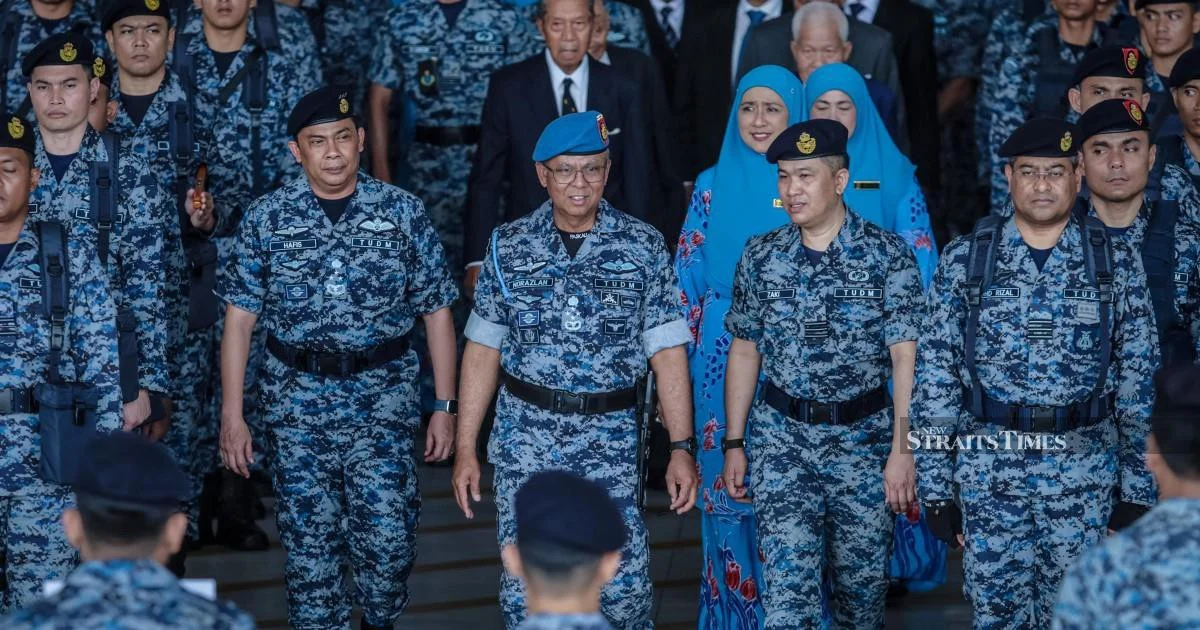
General Tan Sri Muhamad Norazlan Aris, commander of the Royal Malaysian Air Force, has highlighted the mounting importance of aerial capabilities in safeguarding Malaysia's extensive maritime interests, pointing to an increasingly complex regional security landscape that demands stronger air defence mechanisms. The statement underscores growing concern within Malaysia's defence establishment about protecting vital sea lanes and economic corridors that are central to the nation's prosperity and strategic stability.
Malaysia's maritime routes represent more than just shipping lanes; they constitute critical arteries for international commerce, energy supplies, and regional trade connectivity. The Strait of Malacca alone handles approximately one-third of global maritime trade, making it indispensable for Malaysia's economy and the broader Southeast Asian region. Any disruption to these waterways carries implications far beyond Malaysia's borders, affecting economies across East Asia and the wider international community. The RMAF's emphasis on air power reflects recognition that traditional naval patrols alone cannot adequately monitor and protect these expansive maritime zones.
The geopolitical environment that prompted the RMAF commander's remarks has become increasingly complex over recent years. Rising tensions between major powers, evolving territorial disputes, and unpredictable regional dynamics have created an environment where air surveillance and rapid response capabilities become indispensable. The ability to detect, monitor, and respond to threats in maritime zones requires aerial platforms that can cover vast distances and maintain persistent observation. Ground-based and sea-based systems, while valuable, cannot match the reach and speed of well-equipped air forces in addressing emerging security challenges.
Malaysia's existing air defence capabilities have faced scrutiny in recent years. The RMAF operates several squadrons of fighter aircraft, transport planes, and helicopter units, but defence analysts have noted that modernisation remains an ongoing priority. Aircraft from multiple nations conduct operations in and near Malaysian airspace, creating a complex air traffic environment that demands sophisticated monitoring and identification systems. The force's ability to maintain constant vigilance over such vast territorial and maritime spaces requires investment in advanced radar systems, surveillance aircraft, and responsive interceptor capabilities.
The emphasis on air power also reflects lessons learned from regional security incidents and international military developments. Neighbouring countries have undertaken significant air force modernisation programmes, prompting Malaysia to assess its competitive position and capability gaps. The rise of unmanned aerial systems, long-range reconnaissance capabilities, and advanced air-to-surface weaponry among regional and extra-regional powers has created new security considerations that demand sophisticated counter-measures and detection systems.
From an economic perspective, ensuring uninterrupted maritime trade flows directly impacts Malaysia's development objectives and prosperity. Disruptions to shipping, whether from natural disasters, accidents, or security threats, carry significant costs for Malaysian businesses and consumers. The petrochemical, electronics, and agricultural sectors all depend heavily on reliable sea transport for both inputs and exports. Air-based monitoring and rapid response capabilities can identify and help prevent incidents that might otherwise disable critical trade routes, protecting Malaysia's economic interests and employment.
The RMAF chief's remarks also carry implications for Malaysian defence spending and strategic planning. Acknowledging the critical importance of air power suggests that future defence budgets may prioritize air force modernisation and capabilities development. This could encompass acquiring additional fighter aircraft, upgrading surveillance and radar systems, developing cyber defence capabilities, and enhancing pilot training programmes. Such investments require careful fiscal management but are viewed as essential for long-term security stability.
Regional partners face similar challenges and security concerns. Other Southeast Asian nations sharing maritime interests in contested or busy waters have likewise prioritised air defence capabilities. The RMAF's perspective aligns with broader regional trends toward investing in air forces as primary instruments of maritime domain awareness and security. Potential opportunities exist for enhanced regional cooperation, intelligence sharing, and joint exercises that could strengthen collective maritime security across Southeast Asia without requiring massive individual expenditures by smaller nations.
The security environment affecting Malaysia's maritime routes extends beyond traditional military threats. Piracy, terrorism, smuggling, and unauthorised resource extraction all represent challenges that air-based surveillance can help address. The ability to monitor vast ocean areas with modern aircraft, equipped with advanced sensors and communication systems, enables quicker detection and response to various maritime threats. This multi-purpose capability makes air power investments particularly valuable for addressing the diverse security challenges that Malaysia's maritime domain faces.
Looking forward, the RMAF's strategic assessment likely incorporates anticipated technological developments and evolving threat profiles. As other nations introduce advanced aircraft and systems, Malaysia must maintain minimum capability thresholds to ensure credible defence and maritime monitoring. The long procurement cycles for military aircraft and systems mean decisions made today will shape Malaysia's air defence posture for decades. The RMAF commander's emphasis on air power's criticality provides important context for understanding defence policy discussions and budgetary allocations in coming years.
The statement also reflects Malaysia's position as a middle power with significant maritime interests but limited resources compared to larger regional players. Air power offers a relatively efficient means of projecting capability across vast maritime zones, making it a practical strategic choice given these constraints. By developing strong air defence and surveillance capabilities, Malaysia can enhance its ability to monitor and protect its interests without requiring the massive naval expenditures that larger powers invest.
Ultimately, General Tan Sri Muhamad Norazlan Aris's assessment highlights a critical reality: protecting Malaysia's maritime prosperity requires constant vigilance and sophisticated defensive capabilities. As regional geopolitical dynamics continue evolving and new security challenges emerge, air power will remain central to Malaysia's maritime security strategy, requiring sustained investment, training, and modernisation to ensure the force can fulfil its crucial protective mission.

%22%2F%3E%3C%2Fpattern%3E%3C%2Fdefs%3E%3Crect%20width%3D%22100%25%22%20height%3D%22100%25%22%20fill%3D%22url(%23ph2hy9vg)%22%2F%3E%3Crect%20width%3D%22100%25%22%20height%3D%22100%25%22%20fill%3D%22url(%23ph2hy9vp)%22%2F%3E%3Ctext%20x%3D%2250%25%22%20y%3D%2250%25%22%20text-anchor%3D%22middle%22%20dominant-baseline%3D%22central%22%20fill%3D%22rgba(255%2C255%2C255%2C0.95)%22%20font-family%3D%22Georgia%2C%20'Times%20New%20Roman'%2C%20serif%22%20font-weight%3D%22700%22%20font-size%3D%22272%22%20letter-spacing%3D%22-0.02em%22%3EAnwar%3C%2Ftext%3E%3C%2Fsvg%3E)