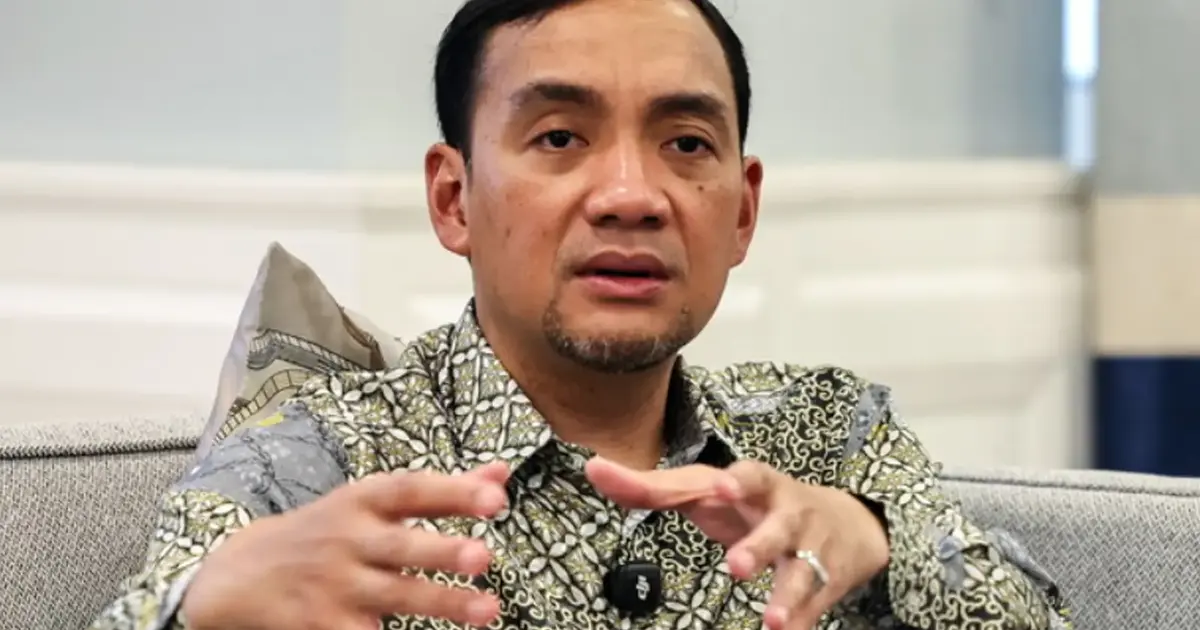
Johor Menteri Besar Onn Hafiz has delivered a pointed reminder to political aspirants: visibility and popularity within the party or public sphere do not automatically translate into the state's highest administrative office. In remarks directed at Malaysia's complex political landscape, where factional competition and media profiles often dominate discourse, Onn Hafiz has stressed that royal consent remains the decisive factor in selecting who steers Johor's administration.
The statement carries particular weight given Malaysia's constitutional monarchy framework, where the sultans retain significant prerogatives in state affairs. Within Johor, a sultanate with deep historical roots and considerable political influence, the ruler's approval has consistently been non-negotiable in appointing the menteri besar. This constitutional reality, while understood in theory by most politicians, is frequently underestimated in practice as ambitious figures seek to build personal brands and organisational support.
Onn Hafiz's intervention appears designed to reset expectations and discourage what he perceives as naive calculations among political competitors. Whether targeting specific rivals or addressing a broader culture of self-promotion, his message suggests that some quarters may harbour unrealistic assumptions about the pathway to power in Johor. The emphasis on royal consent serves as both a historical grounding and a cautionary note: institutional arrangements and constitutional prerogatives ultimately supersede grassroots momentum or media prominence.
Johor's political dynamics have long been characterised by competition between established factions within UMNO and the broader Barisan Nasional coalition. The menteri besar position has periodically become a flashpoint when transitions approach, with various contenders maneuvering for advantage. Onn Hafiz's current standing as the incumbent gives his words substantial authority—he himself presumably benefited from royal approval—yet his statement also implicitly acknowledges that such competition is ongoing and that some figures may be overestimating their prospects.
The role of the sultan in Johor extends beyond ceremonial functions. Constitutionally, the ruler advises on and consents to ministerial appointments, effectively possessing veto power over candidates. This arrangement differs meaningfully from purely parliamentary systems where the legislature alone determines executive leadership. For Malaysian politicians accustomed to navigating Westminster-style politics, the continued relevance of royal prerogative can sometimes be overlooked, particularly when media coverage and party factional support create a false sense of inevitability around particular candidates.
Onn Hafiz's comments also reflect a tension endemic to Malaysia's system of governance. Democratic processes and party politics determine which faction holds the majority and hence proposes candidates; yet the constitutional monarchy means that royal institutions retain genuine discretionary power. Politicians may dominate public discourse, but sultans retain institutional leverage. This duality occasionally produces friction when a figure who appears dominant within party structures discovers that royal approval is withheld or conditional.
For Malaysian readers and regional observers, Onn Hafiz's statement underscores how Southeast Asian politics often defy Western democratic models. While Malaysia incorporates parliamentary democracy, the institution of constitutional monarchy endows rulers with meaningful checks on executive appointments. Understanding this distinction is crucial for grasping how power actually distributes itself in the country. Ambitious politicians who focus exclusively on party machinery and public profile while neglecting relationships with traditional institutions may find themselves, as Onn Hafiz suggests, disappointed when the crucial moment arrives.
The practical implications extend beyond Johor. Similar dynamics operate in other Malaysian states governed by sultans—Selangor, Perak, Kedah, and others—where royal consent is equally vital. What Onn Hafiz articulates for Johor resonates as a broader principle across the federation. It also reminds observers that Malaysia's political system cannot be fully understood through party politics alone; the monarchy's residual powers remain functionally significant in ways that pure electoral competition might obscure.
Onn Hafiz's timing in making this statement may signal concerns about particular individuals or factions positioning themselves for future advancement. Whether responding to recent media speculation about potential successors or seeking to dampen expectations among ambitious subordinates, his intervention carries pragmatic intent alongside its constitutional lessons. The message functions simultaneously as a civics lesson and as a political maneuver designed to shape behaviour among rivals.
The broader context involves Malaysian politics' ongoing evolution following several years of substantial institutional turbulence. The dissolution of Barisan Nasional's long-standing dominance, emergence of competing coalitions, and shifts in factional alignments have created uncertainty about traditional power-transfer mechanisms. In this environment, reaffirming the role of constitutional institutions—particularly royal institutions—may serve to stabilise expectations and discourage actors from overreaching based on assumptions that old rules no longer apply.
For Johor specifically, Onn Hafiz's statement serves notice that despite whatever political dynamics may be unfolding within UMNO, Barisan Nasional, or in state electoral contests, the ultimate decision about state leadership will rest with the palace. This is not merely abstract constitutional theory but operational political reality. Aspiring politicians would be wise to cultivate relationships with decision-makers at multiple levels, recognising that party position, public visibility, and media narrative, while important, do not constitute the complete equation for advancement.
Moving forward, Onn Hafiz's clarification may influence how potential menteri besar candidates conduct themselves, how factional competitions unfold, and how much confidence various groups place in their own prospects. By emphasising royal prerogative, he has essentially repositioned the starting point for any succession discussion, ensuring that institutional arrangements remain paramount in how stakeholders calculate their political calculations and strategies.


%22%2F%3E%3C%2Fpattern%3E%3C%2Fdefs%3E%3Crect%20width%3D%22100%25%22%20height%3D%22100%25%22%20fill%3D%22url(%23ph2hy9vg)%22%2F%3E%3Crect%20width%3D%22100%25%22%20height%3D%22100%25%22%20fill%3D%22url(%23ph2hy9vp)%22%2F%3E%3Ctext%20x%3D%2250%25%22%20y%3D%2250%25%22%20text-anchor%3D%22middle%22%20dominant-baseline%3D%22central%22%20fill%3D%22rgba(255%2C255%2C255%2C0.95)%22%20font-family%3D%22Georgia%2C%20'Times%20New%20Roman'%2C%20serif%22%20font-weight%3D%22700%22%20font-size%3D%22272%22%20letter-spacing%3D%22-0.02em%22%3EAnwar%3C%2Ftext%3E%3C%2Fsvg%3E)