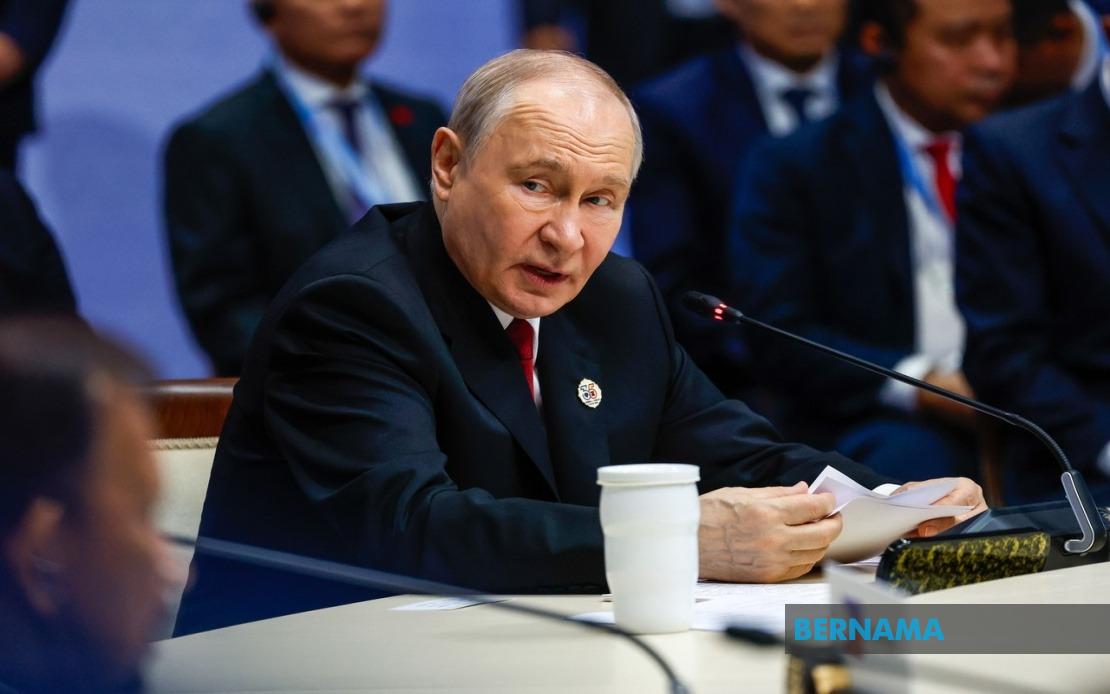
The Russian government hosted a commemorative summit in Kazan to celebrate the three-and-a-half decades of partnership between Russia and the Association of Southeast Asian Nations, with President Vladimir Putin highlighting the relationship as a crucial stabilising presence in an increasingly turbulent Asia-Pacific landscape. The event, which drew participation from Malaysia's Prime Minister Datuk Seri Anwar Ibrahim and Philippine President Ferdinand Marcos Jr in his capacity as current ASEAN Chair, underscored Moscow's continued commitment to deepening engagement with Southeast Asian governments despite mounting international pressure and sanctions on the Kremlin.
Russia's official ties with ASEAN began in 1991 when Moscow established formal relations with the bloc in Kuala Lumpur, marking the end of the Cold War and opening a new chapter in regional diplomacy. The relationship has evolved significantly over the decades, progressing from initial contact to full Dialogue Partner status in 1996 and eventually reaching Strategic Partnership designation in 2018. This incremental elevation reflects a sustained diplomatic effort by Russia to position itself as a serious player in Southeast Asian affairs rather than a distant power concerned primarily with European matters.
Putin characterised the bilateral framework as resting upon international law and mutual benefit, positioning Russia as a rules-based actor despite Western criticism of Moscow's foreign policy conduct elsewhere. The two sides have constructed what Putin described as a comprehensive legal and contractual architecture, backed by multiple joint mechanisms spanning economic, security and cultural domains. This institutional depth suggests both parties view their association as more than transactional convenience, though the strength and resilience of these structures will face tests as global alignments continue shifting.
The partnership encompasses remarkably diverse areas of cooperation. Security collaboration includes defence dialogues and maritime coordination in a region where territorial disputes and great-power competition create persistent friction. Trade and investment relationships, though modest compared to ties with Western nations or China, provide important diversification for both sides. Energy cooperation holds particular significance for Southeast Asia, where countries including Vietnam, Indonesia and Thailand seek alternative suppliers and technologies beyond traditional partners. Agricultural exchanges, especially grain exports from Russia, matter significantly for food-security conscious ASEAN members worried about supply chain vulnerabilities.
Digitalisation and technological partnership represent emerging frontiers that reflect modern realities. Russia possesses considerable expertise in information technology, cybersecurity and space applications that appeal to developing Southeast Asian economies seeking to leapfrog traditional development stages. Educational and scientific exchanges cultivate human capital while building long-term relationships among elites. These soft-power dimensions often prove more durable than government-to-government deals because they create constituencies within civil society invested in maintaining good relations.
The timing of the summit carries significance within broader geopolitical contexts. Russia faces increasing isolation from Western nations following its invasion of Ukraine, making Southeast Asian partnerships strategically valuable as sources of diplomatic legitimacy and economic interaction. Conversely, ASEAN nations remain committed to strategic autonomy, seeking to maintain productive relationships across the geopolitical spectrum rather than aligning exclusively with any single major power. This mutual need for partnership explains why several ASEAN leaders attended despite international pressure and their own domestic political considerations.
For Malaysia specifically, Russia represents both opportunity and complexity. As a Muslim-majority nation with significant trading interests in the Middle East and relationships with Western powers, Malaysia must calibrate its Russia engagement carefully. The country has traditionally maintained non-aligned positions, and the Russia-ASEAN partnership allows Malaysia to pursue independent foreign policy while avoiding premature alignment with any bloc. Malaysia's role as a potential bridge between Russia and the broader Indo-Pacific community gives it diplomatic leverage it seeks to exploit.
The current geopolitical environment distinguishes this summit from previous anniversaries. Global uncertainties surrounding energy supplies, food security and technological dominance create genuine interdependencies that make partnerships like Russia-ASEAN increasingly valuable to both parties. Russia's difficulties accessing Western markets and technology make Southeast Asian openness economically valuable. Similarly, ASEAN nations worried about supply chain disruptions and energy price volatility appreciate diversified sources of supply and partnership.
Russia's strengths in specific sectors align conveniently with Southeast Asian priorities. Beyond energy, Russia offers agricultural products crucial for food security in a region vulnerable to climate shocks and geopolitical disruptions. Higher education opportunities in Russian universities remain affordable for Southeast Asian students compared to alternatives. Technology transfer in areas like space applications and industrial manufacturing could support regional development ambitions, though concerns about technology quality and reliability compared to Western or Chinese alternatives persist among some ASEAN members.
The strategic partnership framework emphasises balanced security architecture, language that reflects concerns about the region being dominated by any single external power. ASEAN members worry simultaneously about overreliance on the United States, Chinese dominance of regional affairs, and Russian unpredictability. Maintaining Russia as a dialogue partner allows ASEAN to preserve diplomatic space and avoid forced alignment in emerging great-power competition between Washington and Beijing.
Looking forward, the partnership faces both opportunities and constraints. Economic interdependence remains limited compared to ASEAN's relationships with other major powers, suggesting cooperation will remain relatively modest in scale. Political differences on issues like democracy and human rights, though not emphasised in summit statements, create underlying tensions in some bilateral relationships within ASEAN. Russia's continued international isolation could paradoxically strengthen its commitment to Southeast Asian partnerships, or could limit its ability to offer the investments and technology transfer that would make cooperation truly transformative.
The success of Russia-ASEAN strategic partnership ultimately depends on both sides maintaining long-term commitment despite inevitable fluctuations in global politics. The 35-year relationship, while substantial, remains considerably younger and less institutionalised than ASEAN's partnerships with the United States, China or Japan. Building genuine strategic depth requires consistent investment, mutual understanding and willingness to accommodate each other's core interests, elements that will be tested as regional geopolitics continue their volatile trajectory in coming years.


%22%2F%3E%3C%2Fpattern%3E%3C%2Fdefs%3E%3Crect%20width%3D%22100%25%22%20height%3D%22100%25%22%20fill%3D%22url(%23ph2hy9vg)%22%2F%3E%3Crect%20width%3D%22100%25%22%20height%3D%22100%25%22%20fill%3D%22url(%23ph2hy9vp)%22%2F%3E%3Ctext%20x%3D%2250%25%22%20y%3D%2250%25%22%20text-anchor%3D%22middle%22%20dominant-baseline%3D%22central%22%20fill%3D%22rgba(255%2C255%2C255%2C0.95)%22%20font-family%3D%22Georgia%2C%20'Times%20New%20Roman'%2C%20serif%22%20font-weight%3D%22700%22%20font-size%3D%22272%22%20letter-spacing%3D%22-0.02em%22%3EAnwar%3C%2Ftext%3E%3C%2Fsvg%3E)