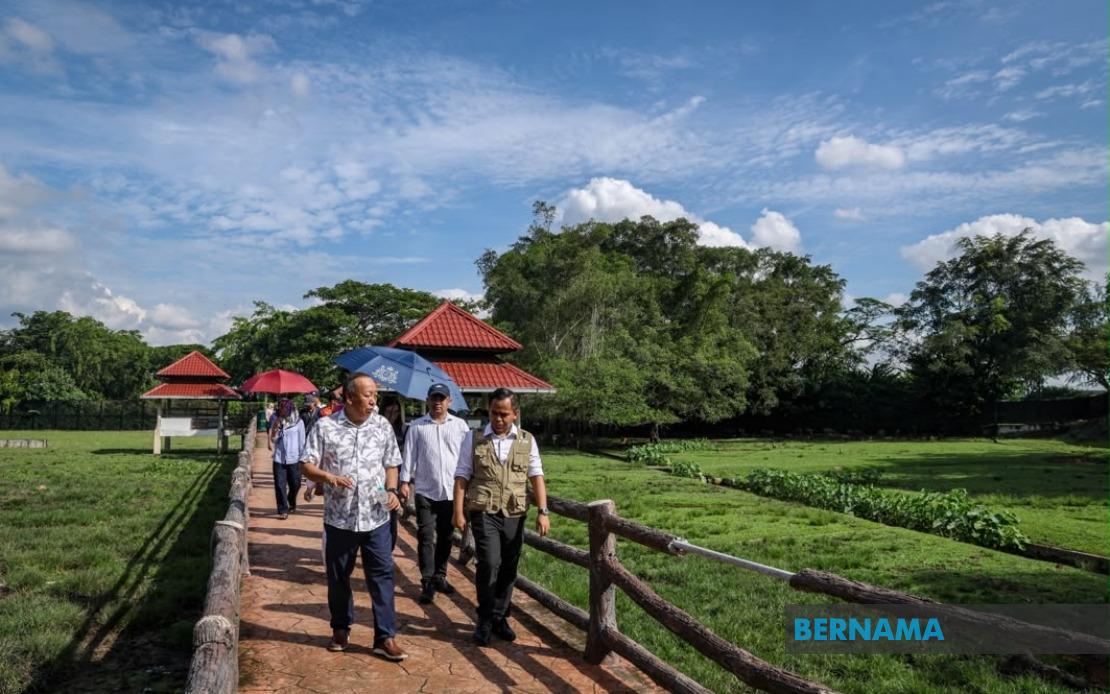
Sabah UMNO has committed its organisational resources to strengthen Barisan Nasional's campaign in the upcoming Johor state election, with particular emphasis on constituencies where migrant voters from the East Malaysian state form a significant electoral bloc. The party's liaison committee chairman Datuk Jafry Ariffin announced that Sabah UMNO will concentrate its efforts in the Pasir Gudang parliamentary constituency, specifically targeting the Permas and Johor Jaya state seats where the party has identified substantial concentrations of registered voters from Sabah.
Demographic data compiled by Sabah UMNO indicates that approximately 3,000 eligible voters from Sabah are domiciled in Permas, with another 2,000 registered in Johor Jaya. This electoral presence—totalling around 5,000 voters across the two constituencies—represents a meaningful bloc that could influence outcomes in competitive races. For context, the deployment of external party machinery to mobilise diaspora voters reflects a long-standing Malaysian political practice where state-based organisations collaborate to maximise support among populations with shared cultural or geographic ties.
Ariffin, who serves concurrently as Sabah's Minister of Tourism, Culture and Environment, underscored the continuity of this strategy by noting that Sabah UMNO was assigned identical responsibilities during the 2022 Johor state election four years earlier. This institutional memory suggests that the party has developed established networks and operational protocols within these constituencies, enabling it to hit the ground more effectively than newcomers to the electoral terrain. The repetition of the assignment also indicates that BN strategists view this partnership as sufficiently productive to warrant replication in the current electoral cycle.
The preliminary campaign activities by Sabah UMNO have already commenced at a modest scale as part of foundational groundwork. However, Ariffin made clear that the party intends to substantially intensify its mobilisation efforts following the official nomination day, scheduled for June 27. This measured approach—building organisational foundations before the formal campaign window opens—reflects standard practice in Malaysian electoral contests, where visible campaign activities accelerate once candidates are officially nominated. The full deployment is timed to coincide with the formal campaign period, ensuring maximum resource concentration during the period when voter attention is highest and media coverage most intensive.
The Election Commission has designated July 11 as polling day, providing approximately two weeks of formal campaigning following nominations. This compressed timeline underscores the importance of having pre-existing organisational infrastructure in place, as Sabah UMNO possesses from its earlier involvement in these constituencies. The party's experience from the 2022 campaign will be leveraged to refine messaging and targeting strategies, applying lessons learned about voter preferences and communication channels that resonate with the Sabahan diaspora community in Johor.
The broader political context shapes the significance of Sabah UMNO's contribution to the BN campaign. The Johor State Legislative Assembly comprises 56 seats, and at the time of dissolution on June 1, Barisan Nasional commanded a substantial majority with 40 seats. Pakatan Harapan held 12 seats, while Perikatan Nasional secured three and MUDA one. This distribution indicates that while BN enters the contest with clear structural advantages, the opposition nonetheless retains meaningful parliamentary representation, particularly through Pakatan Harapan's twelve-seat bloc, necessitating thorough campaign execution across all constituencies where victory is contested.
The involvement of Sabah UMNO's machinery demonstrates how Malaysia's federal structure enables cross-state political cooperation when national coalitions face electoral contests. Such arrangements are standard practice across the country's major political alliances, wherein parties leverage resources and personnel across state boundaries to maximise their collective electoral performance. For Sabah UMNO specifically, participating actively in peninsular elections strengthens its standing within the broader UMNO and BN structures, cementing its role as a dependable partner in national political endeavours.
The decision to concentrate resources in Pasir Gudang rather than dispersing efforts across multiple constituencies reflects data-driven campaign strategy. By targeting areas with identifiable concentrations of voters likely to respond positively to Sabah UMNO's mobilisation efforts—such as those with existing social and kinship networks within the Sabahan diaspora—the party optimises its return on invested resources. This microtargeting approach has become increasingly sophisticated in Malaysian politics, enabling parties to deploy personnel and messaging more efficiently than broad-based campaigns.
For Johor voters generally, this cross-state coordination illustrates the intensive nature of Malaysian state elections, which frequently involve substantial organisational commitments from allied parties operating across the federation. The influx of campaign workers from Sabah, combined with existing peninsular BN machinery, creates formidable ground-level presence in targeted constituencies. This coordinated approach has historically proven effective in maintaining coalition dominance in states where BN retains organisational advantages.
The upcoming election will test whether Barisan Nasional can consolidate its incumbency advantage in Johor, one of the country's largest and most economically significant states. The involvement of diverse UMNO branches across the federation in the campaign effort signals the coalition's determination to retain firm control of the state assembly. As the contest progresses toward nomination day and beyond, the tactical contributions of Sabah UMNO in mobilising Sabahan voters in Permas and Johor Jaya may prove instrumental in determining final seat allocations.


%22%2F%3E%3C%2Fpattern%3E%3C%2Fdefs%3E%3Crect%20width%3D%22100%25%22%20height%3D%22100%25%22%20fill%3D%22url(%23ph2hy9vg)%22%2F%3E%3Crect%20width%3D%22100%25%22%20height%3D%22100%25%22%20fill%3D%22url(%23ph2hy9vp)%22%2F%3E%3Ctext%20x%3D%2250%25%22%20y%3D%2250%25%22%20text-anchor%3D%22middle%22%20dominant-baseline%3D%22central%22%20fill%3D%22rgba(255%2C255%2C255%2C0.95)%22%20font-family%3D%22Georgia%2C%20'Times%20New%20Roman'%2C%20serif%22%20font-weight%3D%22700%22%20font-size%3D%22272%22%20letter-spacing%3D%22-0.02em%22%3EAnwar%3C%2Ftext%3E%3C%2Fsvg%3E)