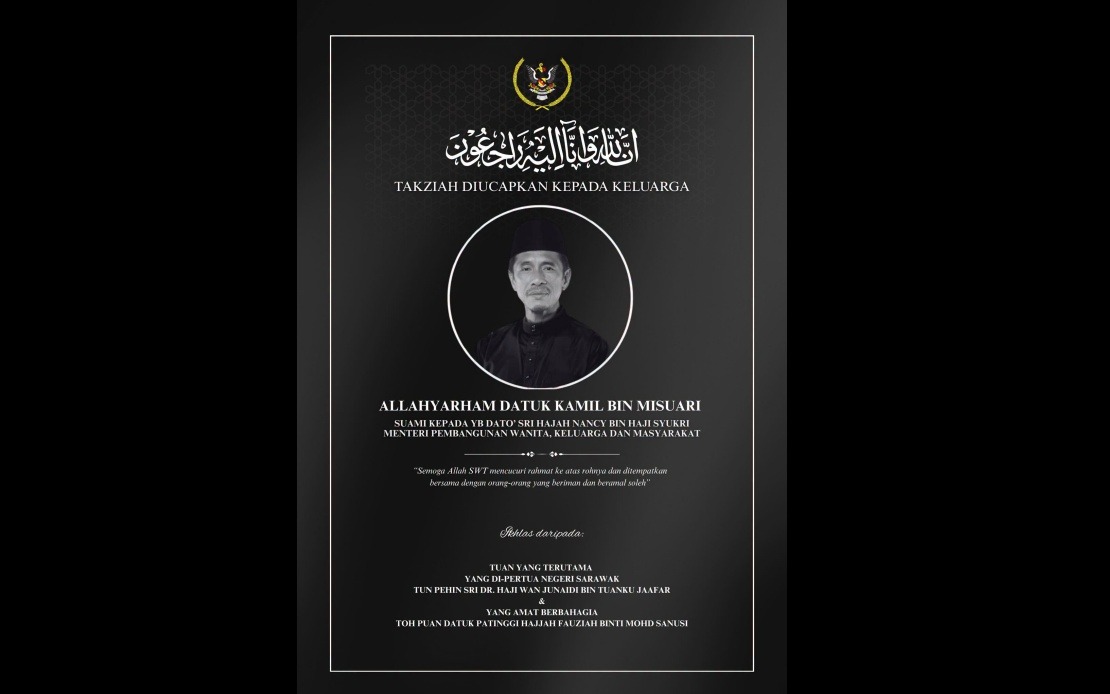
The Yang Dipertua Negeri Sarawak, Tun Dr Wan Junaidi Tuanku Jaafar, has conveyed his deepest sympathies to Women, Family and Community Development Minister Datuk Seri Nancy Shukri following the passing of her husband, Datuk Kamil Misuari, on June 18. A statement from Astana Sarawak indicated that the head of state and his wife, Toh Puan Fauziah Mohd Sanusi, have offered prayers for the departed soul.
According to the official message, Tun Wan Junaidi and Toh Puan Fauziah have invoked blessings upon Kamil's memory, requesting divine mercy for his soul and the acceptance of his virtuous deeds in the afterlife. The statement reflected the customary expressions of Islamic faith common among Malaysia's senior political figures during times of bereavement, emphasising spiritual support for the grieving family.
The couple's prayers extended beyond the deceased to encompass those left behind. Tun Wan Junaidi and his wife specifically sought divine strength, steadfastness, and patience for Datuk Seri Nancy and her immediate family as they navigate the profound loss and emotional burden that accompanies such circumstances. This gesture underscores the traditional role played by Malaysia's constitutional monarchies in offering moral and spiritual leadership during moments of national grief.
The Office of the Minister of Women, Family and Community Development formally announced that Kamil, aged 65, passed away at a hospital in Kuala Lumpur on the evening of June 18. His demise marks the end of a marriage that spanned nearly four decades, having wed Datuk Seri Nancy in 1985. The couple was blessed with three children during their time together, creating a significant family structure now facing adjustment to the absence of its patriarch.
Arrangements for the final rites have already been put in motion, reflecting the swift coordination typical of high-profile ministerial families in Malaysia. Kamil's remains will be transported to Kuching the following day, where he will be laid to rest at the Samariang Muslim Cemetery. This decision to bring him to Sarawak for burial speaks to the family's connections to the state and their desire to be laid to rest within their home community.
The death of Kamil represents a significant personal loss for Datuk Seri Nancy during her tenure as a federal minister overseeing crucial portfolios affecting Malaysian women, families, and community welfare. Her portfolio addresses some of Malaysia's most sensitive social issues, and her ability to continue ministerial duties during this period of mourning will likely be a matter of consideration for both herself and the government.
As minister, Datuk Seri Nancy holds responsibility for policies and programmes affecting millions of Malaysian families. The intersection of her public responsibilities and private grief reflects the demanding nature of high office in Malaysia, where personal and political dimensions of life often intersect. Her experience will likely resonate with other public figures who have navigated similar challenges.
The expression of condolences from Sarawak's Yang Dipertua Negeri carries particular significance given the constitutional and ceremonial importance of such figures in Malaysian governance. Such messages, issued through official channels and formal statements, represent not merely personal sympathy but institutional recognition of loss within the political establishment. They affirm the bonds of fellowship and mutual respect that characterise Malaysia's federal system.
The wider political community in Malaysia has traditionally responded to the personal losses of public figures with collective expressions of sympathy, reflecting cultural values that acknowledge the common humanity shared by those in leadership positions regardless of political affiliation or ideological difference. Such moments of collective mourning serve to transcend the often contentious nature of political discourse and demonstrate solidarity in the face of universal human experiences like bereavement.
For Datuk Seri Nancy Shukri, the support extended by senior state figures such as Tun Wan Junaidi provides both emotional sustenance and institutional backing during a challenging period. The recognition from Sarawak's chief executive, despite the geographic distance between the federal capital and the state, demonstrates the interconnected nature of Malaysia's political structure and the broader networks of support available to ministers during times of personal crisis.

%22%2F%3E%3C%2Fpattern%3E%3C%2Fdefs%3E%3Crect%20width%3D%22100%25%22%20height%3D%22100%25%22%20fill%3D%22url(%23ph2hy9vg)%22%2F%3E%3Crect%20width%3D%22100%25%22%20height%3D%22100%25%22%20fill%3D%22url(%23ph2hy9vp)%22%2F%3E%3Ctext%20x%3D%2250%25%22%20y%3D%2250%25%22%20text-anchor%3D%22middle%22%20dominant-baseline%3D%22central%22%20fill%3D%22rgba(255%2C255%2C255%2C0.95)%22%20font-family%3D%22Georgia%2C%20'Times%20New%20Roman'%2C%20serif%22%20font-weight%3D%22700%22%20font-size%3D%22272%22%20letter-spacing%3D%22-0.02em%22%3EAnwar%3C%2Ftext%3E%3C%2Fsvg%3E)