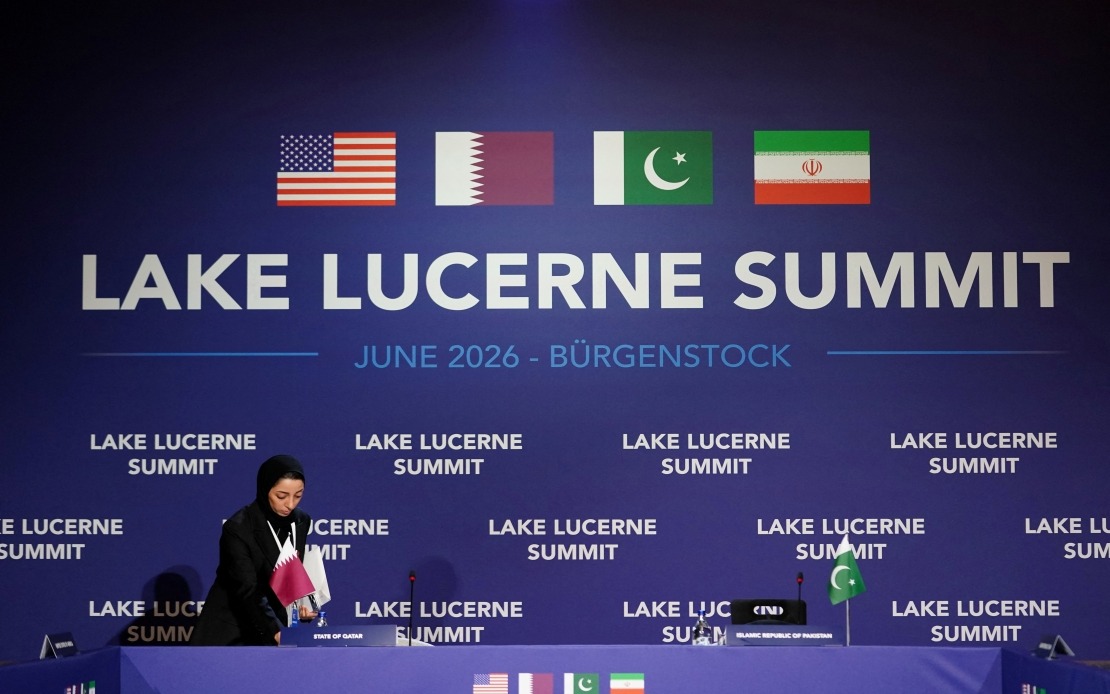
A coalition of four strategically important Middle Eastern and South Asian nations has publicly endorsed the recently signed agreement between the United States and Iran, viewing the accord as a meaningful breakthrough in efforts to reduce tensions that have long threatened regional stability. The foreign ministers of Türkiye, Egypt, Pakistan and Saudi Arabia issued a joint statement following their meeting in Cairo on Sunday, June 21, expressing optimism about the Islamabad Memorandum of Understanding and its potential implications for the broader West Asian region.
The ministers' statement underscored their belief that the agreement represents more than merely a bilateral achievement between Washington and Tehran. They characterized the memorandum as a constructive development with far-reaching consequences for international peace and prosperity, particularly given the region's critical importance to global economic systems. The diplomats specifically noted that the conflict had posed substantial risks not only to regional security and political stability but also to vital energy markets, international maritime trade corridors, and worldwide supply chains that depend heavily on the stability of the Persian Gulf and surrounding areas.
The significance of this multilateral endorsement lies in the diverse geopolitical positions of the four nations involved. Türkiye occupies a unique bridge position between Europe and Asia, Egypt serves as a critical player in Arab affairs and Middle Eastern diplomacy, Pakistan represents South Asian interests and maintains complex regional relationships, while Saudi Arabia leads the Gulf Cooperation Council and has historically maintained strong ties with Washington. Their collective backing demonstrates that major regional actors from different subregions recognize the agreement's potential value, even as they maintain distinct national interests and security concerns.
The statement gave particular recognition to the diplomatic efforts that made the agreement possible, singling out Pakistan for its instrumental role in organizing the negotiation process and serving as a venue for talks. This acknowledgment reflects Pakistan's longstanding position as a crucial diplomatic intermediary in West Asian affairs, a role that carries significant weight given Islamabad's relationships with both Iran and the broader Gulf states. The ministers also praised Qatar's support for the process, underscoring how smaller but diplomatically active Gulf nations have become essential players in regional conflict resolution efforts.
Despite their cautious optimism, the four nations emphasized that substantial work remains ahead. They stressed the importance of moving expeditiously to subsequent phases of negotiation aimed at achieving a comprehensive, verifiable and mutually acceptable resolution of outstanding issues between the United States and Iran. This measured approach reflects the diplomatic sophistication of the statement's authors, who avoided excessive triumphalism while recognizing genuine progress.
A critical dimension of the joint position involves protecting the interests of Gulf Cooperation Council states and Levantine nations. The ministers made explicit that any future agreements emerging from continued negotiations must account for the legitimate security concerns of these countries, many of which have expressed apprehension about Iran's regional activities and capabilities. This provision signals that the four nations view the agreement not as a comprehensive settlement but rather as an important initial step requiring careful management of broader regional security dynamics.
The statement also elevated the Palestinian question to a central position in the broader West Asian peace agenda. The ministers asserted that resolving the Israeli-Palestinian conflict remains an essential prerequisite for achieving lasting peace and stability across the region, reflecting a consensus position held by the overwhelming majority of Arab and Muslim-majority nations. This framing demonstrates how regional leaders continue to link progress on multiple conflict fronts as interconnected elements of a comprehensive approach to Middle Eastern stability.
Regarding Palestinian statehood specifically, the four nations reaffirmed their support for an independent Palestinian state established within the 1967 borders and with East Jerusalem serving as its capital, consistent with existing United Nations resolutions. This position, while standard in Arab diplomatic circles, takes on heightened significance when articulated jointly by ministers from nations with varying relationships with the West, underscoring the durable consensus around Palestinian rights across otherwise divergent foreign policy orientations.
For Southeast Asian observers and policymakers, this development carries important implications regarding the international rules-based order and diplomatic problem-solving. The agreement demonstrates that even intractable conflicts involving major powers can progress toward de-escalation through sustained diplomatic engagement and regional mediation. Malaysia and other ASEAN nations have long advocated for dialogue-based approaches to regional disputes, and this case study offers validation of such principles, even in the volatile Middle Eastern context.
The endorsement from these four strategically positioned nations also reflects broader recognition of the interconnectedness of regional conflicts and the impossibility of resolving any single dispute in isolation. The ministers' explicit linking of the US-Iran agreement to broader questions of Palestinian rights, Gulf security, and maritime stability illustrates how contemporary diplomacy requires holistic approaches addressing multiple grievances simultaneously. This perspective may prove instructive for Southeast Asian countries navigating their own complex regional security challenges and seeking sustainable conflict resolution frameworks.
Looking forward, the effectiveness of this agreement will largely depend on successful execution of the next negotiation phases and the ability of all parties to demonstrate good faith commitment to the terms. The cautious optimism expressed by these four nations suggests they recognize both the promise and the perils ahead, offering qualified support while maintaining realistic expectations about the pace and scope of potential improvements in US-Iran relations.

%22%2F%3E%3C%2Fpattern%3E%3C%2Fdefs%3E%3Crect%20width%3D%22100%25%22%20height%3D%22100%25%22%20fill%3D%22url(%23ph4g5org)%22%2F%3E%3Crect%20width%3D%22100%25%22%20height%3D%22100%25%22%20fill%3D%22url(%23ph4g5orp)%22%2F%3E%3Ctext%20x%3D%2250%25%22%20y%3D%2250%25%22%20text-anchor%3D%22middle%22%20dominant-baseline%3D%22central%22%20fill%3D%22rgba(255%2C255%2C255%2C0.95)%22%20font-family%3D%22Georgia%2C%20'Times%20New%20Roman'%2C%20serif%22%20font-weight%3D%22700%22%20font-size%3D%22320%22%20letter-spacing%3D%22-0.02em%22%3E32%3C%2Ftext%3E%3C%2Fsvg%3E)