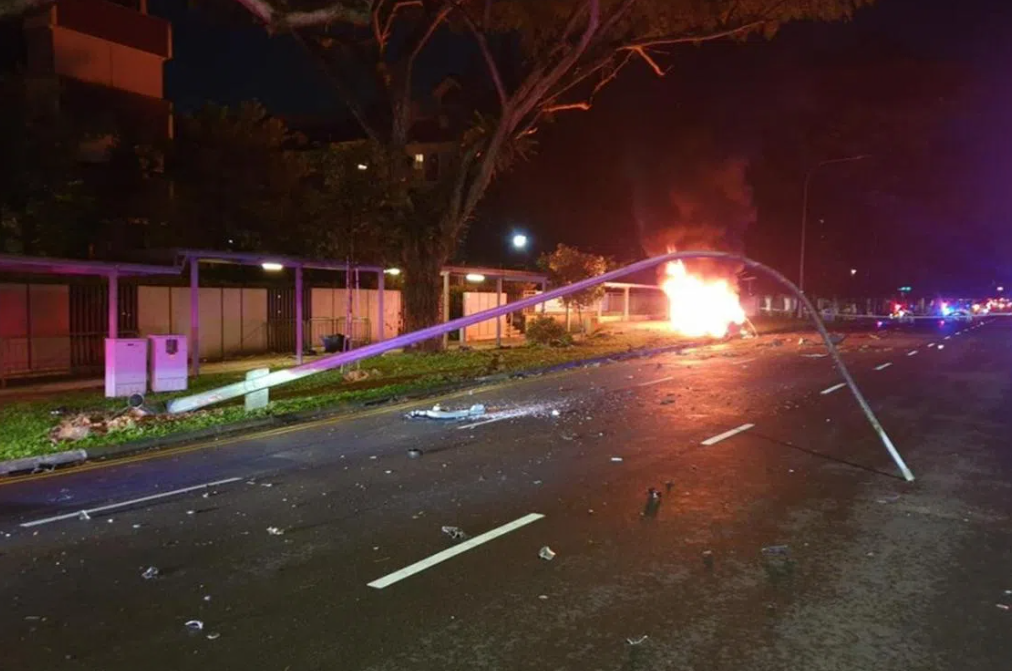
A Singapore man has been charged with a series of traffic offences following a harrowing March morning incident that saw him drive recklessly through central areas of the island at dangerous speeds while under the influence of alcohol, ultimately colliding with a bus carrying school children. Aaron Tan Yao Cong, 29, now faces five distinct charges including drink-driving as a repeat offender, dangerous driving causing hurt, and driving against the flow of traffic. The case underscores persistent concerns about repeat offenders continuing to pose risks on roads despite prior legal consequences.
Court documents reveal that Tan's blood alcohol content measured 148 milligrams per 100 millilitres of blood when tested after his arrest, nearly double the legal limit of 80 milligrams per 100 millilitres. Notably, Tan had initially refused to take a breathalyser test at the scene, a refusal itself constituting a separate charge. His previous criminal record compounds the severity of the current matter—he was already convicted in 2019 of drink-driving and driving without due care and attention, making him a legally designated repeat offender in these specific categories.
The incident unfolded in the early morning hours of 6 March 2024, beginning around 5.50am when Tan disregarded a straight-only traffic sign at Cavenagh Road near Bukit Timah Road. Rather than proceeding straight, he negotiated a left turn and deliberately drove his vehicle towards oncoming traffic. He came to a stop on the left side of the two-lane Cavenagh Road facing towards Buyong Road, but the encounter with oncoming traffic appears to have been merely the opening act of a more catastrophic sequence of events.
Within minutes, at 6.16am, Tan accelerated away from the scene along Bukit Timah Road heading towards Upper Bukit Timah Road. Police documentation indicates he was travelling at an average speed of 114 kilometres per hour while weaving dangerously between other vehicles along the stretch between Coronation Road and Anamalai Avenue. This was not a brief lapse in judgment but rather a sustained period of reckless operation of a motor vehicle on public roads during morning rush hour preparations, when visibility remains limited and pedestrian and vehicular activity begins intensifying.
The situation deteriorated further at the junction of Sixth Avenue, where Tan allegedly failed to observe a red traffic light signal. His vehicle collided with a private bus that was executing a U-turn at the intersection. The impact was sufficiently severe that Tan's car subsequently struck a lamp post, the collision igniting a fire that consumed the vehicle. Four people escaped from Tan's burning car, including Tan himself and three passengers who had been travelling with him. The bus, however, carried additional occupants including its driver and two young passengers aged nine and ten years old.
All individuals involved in the collision were transported to hospital for medical evaluation and treatment. The two children aboard the bus required medical attention following the crash, representing the most troubling consequences of Tan's actions. While the charges against Tan do not yet indicate whether either child sustained serious injury, any harm to minors invariably escalates public concern about traffic safety. These children were simply passengers on a school bus going about their routine morning journey when they became victims of another person's dangerous behaviour.
Tan made his first court appearance on Thursday, 18 June, facing the five charges: drink-driving as a repeat offender, dangerous driving causing hurt, leaving a vehicle in a position likely to cause danger to others, failing to comply with a breathalyser test, and driving against the flow of traffic. He has not yet entered pleas to any of the charges, with his next court date scheduled for 16 July. The case therefore remains in its early procedural stages, though the factual basis appears well-documented through police investigation and court filings.
The sentencing exposure Tan faces, if convicted, reflects legislative intent to deter such behaviour through substantial penalties. For drink-driving as a repeat offender, he could receive imprisonment of up to two years and a fine reaching $20,000 Singapore dollars. The dangerous driving causing hurt charge carries potential jail time of up to two years and fines up to $10,000, with repeat offender provisions allowing fines up to $20,000. Failing to provide a breath specimen carries six months imprisonment and $5,000 fine for first offenders, escalating to twelve months jail and $10,000 fine for repeat offenders. The accumulated potential sentences could result in significant custodial time if Tan is convicted on multiple counts.
This case resonates particularly strongly in the Malaysian and broader Southeast Asian context, where road safety remains a persistent public health challenge. Singapore's relatively strict enforcement and severe penalties for traffic violations stand in contrast to enforcement patterns in some regional jurisdictions, yet repeat offenders continue to emerge even within Singapore's tightly regulated environment. The incident demonstrates that legislative frameworks, while necessary, prove insufficient without consistent enforcement and rehabilitation mechanisms that genuinely deter recidivism among individuals who have already experienced the consequences of similar behaviour.
The involvement of young children among the victims raises questions about whether existing penalties adequately reflect the broader societal harm caused by such incidents. Road accidents involving vulnerable road users, particularly children, typically generate significant public concern about whether current legal frameworks sufficiently protect citizens. Tan's prior 2019 convictions for drink-driving and careless driving suggest that his initial penalties did not produce the intended deterrent effect, a pattern observed across multiple jurisdictions where repeat traffic offenders continue to pose risks despite previous legal interventions.
For Malaysian readers, the case offers sobering illustration of how quickly traffic situations can escalate from driver error into catastrophic incidents. The combination of alcohol impairment, excessive speed, and deliberate disregard for traffic signals and road markings creates a nearly perfect storm for serious injury or death. The fact that Tan's vehicle caught fire adds an additional dimension of danger, as occupants face not only collision trauma but also fire hazard. His case will likely influence judicial thinking about appropriate sentencing for similar offences across the region, particularly regarding repeat offenders.
The prosecution will need to establish several elements during trial, including proof of Tan's alcohol levels at the time of driving (supported by the breathalyser result), the speeds at which he travelled (supported by police observations and vehicle data), and his failure to comply with traffic signals and road markings. The children's injuries and the bus driver's condition will be documented through medical records and testimony. Tan's decision-making process in fleeing the initial confrontation with oncoming traffic remains a question that trial proceedings may illuminate, potentially shedding light on his state of mind and judgment capacity at the time.


%22%2F%3E%3C%2Fpattern%3E%3C%2Fdefs%3E%3Crect%20width%3D%22100%25%22%20height%3D%22100%25%22%20fill%3D%22url(%23ph2hy9vg)%22%2F%3E%3Crect%20width%3D%22100%25%22%20height%3D%22100%25%22%20fill%3D%22url(%23ph2hy9vp)%22%2F%3E%3Ctext%20x%3D%2250%25%22%20y%3D%2250%25%22%20text-anchor%3D%22middle%22%20dominant-baseline%3D%22central%22%20fill%3D%22rgba(255%2C255%2C255%2C0.95)%22%20font-family%3D%22Georgia%2C%20'Times%20New%20Roman'%2C%20serif%22%20font-weight%3D%22700%22%20font-size%3D%22272%22%20letter-spacing%3D%22-0.02em%22%3EAnwar%3C%2Ftext%3E%3C%2Fsvg%3E)