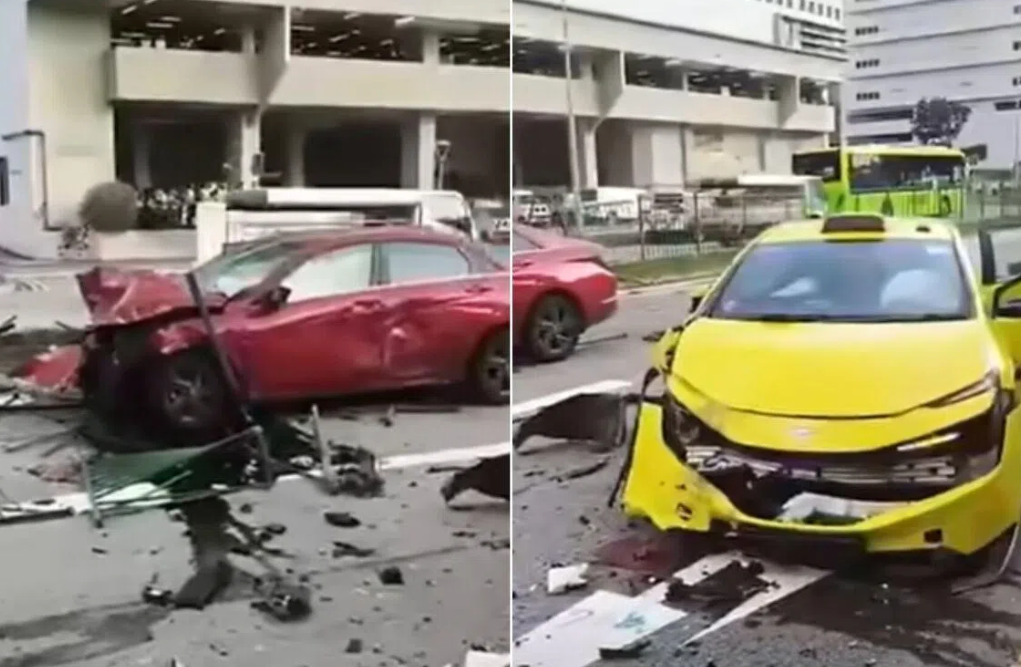
A 36-year-old man in Singapore is facing serious criminal charges stemming from a vehicular collision in the Kallang area that left two people injured, with prosecutors alleging he was operating a motor vehicle while impaired by methamphetamine. Mohamed Firdouz Mohamed Akram appeared in court on June 19 to answer a string of charges including dangerous driving causing bodily harm, driving without the required Class 3 licence, drug-impaired driving, and possession of offensive weapons.
The incident unfolded on the morning of June 17 when Firdouz allegedly operated a car along Kallang Bahru at approximately 8am despite being under the influence of methamphetamine, commonly known on the streets as "Ice". Court proceedings revealed that he failed to maintain adequate control of the vehicle, leading to a collision with a taxi that was traveling in the area. The impact of the crash resulted in injuries to both occupants of the cab: a 60-year-old taxi driver who complained of chest pains and a 43-year-old passenger who sustained pain in her tailbone area.
What compounded the severity of the situation was Firdouz's decision to flee the scene immediately following the accident. Rather than remain at the collision site to provide details to other road users and emergency responders, he abandoned his vehicle and departed before police officers arrived at the location. This flight from the scene is a significant factor that typically weighs heavily in criminal proceedings, as it demonstrates consciousness of guilt and obstructing the course of justice.
Police response was swift and methodical. According to a statement released on June 18, officers began investigating the incident and swiftly identified the driver's identity despite his absence from the scene. Within a remarkably short timeframe of just five hours from when the initial report was filed, authorities apprehended Firdouz, demonstrating effective surveillance and tracking procedures. The speed of his arrest suggests police possessed clear information about his whereabouts or associations that allowed them to locate him quickly.
When police examined Firdouz's vehicle following the crash, they discovered a concerning collection of items that provided additional grounds for prosecution. Suspected drugs, drug-related paraphernalia including vaporisers, and a knuckleduster were retrieved from inside the car and secured as evidence for the case. These discoveries transformed what might have been primarily a traffic matter into a multi-faceted criminal investigation touching on drug offences and weapons possession.
The weapons allegations extend beyond the knuckleduster found in his vehicle. Court documents indicate that Firdouz allegedly had two knives in his possession when police located him in a room at the Village Hotel Katong on Marine Parade Road at around 1pm on the same day of the accident. The presence of multiple weapons, combined with evidence of drug use and dangerous driving, paints a picture of an individual engaged in reckless and potentially criminal behaviour that endangered public safety on Singapore's roads.
The charges Firdouz faces carry substantial potential penalties that reflect the seriousness with which Singapore's legal system treats such offences. For driving while under the influence of a controlled drug, offenders face imprisonment of up to one year, a financial penalty reaching S$10,000, or a combination of both. Those convicted specifically of causing injury to other persons through dangerous driving face up to a year of imprisonment coupled with fines ranging from S$2,000 to S$10,000. When multiple charges are prosecuted concurrently or consecutively, sentences can accumulate to impose meaningful custodial consequences.
The case highlights ongoing concerns about drug-impaired driving in Singapore and the broader Southeast Asian region. Methamphetamine use among drivers has emerged as a particularly troubling issue, as the drug's stimulating properties can create a false sense of confidence while simultaneously impairing judgement, reaction times, and motor control. This combination makes users particularly dangerous behind the wheel, as was evident in the Kallang incident where Firdouz's impaired condition led directly to a collision causing physical harm.
For Malaysian readers and observers across the region, this case serves as a cautionary reminder of how substance abuse intersects with road safety. Singapore's stringent enforcement approach and rapid police response demonstrate the importance of comprehensive investigation when traffic incidents involve suspected drug use. The quick apprehension also underscores how modern policing techniques, including surveillance and intelligence gathering, can swiftly identify and locate suspects despite their attempts to evade authorities.
The procedural aspect of this case also merits attention. Firdouz's case is scheduled for further mention in court on July 17, indicating that the judicial process remains in its early stages with potential for additional charges, further investigations, or plea negotiations. The severity of charges suggests prosecutors are pursuing a robust prosecution rather than seeking to resolve matters through expedited procedures.
This incident also raises questions about licensing compliance and how unlicensed drivers come to operate vehicles on public roads. Firdouz's operation of the vehicle without a valid Class 3 licence means he was already committing a traffic violation before the collision occurred, suggesting potential systemic issues in enforcement of licensing requirements that warrant examination by transport authorities.
As Singapore continues to grapple with road safety challenges, cases like this reinforce the state's zero-tolerance stance toward driving impairment and reckless conduct that endangers other road users. The comprehensive nature of charges—from drug-impaired driving to weapons possession—demonstrates how a single criminal incident can spawn multiple distinct offences requiring separate legal proceedings and potential sentences. For the injured parties in the taxi, the case outcome may determine whether they receive civil compensation and whether their suffering results in meaningful consequences for the defendant.


%22%2F%3E%3C%2Fpattern%3E%3C%2Fdefs%3E%3Crect%20width%3D%22100%25%22%20height%3D%22100%25%22%20fill%3D%22url(%23ph2hy9vg)%22%2F%3E%3Crect%20width%3D%22100%25%22%20height%3D%22100%25%22%20fill%3D%22url(%23ph2hy9vp)%22%2F%3E%3Ctext%20x%3D%2250%25%22%20y%3D%2250%25%22%20text-anchor%3D%22middle%22%20dominant-baseline%3D%22central%22%20fill%3D%22rgba(255%2C255%2C255%2C0.95)%22%20font-family%3D%22Georgia%2C%20'Times%20New%20Roman'%2C%20serif%22%20font-weight%3D%22700%22%20font-size%3D%22272%22%20letter-spacing%3D%22-0.02em%22%3EAnwar%3C%2Ftext%3E%3C%2Fsvg%3E)