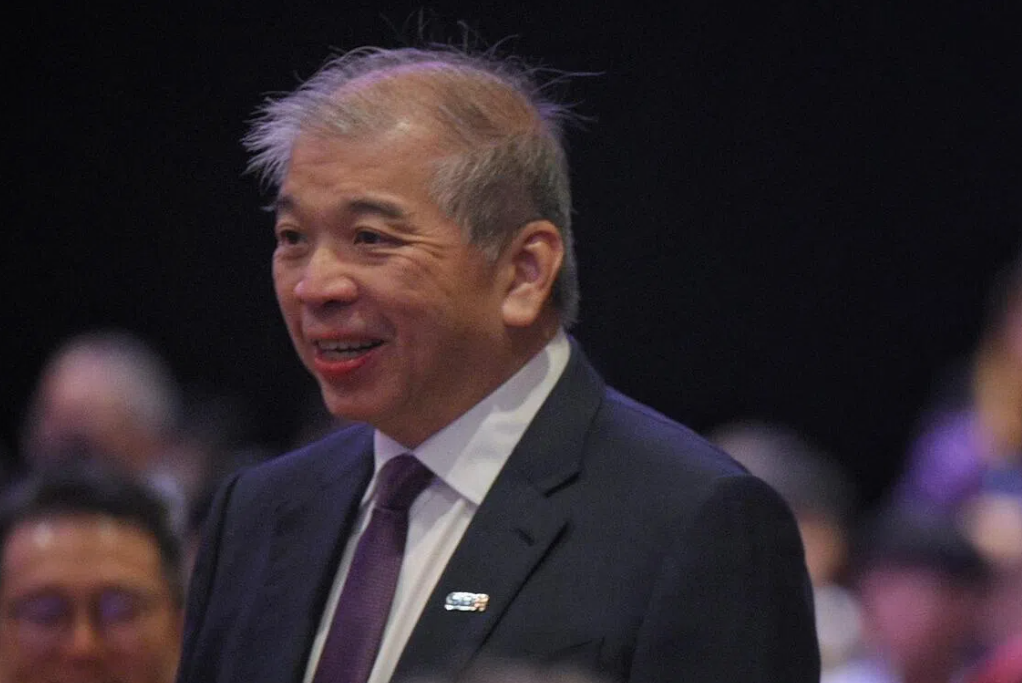
Singapore shipping magnate Teo Siong Seng and several other container industry executives have been named in two class-action civil lawsuits filed in California's federal district court, marking a significant escalation in the legal fallout from an alleged global price-fixing conspiracy. The civil actions, filed separately by American manufacturers C.A. Spalding Company and transportation firm Daybreak Express in early June, represent a parallel legal front to the criminal indictment already brought by the US Department of Justice, exposing the defendants to substantial financial liability from private businesses harmed by the alleged scheme.
The foundation for these civil claims rests on the criminal indictment unsealed in May, which accused five container manufacturers and their executives of orchestrating a sophisticated cartel that controlled approximately 95 per cent of global standard dry container production. Singamas Container Holdings, where 71-year-old Teo serves as chief executive, was identified as a key participant alongside China International Marine Containers (CIMC), Shanghai Universal Logistics Equipment, CXIC Group Containers, and two unnamed manufacturers. The cartel's operations extended across multiple jurisdictions and production facilities, demonstrating the scale and coordinated nature of the alleged conspiracy.
Central to the alleged scheme was an intricate system designed to artificially constrict supply and maintain elevated pricing. According to court documents, cartel members implemented coordinated production restrictions by limiting the number of operating shifts and operating hours on each container production line daily. More strikingly, the conspirators installed 87 video surveillance cameras strategically positioned across 49 container production lines at their factories, creating a monitoring network ostensibly designed to police compliance with agreed-upon output restrictions and prevent any participant from exceeding established production quotas.
The economic impact of these alleged manipulations was dramatic and measurable. The price of a standard 20-foot shipping container more than doubled between 2019 and 2021, rising from approximately US$1,600 to US$3,500. This artificial inflation devastated American businesses reliant on container transportation and storage, and the civil lawsuits seek to recover millions of dollars in allegedly inflated costs paid over multiple years. The financial figures underscore how a concentrated global market in essential logistics infrastructure can be vulnerable to coordinated price manipulation.
The alleged conspirators reaped substantial gains from maintaining inflated prices. CIMC's container manufacturing division achieved dramatic profit growth, increasing from approximately 137 million yuan (S$26 million) in 2019 to 1.99 billion yuan in 2020, then surging to 11.3 billion yuan in 2021. Singamas experienced an even more striking reversal, transforming from a US$110 million loss in 2019 to a US$186.8 million profit by 2021. These financial results provided investigators with compelling circumstantial evidence that the price-fixing arrangement directly benefited the accused firms at the expense of their customers.
The civil lawsuits invoke the treble damages provision, a critical aspect of US antitrust law that allows courts to award three times the actual damages suffered. This mechanism serves both to compensate injured parties fully and to impose meaningful deterrence against future cartel behaviour. If successful, defendants could face penalties far exceeding the actual overcharges, creating substantial financial exposure that extends beyond simple compensation for losses incurred.
Court records indicate that summonses were issued to the defendants in mid-June, initiating the formal legal process. The named individuals include Mai Boliang and Huang Tianhua from CIMC, Wan Yongbo from CIMC's Operation Management Centre, Li Qianmin from Shanghai Universal Logistics Equipment, and Zhang Yuqiang from CXIC Group Containers—all Chinese nationals. Singamas marketing director Vick Ma, also Chinese, is awaiting extradition to the United States after his arrest in France in April. Teo remains the only Singapore-based defendant in the proceedings.
Teo's professional standing in Singapore has deteriorated markedly since his naming in the US indictment. He has taken leaves of absence from multiple high-profile positions, including executive chairman of Pacific International Lines, chairman of the Singapore Business Federation, board membership at Enterprise Singapore, and pro-chancellor roles at the National University of Singapore. These absences reflect the reputational damage and practical difficulties associated with facing serious international criminal and civil allegations.
Most significantly, Teo announced in late May that he will not seek re-election as Singapore Business Federation chairman when his term concludes on June 24, despite having been elected to the position just weeks earlier on May 20, 2025. His brief tenure followed the early departure of his predecessor, Lim Ming Yan, who stepped down to focus on his appointment to lead Changi Airport Group. Teo had previously served as SBF chairman from 2014 to 2020, occupying the apex business chamber's top role for three consecutive two-year terms before stepping aside.
In his sole public statement since the accusations emerged, Teo indicated that his decision to withdraw from these positions was deliberate and considered. He stated that he had proactively chosen to take leaves of absence to allocate sufficient time to address the legal matters while protecting the interests of the organisations from which he was stepping back. The statement suggested he anticipated a prolonged engagement with the US legal system, given the complexity of international cartel investigations and the multiple jurisdictions potentially involved.
For Malaysian and Southeast Asian business leaders and logistics operators, these developments carry significant implications. The region's container-dependent shipping and manufacturing sectors were directly exposed to the alleged price-fixing conspiracy, meaning Malaysian companies may have been among the victims of artificially inflated container costs during the 2019-2021 period. The aggressive pursuit of these cases by US authorities underscores the extraterritorial reach of American antitrust enforcement and the willingness of US courts to hold non-resident executives accountable for alleged cartel activities affecting American commerce.
The civil lawsuits represent a warning to regional business leaders about the risks of participating in or facilitating international cartels. Defendants now face potential exposure to both criminal prosecution and substantial civil damages in foreign jurisdictions, even if they do not reside in the United States. The involvement of surveillance systems and documented production coordination mechanisms provided prosecutors with concrete evidence that proved difficult to dispute, suggesting that sophisticated monitoring arrangements designed to police cartel compliance can paradoxically become the most damaging documentary evidence at trial.
This case also highlights the vulnerability of concentrated global industries to coordinated price manipulation. The container manufacturing sector's concentration in a small number of firms created conditions where a cartel could theoretically exercise significant market power. As supply chain resilience becomes increasingly critical to regional economies, Malaysian policymakers and business leaders should consider how market concentration in essential logistics infrastructure might create systemic risks. The enormous profits generated by the alleged cartel activities demonstrate the financial incentives that drive such schemes and the substantial sums that might be justified in competitive investment to prevent such market manipulation.


%22%2F%3E%3C%2Fpattern%3E%3C%2Fdefs%3E%3Crect%20width%3D%22100%25%22%20height%3D%22100%25%22%20fill%3D%22url(%23ph2hy9vg)%22%2F%3E%3Crect%20width%3D%22100%25%22%20height%3D%22100%25%22%20fill%3D%22url(%23ph2hy9vp)%22%2F%3E%3Ctext%20x%3D%2250%25%22%20y%3D%2250%25%22%20text-anchor%3D%22middle%22%20dominant-baseline%3D%22central%22%20fill%3D%22rgba(255%2C255%2C255%2C0.95)%22%20font-family%3D%22Georgia%2C%20'Times%20New%20Roman'%2C%20serif%22%20font-weight%3D%22700%22%20font-size%3D%22272%22%20letter-spacing%3D%22-0.02em%22%3EAnwar%3C%2Ftext%3E%3C%2Fsvg%3E)