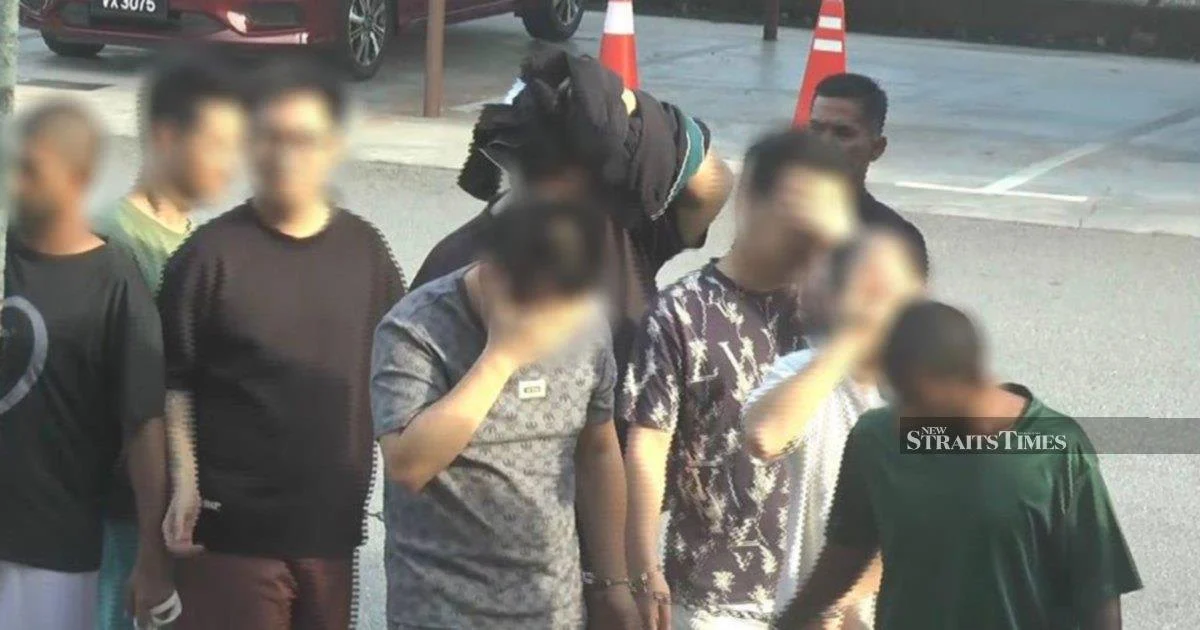
The Bukit Mertajam magistrates court delivered guilty verdicts and financial penalties against six foreign nationals on charges related to online romance fraud operations targeting their fellow countrymen. The convictions underscore Malaysia's ongoing struggle with transnational cybercrime networks that exploit emotional vulnerabilities through digital deception.
The court convicted five individuals holding Chinese citizenship alongside a Taiwanese national, each receiving an identical RM9,000 fine after entering guilty pleas. The cases highlight a persistent pattern in which organized groups coordinate romance scam operations from within Malaysia, often targeting diaspora communities and nationals abroad who may share linguistic and cultural commonalities with the perpetrators.
Online romance fraud, often termed "love scams," represents one of Southeast Asia's most prevalent forms of digital financial crime. Perpetrators establish false romantic relationships with victims through social media platforms and dating applications, gradually building trust over weeks or months before introducing urgent financial requests. These schemes frequently target vulnerable individuals seeking companionship, extracting sums ranging from hundreds to tens of thousands of dollars.
The successful prosecution in Bukit Mertajam reflects Malaysia's increasing capacity to identify and prosecute transnational cybercriminals operating within its borders. Law enforcement agencies have expanded their capabilities in cross-border investigations and digital forensics, enabling them to track perpetrators despite their attempts to mask communication origins and financial flows through cryptocurrency and money-mule networks.
Chinese and Taiwanese nationals have featured prominently in fraud investigations across Malaysia and neighbouring jurisdictions, partly due to established criminal networks that exploit linguistic advantages and familiarity with digital payment systems prevalent in East Asian markets. These organized operations typically employ call centres or office spaces to coordinate multiple simultaneous scams, with team members assigned specialized roles including victim recruitment, relationship management, and financial transaction processing.
The RM9,000 penalty represents a meaningful financial consequence, though critics argue such fines may insufficient deter organized syndicates generating illicit revenues in the millions. Sophisticated networks often absorb legal costs and penalties as operational expenses, offset against substantial fraud proceeds. The effectiveness of punishment ultimately depends upon consistent enforcement and asset recovery mechanisms that target accumulated criminal wealth.
Malaysia's law enforcement framework, encompassing federal and state police units alongside cybercrime specialists, has intensified cooperation with international counterparts through INTERPOL and regional intelligence-sharing initiatives. These collaborative efforts have yielded simultaneous raids across multiple jurisdictions, disrupting transnational networks and preventing repatriation of proceeds to overseas bases. However, jurisdictional complexities and varying legal standards across nations continue challenging comprehensive investigations.
Victims of romance scams frequently experience profound psychological trauma extending beyond financial loss. Individuals report severe emotional distress, damaged self-esteem, and diminished trust in digital communication platforms. Many remain reluctant to report incidents to authorities due to embarrassment, compounding the challenge for law enforcement in establishing crime prevalence rates and identifying linked cases across jurisdictions.
The convictions in Bukit Mertajam arrive amid heightened public awareness campaigns across Malaysia warning citizens of deceptive online practices. Financial institutions and telecommunications companies have implemented enhanced monitoring protocols designed to identify suspicious fund transfers and communication patterns consistent with romance fraud operations. However, scammers continuously adapt methodologies, adopting new platforms and refining deceptive narratives to circumvent detection systems.
Geographic proximity to major financial hubs and Malaysia's established status as an international commercial centre have unfortunately rendered the country attractive to transnational criminal enterprises. The availability of banking infrastructure, internet connectivity, and relative anonymity within urban centres creates operational advantages for organized fraud networks. Consequently, Malaysian authorities must balance facilitating legitimate commerce with implementing rigorous oversight mechanisms.
Moving forward, addressing romance fraud requires multifaceted approaches encompassing legislative reinforcement, technology-driven prevention, victim support services, and international cooperation. Malaysian policymakers are examining legislative frameworks employed by regional counterparts, including Singapore and Australia, which impose substantial prison sentences alongside financial penalties for organized fraud conspiracies. Enhanced penalties potentially serve as stronger deterrents for internationally mobile criminal operatives.
The successful prosecution represents incremental progress in combating cybercrime, yet systemic vulnerabilities persist. Victims and their family members remain the ultimate stakeholders requiring enhanced protection through improved reporting mechanisms, trauma-informed support services, and realistic recovery pathways. Community education initiatives teaching digital literacy and fraud recognition patterns remain essential prevention strategies, particularly targeting vulnerable demographics including elderly citizens and isolated individuals.


%22%2F%3E%3C%2Fpattern%3E%3C%2Fdefs%3E%3Crect%20width%3D%22100%25%22%20height%3D%22100%25%22%20fill%3D%22url(%23ph2hy9vg)%22%2F%3E%3Crect%20width%3D%22100%25%22%20height%3D%22100%25%22%20fill%3D%22url(%23ph2hy9vp)%22%2F%3E%3Ctext%20x%3D%2250%25%22%20y%3D%2250%25%22%20text-anchor%3D%22middle%22%20dominant-baseline%3D%22central%22%20fill%3D%22rgba(255%2C255%2C255%2C0.95)%22%20font-family%3D%22Georgia%2C%20'Times%20New%20Roman'%2C%20serif%22%20font-weight%3D%22700%22%20font-size%3D%22272%22%20letter-spacing%3D%22-0.02em%22%3EAnwar%3C%2Ftext%3E%3C%2Fsvg%3E)