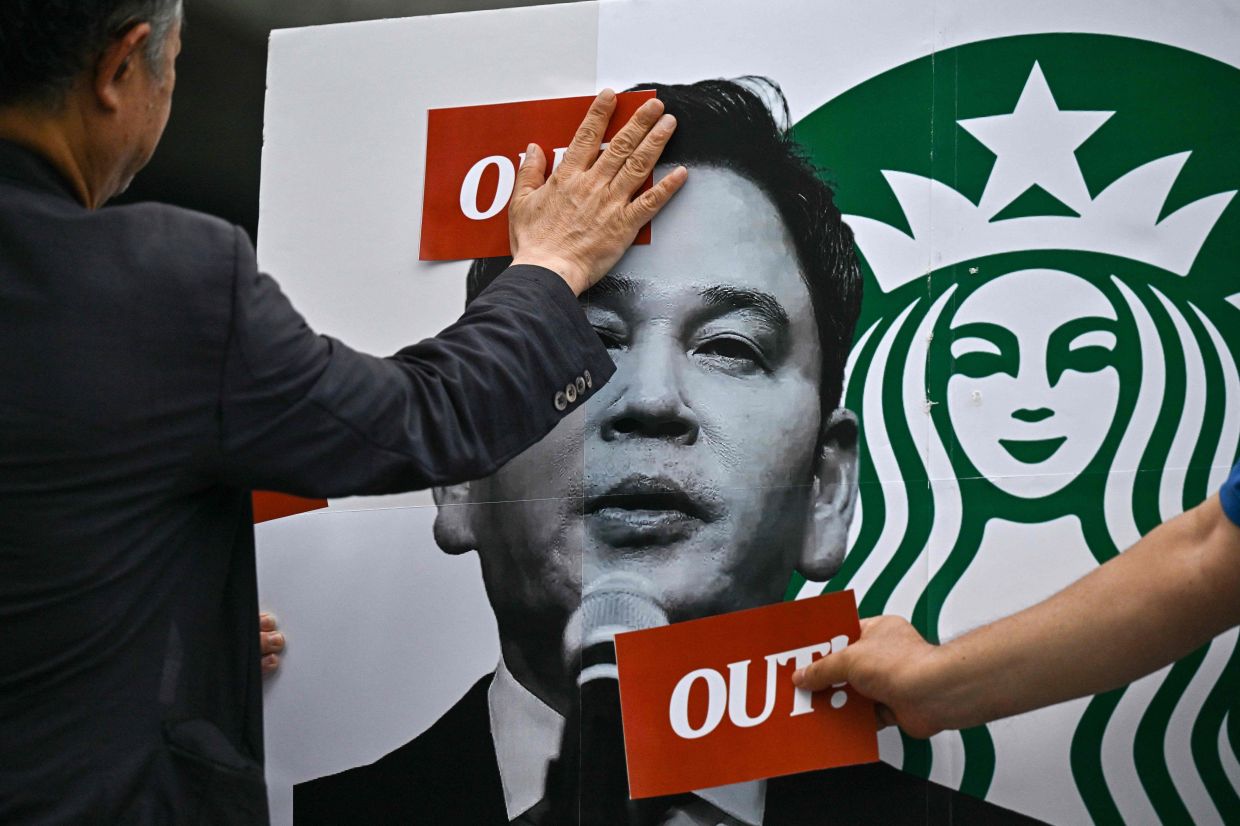
South Korean police have launched an investigation into Starbucks Korea's parent company Shinsegae Group following a promotional blunder that triggered widespread public backlash and sparked legal action against senior management. The Seoul Metropolitan Police Agency questioned Yang Jong-hwan, head of Shinsegae's audit team, regarding the controversial campaign that has become a significant corporate governance crisis in one of Asia's largest economies.
The incident centres on a "Tank Day" reusable cup promotion scheduled for May 18, a date that carries profound historical and emotional weight for the South Korean nation. May 18 marks the anniversary of the Gwangju uprising, a pivotal moment in the country's democratic history when security forces forcibly suppressed a pro-democracy movement in 1980, resulting in the deaths of 165 civilians according to official accounts—though historians and survivors' groups contend the true casualty figure was substantially higher. The juxtaposition of a cheerful, commercially-driven marketing campaign with this solemn commemoration created an immediate firestorm of public condemnation across the country.
Starbucks Korea, which operates more than 2,000 locations nationwide under licensing terms with Shinsegae Group, had apparently failed to recognise the historical significance of the selected date before launching the promotion. The timing proved catastrophic for the coffee chain, as social media users and civic organisations immediately highlighted the insensitivity of celebrating a consumer product launch on a day of national remembrance for victims of state violence. The backlash extended beyond online criticism, with protesters gathering in Seoul and Gwangju to express their anger at what they perceived as a trivialisation of a watershed moment in Korean democratic struggle.
The company's initial response involved decisive but inadequate damage control measures. Shinsegae Group's Korea chief executive was terminated on the day the controversy erupted, signalling the severity of the corporate fallout. Subsequently, Chung Yong-jin, the conglomerate's chairman, made a public apology, bowing in acknowledgment of the incident's gravity and the company's failure to demonstrate cultural sensitivity. These actions reflected the traditional Korean corporate practice of accepting responsibility through executive resignation and formal apology rituals.
However, these internal consequences failed to satisfy civil society and legal advocates. A civic organisation filed formal complaints against Chung and other executives, invoking the May 18 Democratic Uprising Commemoration Act of 2016, which carries specific provisions criminalising the dissemination of false or misleading information about the 1980 crackdown. Beyond this historical crimes statute, the complaint also alleged defamation and insult, indicating prosecutors are considering a broader array of legal theories to address the conduct. This multi-pronged legal strategy reflects the serious nature with which South Korean society continues to regard the Gwangju uprising and its historical memory.
The police investigation represents the formal governmental engagement with the scandal, moving it beyond corporate self-regulation and public sentiment into the realm of criminal inquiry. Yang Jong-hwan's questioning as a witness indicates authorities are reconstructing the decision-making processes that led to the campaign's approval, including why internal oversight mechanisms failed to identify and prevent the problematic date selection. Shinsegae's own subsequent investigation revealed a series of negligent procedural failures, including officials approving design materials without conducting thorough verification of the promotional date's historical context.
In response to the crisis and ongoing investigation, Starbucks Korea has implemented remedial measures that underscore the sensitivity of historical memory in contemporary South Korea. All Starbucks locations across the nation will close for half a day on a designated Monday to permit staff attendance at an educational programme addressing the Gwangju uprising and its historical significance. This mandatory historical education for frontline employees represents an unusual step, demonstrating how deeply the controversy has penetrated corporate operations. Furthermore, Chung and other senior executives have committed to attending a similar historical lesson two days after the staff session, signalling top-level commitment to institutional learning.
The commercial consequences have been severe for Starbucks Korea, with the operator reporting a "sharp decline in sales" during the scandal's initial aftermath. This financial impact extends to a market of considerable strategic importance for the global coffee chain. South Korea ranks as Starbucks' third-largest market globally, trailing only the United States and China, making any sustained reputation damage in the Korean market a significant concern for the international corporation's financial performance and regional strategic positioning.
The incident reveals the distinct sensitivities surrounding historical memory and corporate responsibility in South Korean society, where May 18 remains a touchstone for national identity and democratic values. Unlike many nations where commercial calendar considerations might overshadow historical commemorations, South Korean corporate culture increasingly faces expectations to demonstrate genuine awareness of and respect for significant historical events. The Starbucks case serves as a cautionary example for multinational corporations operating in markets with profound historical consciousness and where civic organisations and consumer activism can swiftly mobilise public opinion against perceived insensitivity.
President Lee Jae Myung's public expression of outrage at "this inhumane and disgraceful conduct" reflects official governmental disapproval and signals that the scandal carries political dimensions beyond corporate management. His intervention suggests that the incident touches on broader questions of how national history is commemorated and protected in the commercial sphere. For regional businesses and multinational corporations expanding across Southeast Asia and East Asia, the Starbucks Korea episode underscores the imperative of understanding and respecting local historical contexts when conducting marketing operations, as calendar coordination failures can rapidly transform into reputational crises with legal and political consequences.

%22%2F%3E%3C%2Fpattern%3E%3C%2Fdefs%3E%3Crect%20width%3D%22100%25%22%20height%3D%22100%25%22%20fill%3D%22url(%23ph2hy9vg)%22%2F%3E%3Crect%20width%3D%22100%25%22%20height%3D%22100%25%22%20fill%3D%22url(%23ph2hy9vp)%22%2F%3E%3Ctext%20x%3D%2250%25%22%20y%3D%2250%25%22%20text-anchor%3D%22middle%22%20dominant-baseline%3D%22central%22%20fill%3D%22rgba(255%2C255%2C255%2C0.95)%22%20font-family%3D%22Georgia%2C%20'Times%20New%20Roman'%2C%20serif%22%20font-weight%3D%22700%22%20font-size%3D%22272%22%20letter-spacing%3D%22-0.02em%22%3EAnwar%3C%2Ftext%3E%3C%2Fsvg%3E)