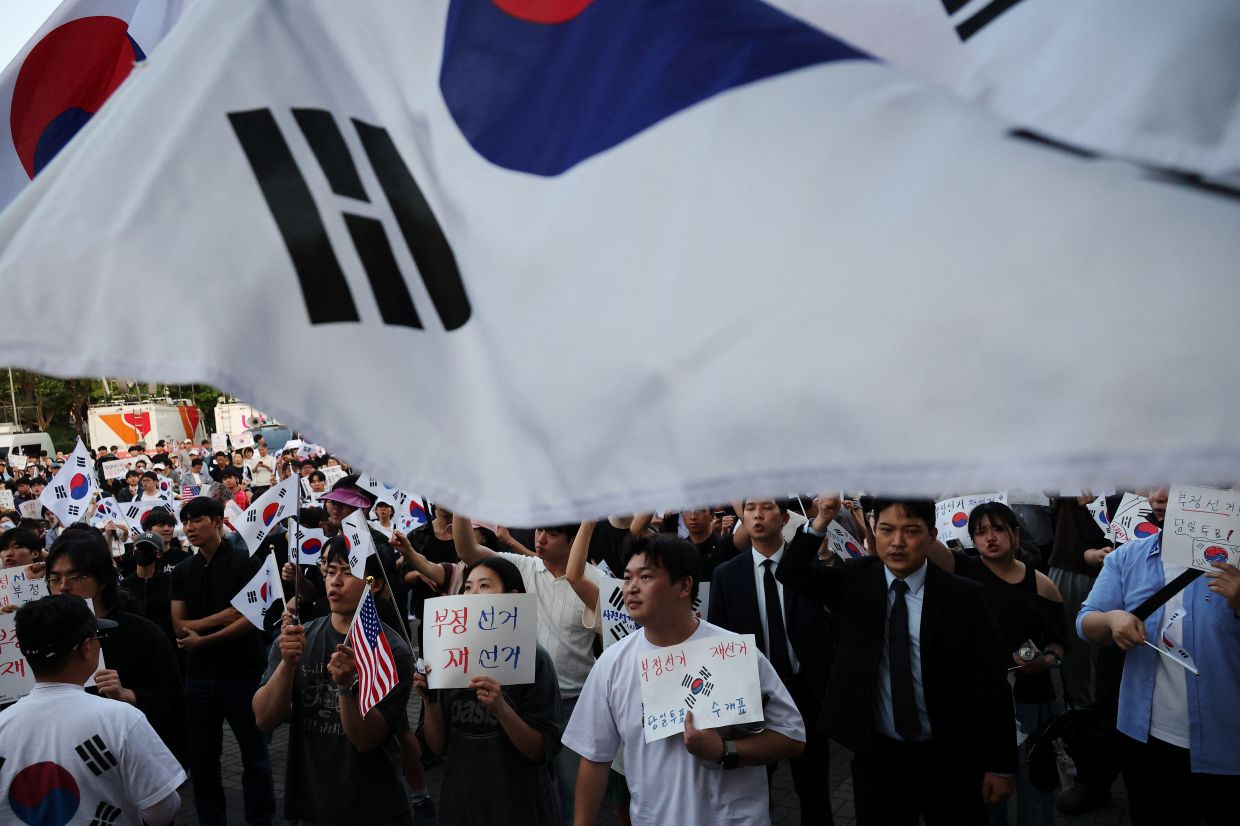
South Korea's President Lee Jae Myung has drawn a careful distinction between legitimate public anger over voting irregularities and what he characterizes as baseless conspiracy theories, as demonstrations continue over significant ballot shortages that disrupted the June 3 local elections. In remarks posted to social media on June 15, the president acknowledged deep public frustration with the National Election Commission's management failures while cautioning protesters against overstepping bounds that could infringe on the rights of other citizens. His position reflects the delicate political balance authorities must maintain when responding to widespread discontent over democratic processes without legitimizing unsubstantiated claims of systematic fraud.
The focal point of ongoing protests remains Olympic Park's handball arena in southern Seoul, which functioned as a vote-counting centre during the local elections and subsequently housed ballot boxes. Demonstrations have blocked facility access, causing operational disruptions to sports organizations headquartered at the Olympic venue and hampering their capacity to conduct administrative work essential for South Korean athletes preparing for international competitions. Lee's intervention came as he shared a news report documenting these workplace disruptions, signalling official concern that legitimate protest was beginning to impose tangible costs on unrelated sectors of society. The president's statement suggested authorities view the intersection of activism and operational impact as requiring immediate clarification of acceptable protest boundaries.
Lee drew explicit distinction between permissible criticism of electoral management and what he termed "absurd conspiracy theories" alleging deliberate election manipulation. Speaking during a videoconference with senior advisors from the Vatican, the president characterized the election commission's failures as representing a serious breach of voting rights—a fundamental democratic principle he emphasized repeatedly. However, he simultaneously warned that some actors were exploiting legitimate grievances as cover for spreading unverified claims of rigging, accusations he suggested had crossed into illegal territory through harassment of police and citizens, unauthorized searches of facilities, and obstruction of official duties. This rhetorical separation underscores official determination to preserve the credibility of investigations while preventing the narrative from shifting toward claims authorities view as politically destabilizing.
The underlying issue stems from documented ballot paper shortages and voting logistics failures that forced temporary suspensions or delays at numerous polling stations during the June 3 elections. These administrative breakdowns directly impacted citizens' ability to vote smoothly and efficiently, validating public concern about the integrity of voting procedures regardless of whether any systematic fraud occurred. Lee acknowledged this distinction explicitly, stating he fully recognizes and accepts public concerns about infringement of voting rights—thereby legitimizing the emotional foundation of protests while simultaneously circumscribing their scope and methods. By validating the core grievance while rejecting interpretations suggesting intentional manipulation, the president attempted to channel anger toward institutional reform rather than conspiratorial narratives.
For Malaysian and Southeast Asian observers, this situation illustrates the complex pressures democratic governments face when managing public trust during electoral crises. South Korea's relatively robust democratic institutions and free press environment have enabled swift public scrutiny of the election commission's failures, creating pressure for accountability that extends beyond administrative remedies into parliamentary and prosecutorial investigations. Yet the emergence of fraud allegations reveals how quickly technical failures can be reinterpreted through conspiratorial lenses, particularly when public confidence in institutions is already fragile. This pattern carries relevance across the region, where electoral disputes have occasionally sparked institutional tensions and protest movements of varying intensity.
Lee specifically instructed law enforcement to conduct strict investigations not only into protesters who obstructed work through force or access restrictions, but also into individuals who allegedly conspired in such activities. This prosecutorial approach suggests authorities intend to pursue accountability on multiple levels simultaneously—holding election officials responsible for management failures while also penalizing protesters who cross into illegal obstruction. The president called for transparent investigation and constructive remedial measures to prevent recurrence, framing the crisis as an opportunity to strengthen democratic systems rather than merely suppress dissent. His emphasis on institutional response and legal accountability reflects confidence that existing frameworks can process both electoral failures and protest conduct through established procedures.
Parliamentary investigation into the election commission's performance could begin as early as the week following the president's statement, with Lee urging the National Election Commission to fully cooperate with legislative oversight. Simultaneously, joint investigation teams comprising prosecutors and police have been tasked with accelerating efforts to determine responsibility "without any sanctuary"—language suggesting official resolve that accountability would extend across institutional hierarchies regardless of seniority or position. This parallel approach of parliamentary review and criminal investigation aims to address both systemic failings and individual culpability, preventing either dimension from being obscured by emphasis on the other. The dual-track strategy reflects institutional maturity in separating questions of administrative failure from questions of criminal conduct.
Lee's invocation of "the righteous anger of young people and citizens" acknowledged generational frustration with institutional performance while positioning responsible action and legal process as appropriate responses to that anger. Rather than dismissing protest as illegitimate, the president reframed activism within parameters of constructive engagement with institutional reform. He called for guaranteeing space for healthy criticism and constructive alternatives, suggesting that demonstrating and debating potential solutions would be more productive than advancing rigging allegations. This framing attempts to preserve protest legitimacy while establishing clear expectations about acceptable conduct and claims, essentially asking activists to maintain pressure for accountability through lawful channels and evidence-based argumentation.
The broader implications extend to questions about how democracies maintain institutional credibility when technical failures occur. South Korea's experience demonstrates that transparent acknowledgment of failures, coupled with visible investigative response and institutional engagement, can satisfy public demand for accountability without requiring acceptance of unfounded conspiracy theories. The president's careful distinction between administrative criticism and fraud allegations establishes a template for managing electoral crises in ways that preserve both institutional legitimacy and democratic participation. For other democracies in the region experiencing electoral tensions, this approach offers a model emphasizing procedural integrity, proportionate accountability, and channels for legitimate grievance expression within established frameworks.
Moving forward, the thoroughness of parliamentary and prosecutorial investigations will substantially determine whether South Korea's institutional response successfully restores public confidence in the election system. Lee's call for transparent fact-finding and speed in determining responsibility establishes benchmarks against which official performance will be measured. Should investigations reveal systematic failures requiring structural reform, such findings would validate concerns driving protests and justify policy changes. Conversely, if investigations establish that failures were isolated and procedurally remediable rather than conspiratorial, the evidence could help contextualize and de-escalate protest narratives. The president's investment in institutional process suggests confidence that transparent investigation can satisfy legitimate demands for accountability while establishing clear boundaries separating justified criticism from conspiracy theorizing.

%22%2F%3E%3C%2Fpattern%3E%3C%2Fdefs%3E%3Crect%20width%3D%22100%25%22%20height%3D%22100%25%22%20fill%3D%22url(%23ph2hy9vg)%22%2F%3E%3Crect%20width%3D%22100%25%22%20height%3D%22100%25%22%20fill%3D%22url(%23ph2hy9vp)%22%2F%3E%3Ctext%20x%3D%2250%25%22%20y%3D%2250%25%22%20text-anchor%3D%22middle%22%20dominant-baseline%3D%22central%22%20fill%3D%22rgba(255%2C255%2C255%2C0.95)%22%20font-family%3D%22Georgia%2C%20'Times%20New%20Roman'%2C%20serif%22%20font-weight%3D%22700%22%20font-size%3D%22272%22%20letter-spacing%3D%22-0.02em%22%3EAnwar%3C%2Ftext%3E%3C%2Fsvg%3E)