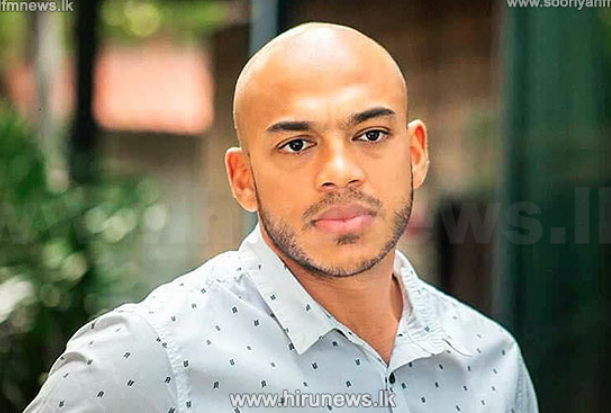
Sri Lanka's anti-corruption authorities have arrested Yoshitha Rajapaksa, the 38-year-old son of former president Mahinda Rajapaksa, on Wednesday in connection with what officials describe as the misappropriation of public funds for his military education. The Bribery Commission confirmed the detention, marking another significant development in a series of legal actions targeting members of the Rajapaksa dynasty that once wielded substantial influence over Sri Lankan politics and governance.
The charges against Yoshitha centre on his career progression within the Sri Lankan Navy, specifically allegations that he received promotions and advanced training opportunities without meeting the stipulated professional qualifications required for such advancement. Investigators have focused particular attention on his attendance at the Royal Naval College Dartmouth in Britain, where he undertook a prestigious officer training programme funded entirely by the government. The commission stated in its official announcement that he is accused of receiving state financing for this overseas instruction despite lacking the minimum credentials ordinarily demanded of naval officers seeking such opportunities.
This arrest arrives amid mounting legal complications for Yoshitha, who was already implicated in two separate money-laundering investigations and had been operating under a foreign travel restriction. He had previously been released on bail pending further proceedings, but the new detention signals an acceleration in prosecutorial efforts against him. The anti-corruption body emphasised that the charges encompass not only the irregular recruitment process itself but also his subsequent receipt of taxpayer money designated for advanced military education abroad.
The decision to pursue Yoshitha reflects broader political developments in Sri Lanka following the September 2024 election victory of President Anura Kumara Dissanayake, who campaigned explicitly on an anti-corruption agenda and pledged to dismantle the entrenched networks of privilege that had insulated powerful families from legal accountability. Dissanayake's administration has signalled its commitment to this platform by directing law enforcement agencies to intensify investigations into the Rajapaksa family's financial dealings and alleged abuses of power stretching back across multiple decades.
Yoshitha faces additional criminal proceedings unrelated to his military career. Prosecutors have commenced a separate prosecution concerning his inability to furnish credible documentation explaining his acquisition of substantial residential property while his father occupied the presidency between 2005 and 2015. When questioned by investigators, Yoshitha claimed that he had financed the purchase through the sale of gemstones that his paternal grandaunt had gifted to him, though the family member has been unable to clarify how she originally obtained these valuable stones. This explanation has apparently failed to satisfy authorities, who continue to pursue the matter in court.
A further case against him involves the purchase of a television network, though specific details regarding the allegations remain under investigation. These multiple legal fronts demonstrate the comprehensive nature of scrutiny now being applied to Yoshitha's financial activities and commercial transactions, suggesting that investigators have identified potential irregularities across several dimensions of his business and professional life.
The intensification of cases against the Rajapaksa family reflects the dramatic reversal in their political fortunes over the past three years. Mahinda Rajapaksa, who led Sri Lanka through the conclusion of its civil war in 2009, had cultivated a substantial political machine and family dynasty that seemed virtually immune to legal challenge during his presidency and in the years immediately following his departure from office. However, the acute economic crisis that struck the nation in 2022, which sparked widespread civil unrest and forced his younger brother Gotabaya Rajapaksa from the presidency, fundamentally altered the political landscape and public appetite for accountability.
Gotabaya Rajapaksa, who succeeded Mahinda as president in 2019, faced his own mounting legal challenges. He received a foreign travel ban earlier this month and has sought court protection against potential arrest in relation to the April 2019 Easter Sunday bombing attacks that claimed 279 lives. His inability to remain in office despite possessing the formal authority of the presidency underscored how quickly public support for the family had eroded when confronted with economic devastation and perceived governmental incompetence.
The cascade of legal actions against multiple family members represents a significant recalibration of Sri Lankan political norms, where dynastic networks had historically insulated their members from prosecution. The breadth of charges — encompassing corruption, money-laundering, misappropriation of public resources, and unexplained wealth accumulation — suggests that authorities are attempting to construct comprehensive cases that address years of alleged misconduct rather than pursuing isolated incidents. For Malaysian observers, the Rajapaksa family's trajectory offers instructive lessons about the fragility of political dominance when economic circumstances shift dramatically and public confidence in governmental competence collapses.
%22%2F%3E%3C%2Fpattern%3E%3C%2Fdefs%3E%3Crect%20width%3D%22100%25%22%20height%3D%22100%25%22%20fill%3D%22url(%23ph2hy9vg)%22%2F%3E%3Crect%20width%3D%22100%25%22%20height%3D%22100%25%22%20fill%3D%22url(%23ph2hy9vp)%22%2F%3E%3Ctext%20x%3D%2250%25%22%20y%3D%2250%25%22%20text-anchor%3D%22middle%22%20dominant-baseline%3D%22central%22%20fill%3D%22rgba(255%2C255%2C255%2C0.95)%22%20font-family%3D%22Georgia%2C%20'Times%20New%20Roman'%2C%20serif%22%20font-weight%3D%22700%22%20font-size%3D%22272%22%20letter-spacing%3D%22-0.02em%22%3EAnwar%3C%2Ftext%3E%3C%2Fsvg%3E)