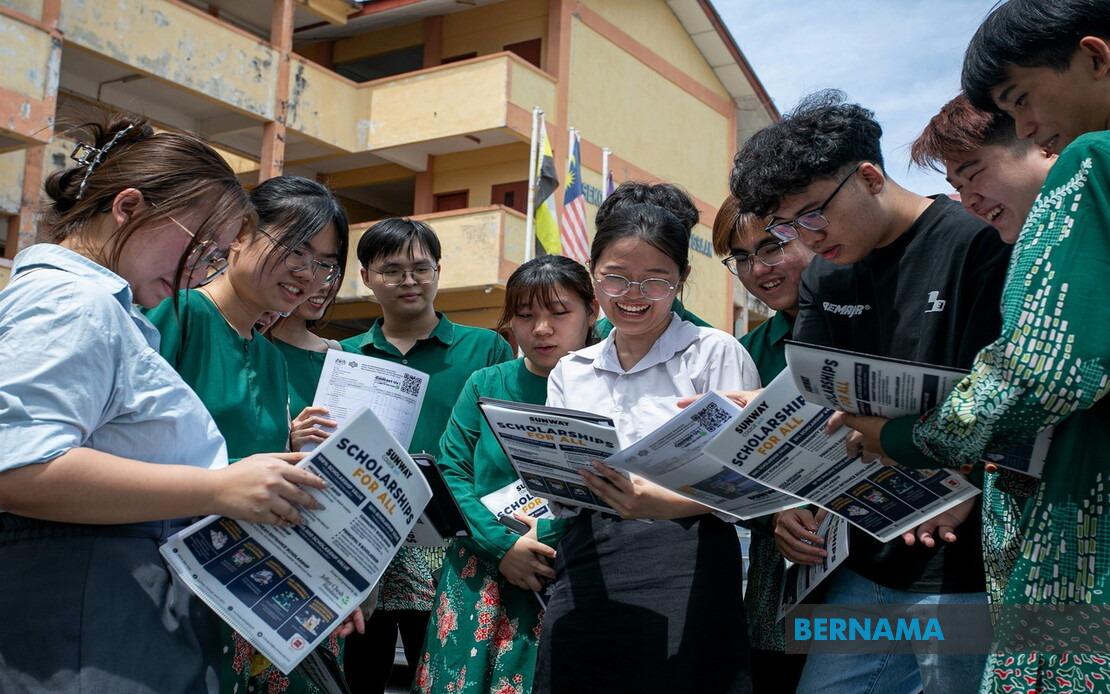
The Sijil Tinggi Persekolahan Malaysia (STPM) continues to establish itself as a credible and accessible route into tertiary education, with recent examination results highlighting how students from varied socioeconomic backgrounds and circumstances are excelling through the Form Six system. Recognition ceremonies at the Malaysian Examinations Council headquarters have brought into focus the diverse pathways through which high-performing learners are accessing university places, challenging long-held assumptions about which qualification routes lead most reliably to academic success.
Hazaril Hakimi Hassan, an Orang Asli student from Kampung Paya Mendoi in Kuala Krau, Pahang, achieved a perfect 4.00 Cumulative Grade Point Average in the 2025 STPM examination, becoming one of the standout performers. His accomplishment carries particular significance as it underscores how Form Six presents genuine opportunities for students from indigenous communities, groups historically underrepresented in Malaysia's higher education landscape. Hazaril's journey from a rural Orang Asli settlement to achieving the highest possible academic ranking demonstrates that geographical location and ethnic background need not be barriers to excellence when proper educational pathways and support systems are available. After studying at SMK Temerloh, he now aims to read Malay Language Education at Universiti Putra Malaysia with ambitions towards an academic career as a university lecturer.
The student's own reflection on his success reveals an important insight about student decision-making in Malaysia. He noted that Form Six initially received less attention and visibility compared to alternative qualifications, but once he grasped the genuine advantages of this pathway supported by dedicated teachers and family encouragement, his confidence in this choice solidified. This observation speaks to a broader challenge in Malaysian education: ensuring that all viable academic routes receive appropriate visibility and recognition among secondary school leavers, particularly in communities where certain qualification paths have historically dominated.
A second perfect scorer, Ng Yu Yong from SMK Tsung Wah in Kuala Kangsar, Perak, brings a different but equally compelling perspective on STPM's appeal. Having secured five A grades including in Physics and Biology, Ng is pursuing a Bachelor of Medicine and Bachelor of Surgery degree at Universiti Malaya. His assessment of Form Six emphasizes practical economic considerations alongside academic rigour: the programme costs considerably less than alternative post-secondary routes, a factor that carries weight in Malaysian families managing educational expenses. For aspiring medical students and those targeting highly competitive university places, he argues that STPM's more demanding assessment framework provides superior preparation and demonstrates greater competitiveness to international universities than other pathways.
Beyond affordability, Ng highlights STPM's international recognition and credibility, noting that top universities globally accept Form Six qualifications and that students can transition to leading institutions abroad if they achieve the necessary grades. This international dimension matters significantly for ambitious Malaysian students considering study options in the region and worldwide. His encouragement to younger cohorts to consider Form Six represents a peer endorsement that may carry greater weight than official promotional efforts, particularly among performance-oriented students who respect academic excellence achieved by contemporaries.
The inclusion of Yeoh Chwen Yih, a visually impaired student from St John's Institution who also achieved a perfect 4.00 CGPA, brings crucial attention to STPM's role in enabling inclusive education. Yeoh's success was substantially facilitated by screen-reading technology that renders learning materials accessible in real time, providing faster and more efficient engagement with course content than traditional Braille-based approaches. For visually impaired learners, educational options remain constrained in Malaysia's system, making Form Six's adoption of accessibility technologies a significant differentiator. Yeoh's intention to pursue law studies underscores how accessible education infrastructure directly enables previously marginalised students to participate fully in competitive academic environments and pursue professional ambitions.
The screen-reading technology that benefits visually impaired Form Six students represents a broader trend toward digital accessibility in Malaysian educational institutions. As examinations councils and schools invest in these tools, they effectively create pathways for disabled students that rival or exceed what is available at some university levels, potentially influencing their choice to pursue higher education with greater confidence. The effectiveness of these technologies in accelerating learning and reducing friction in the educational experience suggests that other Malaysian schools and qualification bodies might benefit from similarly investing in accessibility infrastructure.
Collectively, these three students illuminate distinct dimensions of STPM's contemporary relevance. For Hazaril, the pathway represents opportunity for talented students from underserved communities; for Ng, it offers competitive academic challenge combined with economic accessibility; for Yeoh, it provides inclusive infrastructure enabling participation despite disability. No single narrative fully captures why STPM maintains its position in Malaysia's educational ecosystem, yet each testimony validates different aspects of its continued necessity.
The Malaysian Examinations Council's recognition of these top achievers serves not merely as ceremonial acknowledgment but as strategic messaging about educational pathway options at a time when Malaysian secondary school leavers face genuine choices about their futures. In an environment where international qualifications, private college programmes, and polytechnic routes all compete for students' attention, public visibility of STPM's successful graduates helps counterbalance potential biases toward alternative options that may command greater marketing presence or social visibility among certain demographic groups.
Looking forward, the apparent diversity among high-performing STPM students suggests that the qualification system is successfully reaching across traditional demographic boundaries. The presence of an Orang Asli student, a student from a Chinese-medium secondary school, and a student with visual impairment all achieving perfect grades indicates that structural barriers to excellence are gradually diminishing, though much remains to be done. Their achievements matter not only as individual triumphs but as evidence that systemic improvements in accessibility, support, and recognition are creating conditions where Malaysian students from previously marginalised backgrounds can compete at the highest academic levels.
For Malaysian families and secondary school students currently navigating qualification choices, these narratives offer substantive reasons to view Form Six as worthy of serious consideration. The confluence of international recognition, competitive academic challenge, affordability, and improving accessibility infrastructure presents a compelling case that STPM deserves place alongside other post-secondary options in students' decision-making processes. As Malaysia's education system evolves to meet contemporary demands, ensuring that diverse students across income levels, geographic locations, and ability statuses have equal visibility and access to high-quality pathways becomes increasingly critical to building an equitable and meritocratic higher education ecosystem.

%22%2F%3E%3C%2Fpattern%3E%3C%2Fdefs%3E%3Crect%20width%3D%22100%25%22%20height%3D%22100%25%22%20fill%3D%22url(%23ph2hy9vg)%22%2F%3E%3Crect%20width%3D%22100%25%22%20height%3D%22100%25%22%20fill%3D%22url(%23ph2hy9vp)%22%2F%3E%3Ctext%20x%3D%2250%25%22%20y%3D%2250%25%22%20text-anchor%3D%22middle%22%20dominant-baseline%3D%22central%22%20fill%3D%22rgba(255%2C255%2C255%2C0.95)%22%20font-family%3D%22Georgia%2C%20'Times%20New%20Roman'%2C%20serif%22%20font-weight%3D%22700%22%20font-size%3D%22272%22%20letter-spacing%3D%22-0.02em%22%3EAnwar%3C%2Ftext%3E%3C%2Fsvg%3E)