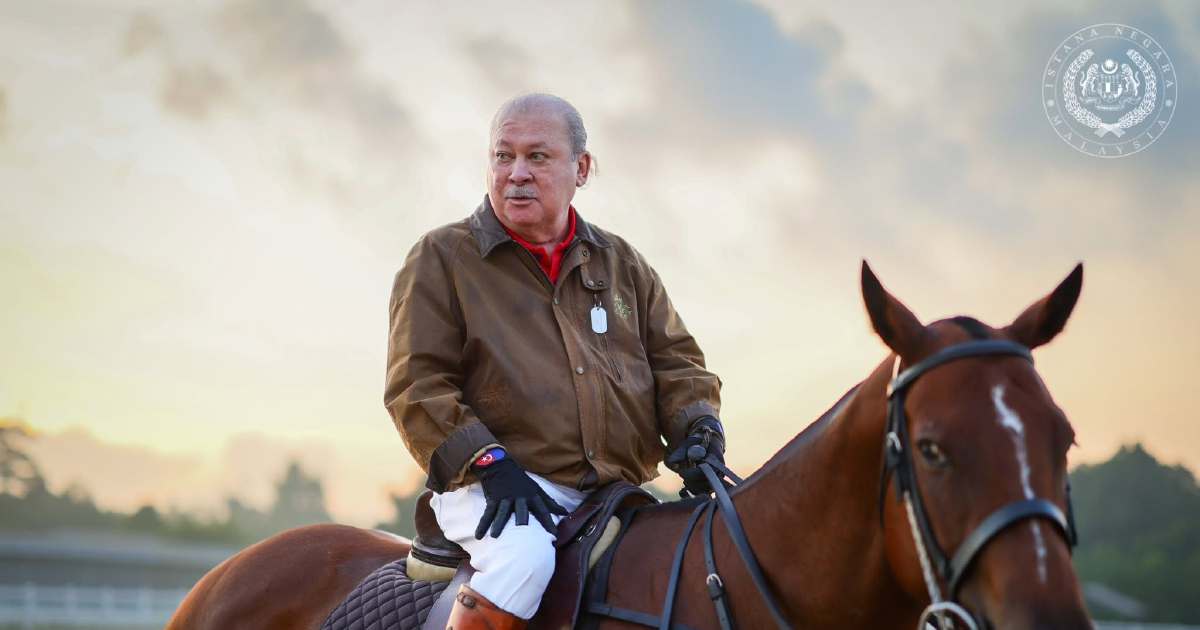
His Majesty Sultan Ibrahim, King of Malaysia, remains dedicated to maintaining his regular morning equestrian activities at the Royal Johor Polo Club situated at Istana Pasir Pelangi in Johor Baru. The monarch was observed executing his riding routine with characteristic composure, moving at a steady trot that reflected both control and relaxation.
The continuation of the King's fitness regimen underscores the emphasis placed on personal health and wellbeing by the highest office of the state. Regular physical activity, particularly horse riding, has long been associated with royal traditions across Commonwealth nations and remains an integral part of the ceremonial and cultural fabric of the Malaysian monarchy. Such activities demand significant physical stamina and coordination, and the King's sustained commitment to these morning sessions demonstrates an active approach to wellness at the head of state level.
The Royal Johor Polo Club serves as one of Malaysia's premier equestrian facilities and has historically functioned as a venue for both sporting pursuits and official recreational activities. The club's location at the historic Istana Pasir Pelangi, a significant royal residence, makes it a natural setting for such regular royal activities. Horse riding facilities in Malaysia, particularly those maintained to international standards, reflect the country's enduring equestrian heritage and the role such activities play in official life.
For Malaysian citizens and the broader Southeast Asian region, the visibility of the King engaging in regular fitness activities carries symbolic weight. The example set by heads of state regarding health consciousness can influence public attitudes towards physical wellness and active lifestyles. The deliberate, measured pace at which His Majesty conducted his ride—described as calm and relaxed—suggests an approach to fitness that emphasizes sustainability and balance rather than intensity, a message that resonates with contemporary wellness philosophy.
Johor, as the southernmost state on mainland Malaysia and home to the royal seat of power, maintains close ties to official state activities. The positioning of such regular royal engagements within the state reinforces Johor's role as a central location for governance and ceremonial life. The state has historically been significant in Malaysian constitutional arrangements, given that the Sultan of Johor holds a distinctive position within the complex framework of Malaysia's dual monarchy structure.
The maintenance of personal fitness routines by public figures, particularly those in prominent positions, often reflects broader organizational commitments to institutional stability and continuity. A monarch who maintains consistent habits and demonstrates visible dedication to personal wellbeing sends signals of steadiness and reliability to both domestic and international observers. Such consistency in routine becomes part of the public understanding of leadership character and capacity.
Equestrian activities hold particular cultural significance within Malay and Southeast Asian traditions, extending back centuries into regional history. Horse riding has featured prominently in royal iconography and ceremonial contexts throughout the region, making it more than merely a recreational pursuit. When a modern Malaysian monarch engages in such activities, he participates in a continuity of cultural practice that bridges historical and contemporary royal identity.
The calm, unhurried manner in which the King conducted his morning ride carries additional resonance during periods of institutional activity and change. The deliberate pace and visible composure offer reassurance regarding the stability of the highest office. In constitutional monarchies, such public visibility, even in routine personal activities, serves important functions in maintaining public confidence and connection to state institutions.
From a regional perspective, the activities of Malaysia's monarch are observed by neighboring Southeast Asian nations as indicators of institutional health and the continuity of governance. The Royal Johor Polo Club scene reflects not just individual wellbeing but also the broader functioning of Malaysia's ceremonial and administrative apparatus. The region's various monarchies and heads of state maintain their own symbolic and fitness routines, and Malaysia's continued adherence to such traditions affirms its place within a broader framework of Southeast Asian governance and royal practice.
The King's sustained engagement with his morning equestrian schedule, maintained with visible tranquility and control, demonstrates a principled approach to balancing the demands of high office with personal wellness. For observers both within Malaysia and across the region, such consistency in routine activity offers a window into the character and priorities of national leadership, reinforcing the centrality of institutional stability to Malaysia's broader governance framework.

%22%2F%3E%3C%2Fpattern%3E%3C%2Fdefs%3E%3Crect%20width%3D%22100%25%22%20height%3D%22100%25%22%20fill%3D%22url(%23ph2hy9vg)%22%2F%3E%3Crect%20width%3D%22100%25%22%20height%3D%22100%25%22%20fill%3D%22url(%23ph2hy9vp)%22%2F%3E%3Ctext%20x%3D%2250%25%22%20y%3D%2250%25%22%20text-anchor%3D%22middle%22%20dominant-baseline%3D%22central%22%20fill%3D%22rgba(255%2C255%2C255%2C0.95)%22%20font-family%3D%22Georgia%2C%20'Times%20New%20Roman'%2C%20serif%22%20font-weight%3D%22700%22%20font-size%3D%22272%22%20letter-spacing%3D%22-0.02em%22%3EAnwar%3C%2Ftext%3E%3C%2Fsvg%3E)