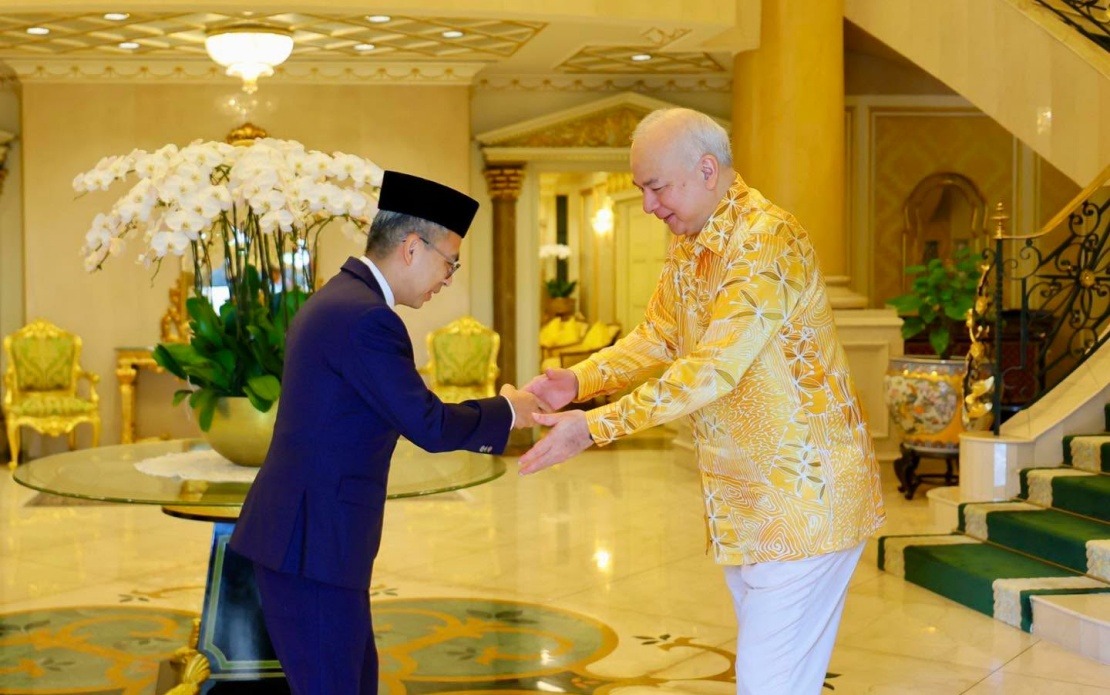
Communications Minister Datuk Fahmi Fadzil has apprised Sultan Nazrin Shah, the Sultan of Perak, regarding ongoing governmental initiatives aimed at bolstering communication infrastructure development throughout the state and broadening the geographic footprint of digital service provision. The briefing took place during a formal audience granted to the minister, highlighting the continued engagement between the Federal Government and Perak's royal institution on critical infrastructure matters affecting the state's digital readiness.
The communications portfolio has become increasingly important across Malaysia as the nation continues its digital transformation agenda. Strengthening telecommunications infrastructure forms a cornerstone of this broader economic strategy, particularly in states like Perak where geographic and demographic factors present unique challenges for equitable coverage expansion. The government's commitment to narrowing digital divides reflects recognition that reliable connectivity underpins economic development, educational opportunities, and access to essential services for all Malaysians regardless of location.
During the audience with the Perak sovereign, Minister Fahmi also highlighted discussions surrounding online safety, a dimension that has gained prominence as digital penetration deepens across the country. The royal attention to this aspect underscores how online security and digital wellbeing have transcended purely technical concerns to become matters of significant governance interest. Protecting citizens—particularly vulnerable populations including children and elderly Malaysians—from online threats and harmful content represents an evolving policy priority that bridges telecommunications development with social responsibility.
Perak's geographic characteristics, encompassing both urbanised areas and scattered rural communities, present both opportunities and challenges for infrastructure planners. The state's economic base, traditionally anchored in tin mining and agriculture, increasingly depends on digital connectivity to participate fully in Malaysia's technology-driven economy. Investments in communication networks therefore carry implications beyond mere service provision, potentially catalysing economic diversification and attracting technology-sector investments to the region.
The minister's emphasis on presenting these initiatives to the Sultan reflects the significant role Perak's royal institution plays in state governance and community leadership. Royal endorsement and awareness of infrastructure programmes can facilitate smoother implementation by building public confidence and understanding of developmental priorities. The Sultan's receptiveness to technical briefings also demonstrates the modern engagement between Malaysia's traditional institutions and contemporary governance challenges.
Online safety concerns have escalated as digital adoption accelerates, with Malaysian users increasingly vulnerable to cybercrimes, data breaches, and fraudulent schemes. The government's multi-layered approach—combining infrastructure expansion with safety frameworks—acknowledges that connectivity without adequate protective mechanisms creates new vulnerabilities. Educational initiatives, regulatory frameworks, and technological safeguards must advance in tandem with network expansion to ensure citizens can leverage digital opportunities securely.
Perak's strategic position within the broader Malaysian telecommunications ecosystem merits attention from federal policymakers. As a state connecting more developed western regions with less densely populated eastern areas, infrastructure improvements there facilitate national digital integration. Enhanced communication networks enable Perak to function as a digital hub for surrounding communities, creating spillover benefits for connectivity and economic activity in adjacent states.
The briefing also reflects the government's consultative approach to infrastructure development, incorporating feedback and perspectives from royal institutions that maintain close connections with their respective populations. This engagement model recognises that sustainable infrastructure projects require not merely technical competence but also social legitimacy and community buy-in. Royal awareness of governmental initiatives can translate into enhanced receptiveness among Perak residents.
Looking forward, the communication sector's trajectory will depend on sustained investment, technological innovation, and policy frameworks that balance commercial viability with equity considerations. For states like Perak, where population distribution and economic capacity vary significantly between districts, targeted infrastructure interventions may prove more effective than uniform approaches. Government coordination with private telecommunications operators, supported by clear regulatory guidance, will shape the pace and scope of coverage expansion.
The minister's public acknowledgement of the audience and discussion topics indicates the government's commitment to transparency regarding infrastructure development priorities. Such communication helps citizens understand how state resources are allocated and what digital futures policymakers are actively shaping. In an era of rapid technological change and evolving cyber threats, informed public discourse around communication infrastructure and online safety becomes essential for building societal resilience.

%22%2F%3E%3C%2Fpattern%3E%3C%2Fdefs%3E%3Crect%20width%3D%22100%25%22%20height%3D%22100%25%22%20fill%3D%22url(%23ph2hy9vg)%22%2F%3E%3Crect%20width%3D%22100%25%22%20height%3D%22100%25%22%20fill%3D%22url(%23ph2hy9vp)%22%2F%3E%3Ctext%20x%3D%2250%25%22%20y%3D%2250%25%22%20text-anchor%3D%22middle%22%20dominant-baseline%3D%22central%22%20fill%3D%22rgba(255%2C255%2C255%2C0.95)%22%20font-family%3D%22Georgia%2C%20'Times%20New%20Roman'%2C%20serif%22%20font-weight%3D%22700%22%20font-size%3D%22272%22%20letter-spacing%3D%22-0.02em%22%3EAnwar%3C%2Ftext%3E%3C%2Fsvg%3E)