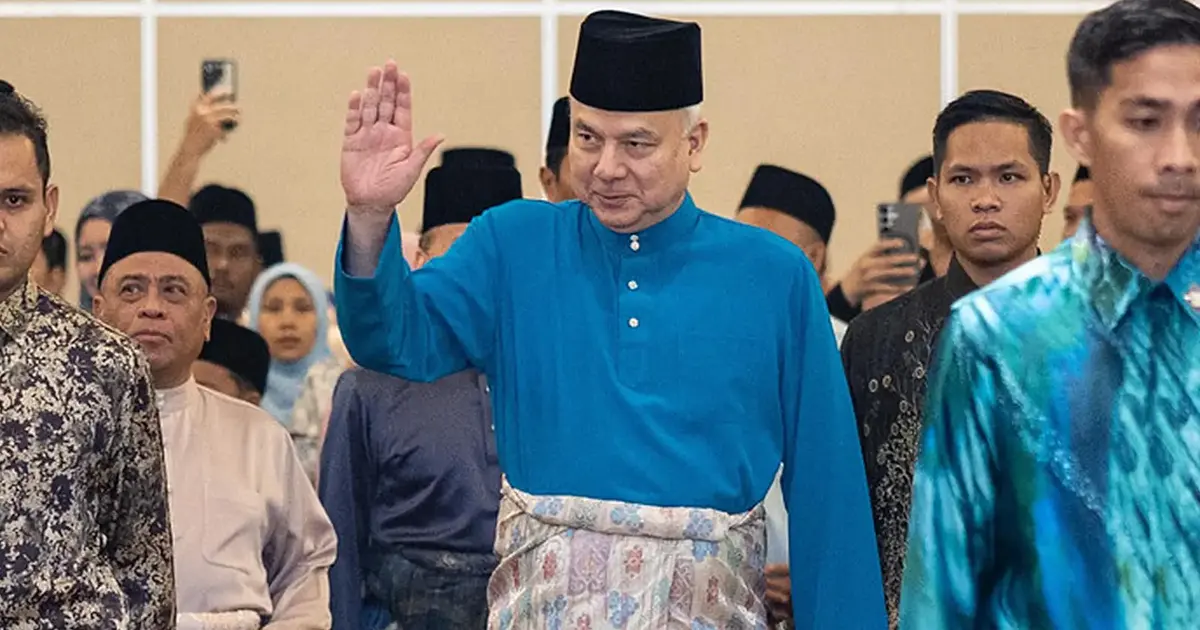
Sultan Nazrin Mudzayyam, the Deputy Agong, has issued a forthright caution to leaders across government and civil society against permitting emotional impulses to dictate their decision-making processes. The Perak ruler's intervention into the discourse on governance quality underscores growing concerns about the calibre of leadership judgement at critical moments, particularly when political pressures and public sentiment threaten to override measured deliberation.
The Sultan's message carries particular weight given his constitutional role and the respect traditionally accorded to royal counsel in Malaysian political culture. By positioning rational decision-making as a prerequisite for effective leadership, he has highlighted a tension that pervades modern governance: the pull between populist responsiveness and principled, contemplative action. This distinction matters enormously in a pluralistic democracy where leaders must balance immediate public demands against long-term institutional and social stability.
Underscoring his address is a broader thesis about national development that extends beyond the mechanics of individual policy choices. Sultan Nazrin has articulated a vision of progress that rests fundamentally on the collective willingness of Malaysians to cooperate meaningfully with one another. This cooperative spirit, he suggests, cannot flourish when leaders prioritize reactive governance over strategic thinking, or when decisions emerge from passion rather than principle.
The emphasis on mutual respect constitutes a second pillar of the Sultan's framework for national advancement. In a country where religious diversity, ethnic plurality, and competing regional interests intersect constantly, the maintenance of respectful relations across these divides becomes essential infrastructure for stability. When leaders allow emotion to govern their choices, they risk inflaming precisely these sensitivities, triggering cycles of mistrust that undermine the social compact.
Harmonious coexistence, the third element of Sultan Nazrin's prescription, should not be misread as mere absence of conflict. Rather, it suggests an active commitment to building common ground and finding workable solutions that acknowledge legitimate differences without permitting them to calcify into permanent antagonism. This proves especially vital in Southeast Asia's complex geopolitical and multicultural landscape, where historical grievances and contemporary tensions can swiftly escalate when leaders respond with impulse rather than reflection.
The royal intervention arrives amid a domestic political context marked by coalition instability, shifting parliamentary alignments, and periodic bouts of heated public discourse. Malaysian leaders across the spectrum face intensifying pressure from partisan supporters, media narratives, and social media dynamics that reward confrontation and punish compromise. Against this backdrop, Sultan Nazrin's counsel functions as a reminder that the highest calling of leadership involves transcending these pressures through principled judgment.
For Malaysian readers observing their nation's political trajectory, the Sultan's message resonates with longstanding concerns about institutional quality and leadership standards. The COVID-19 pandemic, economic disruptions, and social tensions of recent years have tested the resilience of Malaysian governance frameworks. Leaders who respond to each crisis with hastily conceived initiatives risk compounding rather than resolving underlying problems, while those who act with deliberation and consultation build sustainable solutions.
The implications of Sultan Nazrin's counsel extend beyond immediate governance to questions of democratic participation and public expectations. Citizens who engage with politics emotionally, demanding immediate action on grievances, paradoxically may impede their own interests by encouraging leaders to adopt equally emotional approaches. A politically mature society, by contrast, embraces the sometimes frustrating reality that good governance involves careful analysis, stakeholder consultation, and incremental progress rather than dramatic reversal.
Within the Southeast Asian context, Malaysia's experience as a relatively stable multiethnic democracy offers lessons for neighbouring countries grappling with similar challenges. The Sultan's emphasis on reasoned leadership and social harmony speaks to conditions that have enabled Malaysia to avoid the communal violence and institutional collapse that have afflicted other societies in the region. Yet this stability cannot be taken as permanent; it requires constant renewal through the quality of leadership choices.
For corporate and civil society leaders beyond the political sphere, the Sultan's message also holds relevance. Institutions of all kinds benefit from cultures of deliberation where decisions emerge from analysis rather than reaction. In an era of rapid change and incomplete information, the temptation to move quickly increases, yet the costs of poor decisions equally escalate. Leaders who resist pressure for immediate action in favour of thoughtful process often produce better outcomes.
Looking forward, Sultan Nazrin's intervention suggests that questions of leadership philosophy and governance culture deserve prominence in national discourse. Technical policy debates matter, certainly, but they rest upon foundations of institutional quality and leadership character. If Malaysian leaders at all levels—political, corporate, educational, religious—can internalize the principle that measured judgment serves the nation better than emotional reaction, the dividends for social stability and economic progress would be substantial.
The Sultan's call ultimately represents a defence of rationality in public life at a moment when passion often drowns out careful thought. By framing this not as an abstract principle but as essential to practical national success, he has elevated the conversation about what Malaysians should expect from their leaders and what they should demand of themselves.

%22%2F%3E%3C%2Fpattern%3E%3C%2Fdefs%3E%3Crect%20width%3D%22100%25%22%20height%3D%22100%25%22%20fill%3D%22url(%23ph2hy9vg)%22%2F%3E%3Crect%20width%3D%22100%25%22%20height%3D%22100%25%22%20fill%3D%22url(%23ph2hy9vp)%22%2F%3E%3Ctext%20x%3D%2250%25%22%20y%3D%2250%25%22%20text-anchor%3D%22middle%22%20dominant-baseline%3D%22central%22%20fill%3D%22rgba(255%2C255%2C255%2C0.95)%22%20font-family%3D%22Georgia%2C%20'Times%20New%20Roman'%2C%20serif%22%20font-weight%3D%22700%22%20font-size%3D%22272%22%20letter-spacing%3D%22-0.02em%22%3EAnwar%3C%2Ftext%3E%3C%2Fsvg%3E)