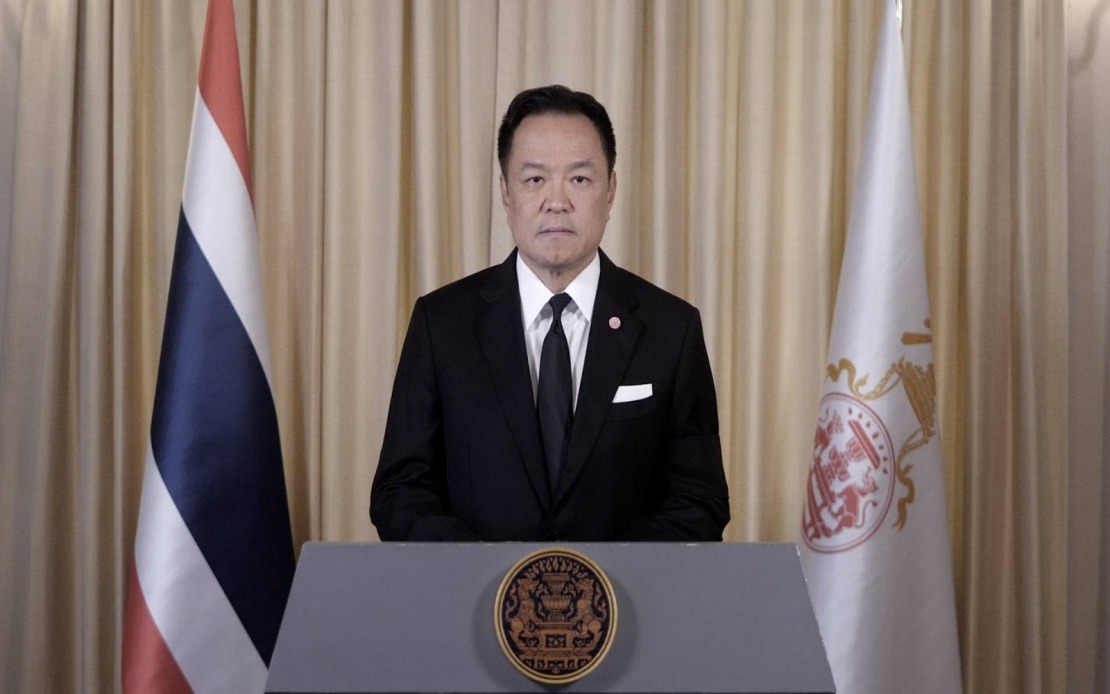
Thailand's government leadership has signalled cautious optimism about the potential consequences of a ceasefire agreement between the United States and Iran, framing any such development as a stabilising force for the broader global economy and Southeast Asia's energy security. Prime Minister Anutin Charnvirakul made the remarks on Monday at Government House, days after US President Donald Trump announced that negotiations with Iran had resulted in a finalised accord that would include reopening the Strait of Hormuz and lifting American naval blockades in the region.
Thailand's assessment of geopolitical risk reflects both the kingdom's vulnerability to external shocks and the strategic calculations of policymakers attempting to balance competing economic interests. The Thai government has faced mounting pressure from volatile global energy markets, supply chain disruptions, and inflation concerns that directly impact consumer welfare and business competitiveness. Any easing of tensions in the energy-rich Gulf region carries immediate implications for Bangkok, as crude oil and liquefied natural gas prices directly influence industrial production costs, electricity generation expenses, and ultimately the purchasing power of Thai households.
Anutin framed the potential agreement within a broader narrative of Thailand's economic resilience and institutional preparedness. He argued that the kingdom has successfully absorbed previous shocks to global supply chains through adaptive management strategies and long-term planning frameworks, rather than reactive crisis responses. This positioning reflects confidence among Thai officials that their diversified economic base and strategic positioning within regional trade networks have created sufficient buffer against external volatility. The emphasis on proactive planning rather than day-to-day crisis management suggests that Bangkok views geopolitical developments as manageable variables within a wider strategic context.
Deputy Prime Minister and Finance Minister Ekniti Nitithanprapas expanded on the economic rationale for welcoming a potential ceasefire, explicitly linking conflict resolution to moderating energy costs that burden both the macroeconomic environment and household finances. His remarks acknowledged Thailand's particular exposure to oil price fluctuations, given the kingdom's heavy reliance on imported petroleum and natural gas for energy needs. The Finance Minister indicated that resolution of West Asian tensions could create conditions for stronger economic growth than currently anticipated by government forecasters, reflecting how deeply energy market stability influences broader growth projections for developing economies in the region.
The potential benefits extend beyond simple arithmetic reductions in energy import bills. Stabilised oil and gas prices would reduce inflationary pressures that have compounded hardship for Thailand's lower-income households and constrained purchasing power across consumer-dependent sectors of the economy. Smaller businesses, which form the backbone of employment in much of Southeast Asia, operate with limited pricing power and minimal hedging capacity against commodity shocks, making them disproportionately vulnerable to sudden energy price swings. A genuine ceasefire would therefore represent meaningful relief for these economically vital constituencies.
Nevertheless, Thai policymakers have been careful to separate their enthusiasm for conflict resolution from broader energy policy commitments. Ekniti explicitly stated that Thailand would continue pursuing its 200-billion-baht energy transition programme regardless of expectations for lower oil prices in coming months. This declaration reflects growing recognition within Southeast Asian governments that energy independence and reduced carbon intensity remain strategic imperatives beyond short-term commodity price considerations. The energy transition agenda encompasses renewable energy development, grid modernisation, and diversification of import sources—structural transformations that lower oil prices might otherwise discourage.
Thailand's balanced position on the ceasefire reflects sophisticated understanding of the region's energy geopolitics. While temporary relief from high oil prices would benefit current economic performance, sustained dependence on imported fossil fuels exposes the kingdom to recurring supply disruptions and price volatility. The energy transition programme represents acknowledgment that long-term energy security requires reducing reliance on Middle Eastern oil shipments, particularly given escalating geopolitical tensions in that region. By committing to energy transition despite prospects for cheaper imported oil, Thai officials signal that they view structural economic transformation as more strategically valuable than short-term savings.
The implications for Southeast Asia more broadly deserve consideration, as Thailand's economic outlook influences investment flows and trade dynamics across the region. As the second-largest economy in mainland Southeast Asia after Indonesia, Thailand's growth trajectory affects demand for agricultural products, manufactured components, and services throughout the region. Improved global economic conditions following a ceasefire would support stronger import demand from Thailand, benefiting regional exporters and creating positive spillover effects through trade networks that connect Vietnamese manufacturers, Cambodian agricultural producers, Lao mining operations, and Myanmar's recovering economic base.
Thailand's government also recognises that continued vigilance toward inflation remains necessary despite potential energy price relief. Ekniti indicated ongoing monitoring of cost pressures affecting both household budgets and small business operations, suggesting that Bangkok understands that energy price moderation alone cannot solve all inflationary challenges. Other cost drivers including supply chain congestion, labour market tightness, and currency fluctuations could perpetuate price pressures even if Middle Eastern tensions ease.
The Thai leadership's calibrated optimism about a potential ceasefire reflects the pragmatic approach characteristic of Southeast Asian policymaking. Rather than celebrating a geopolitical development on ideological grounds, Bangkok has assessed concrete consequences for energy markets, economic growth prospects, and household welfare. This analytical framework prioritises tangible economic outcomes over broader international relations principles. By emphasising the benefits of conflict resolution while maintaining commitment to structural economic transformation, Thailand's government demonstrates how smaller nations navigate great power competition while advancing their own development objectives.


%22%2F%3E%3C%2Fpattern%3E%3C%2Fdefs%3E%3Crect%20width%3D%22100%25%22%20height%3D%22100%25%22%20fill%3D%22url(%23ph2hy9vg)%22%2F%3E%3Crect%20width%3D%22100%25%22%20height%3D%22100%25%22%20fill%3D%22url(%23ph2hy9vp)%22%2F%3E%3Ctext%20x%3D%2250%25%22%20y%3D%2250%25%22%20text-anchor%3D%22middle%22%20dominant-baseline%3D%22central%22%20fill%3D%22rgba(255%2C255%2C255%2C0.95)%22%20font-family%3D%22Georgia%2C%20'Times%20New%20Roman'%2C%20serif%22%20font-weight%3D%22700%22%20font-size%3D%22272%22%20letter-spacing%3D%22-0.02em%22%3EAnwar%3C%2Ftext%3E%3C%2Fsvg%3E)