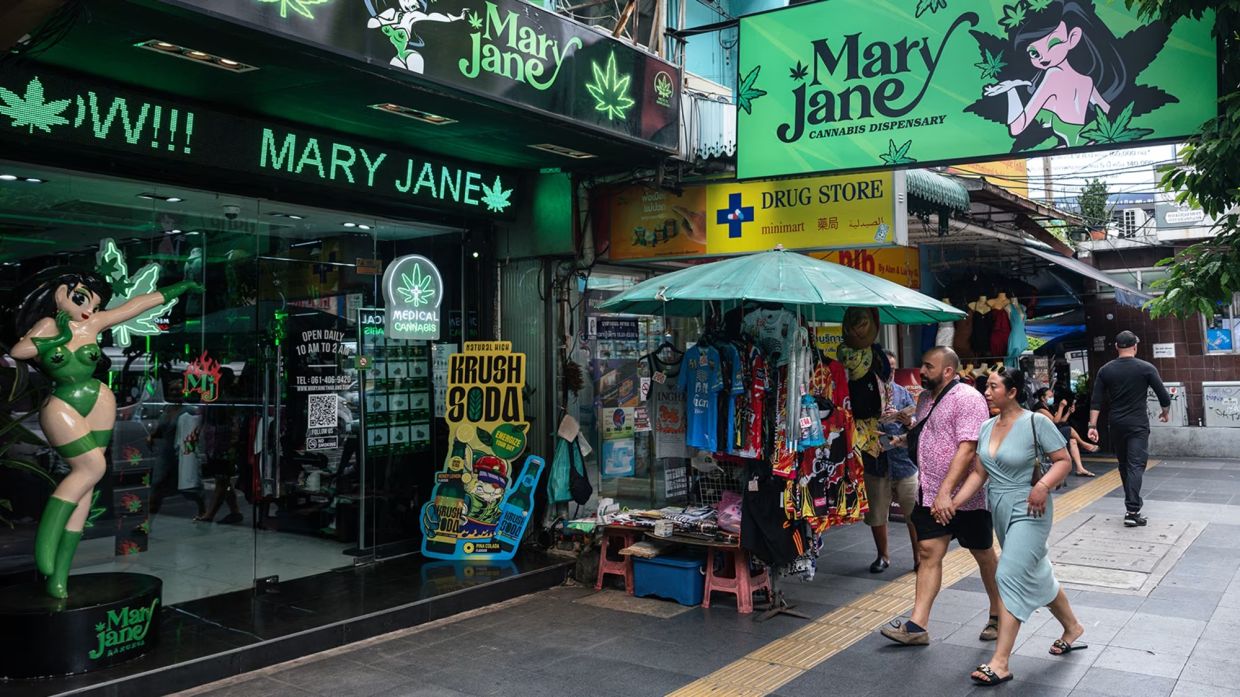
Thailand's approach to cannabis regulation has become a flashpoint for competing interests, with the House Public Health Committee convening on June 18 to determine whether the country should reverse its permissive stance and return cannabis to the narcotics list. The contentious hearing revealed fundamental disagreements between medical professionals and anti-drug advocates seeking tighter controls and business operators arguing that reversion would devastate farmers and legitimate enterprises attempting to comply with existing rules.
Chaired by Sakoltee Phattiyakul, the meeting assembled an unusually broad coalition of stakeholders reflecting the polarisation now gripping Thai cannabis policy. The Department of Thai Traditional and Alternative Medicine, the Food and Drug Administration, medical networks, academics and civic organisations campaigned for stricter oversight, while cannabis entrepreneurs and their supporters defended the current framework. The sharp ideological divide underscores how Thailand's relatively liberal 2022 decision to decriminalise cannabis has become a flashpoint between economic liberalisation and public health conservatism.
Thailand first liberalised cannabis in June 2022, positioning itself as an early adopter of cannabis reform in Southeast Asia. Three years later, the Public Health Ministry attempted to establish regulatory guardrails through three new regulations issued in June 2025, designed to monitor research, sales, processing and exports according to international standards. However, these interim measures have failed to contain proliferation and informal trading, suggesting that without a comprehensive statutory framework, regulatory authority remains fragmented and enforcement inconsistent. Officials now acknowledge the need for a dedicated cannabis and hemp law, with a draft bill submitted to Cabinet under the previous administration but stalled after Parliament's dissolution.
Dr Tewan Thaneerat, deputy director-general of the Department of Thai Traditional and Alternative Medicine, outlined the current governmental position during the hearing. The department classifies cannabis as a controlled herb under the Protection and Promotion of Thai Traditional Medicine Wisdom Act 1999, a framework designed for traditional remedies rather than contemporary commercial distribution networks. The Public Health Ministry continues advancing a new cannabis bill through public hearings scheduled to conclude by late July, with resubmission to Cabinet anticipated thereafter. Yet this timeline offers no immediate remedy for the regulatory vacuum that has metastasised since liberalisation.
Proponents of reclassification argue that returning cannabis to narcotics control temporarily while drafting permanent legislation would plug dangerous gaps in the current regime. Ekkapop Sittiwantana of the People's Party, serving as deputy chairman of the House Public Health Committee, contended that unregistered cultivation and informal direct sales have mushroomed into widespread phenomena exploitable by grey-market operators. He emphasised the necessity of establishing a proper registration system for cannabis plants to prevent both criminal circumvention and the emergence of quasi-legal shadow markets that operate beyond formal oversight. This argument resonates with concerns that Thailand's pragmatic liberalisation has inadvertently created conditions where regulation collapses into ambiguity.
Medical and public health representatives amplified these concerns, questioning whether cannabis should ever have been removed from narcotics classification in the first place. Assoc Prof Dr Smith Srisont, representing a coalition of doctors, academics and drug-harm reduction groups, highlighted an uncomfortable reality: despite cannabis extracts containing more than 0.2 per cent THC remaining classified as narcotics, widespread cannabis availability has already demonstrated measurable public health consequences. He advocated for temporary reclassification followed by a purpose-built regulatory law as a superior sequencing strategy. The current situation exemplifies regulatory incoherence whereby cannabis flowers receive controlled herb status while other plant parts escape criminal liability when cultivated, creating perverse incentives for circumvention through technical botanical distinctions.
The Food and Drug Administration defended its licensing and inspection framework, which covers production facilities, processing plants, imports and retail licensing for certified shops and products. Inspections of cannabis-based products have generally confirmed compliance with labelling standards and raw material quality thresholds. Yet the FDA itself conceded that the fundamental problem lies not with licensed operators' compliance but rather with sales channels operating outside the legal system entirely. This acknowledgment exposes a critical limitation of regulatory architecture that cannot contain market forces when informal channels offer cheaper products without administrative burden or licensing fees.
Cannabis business operators and the Thai Cannabis Future Network presented a contrasting narrative, arguing that legitimate enterprises face existential pressure from black market competition, illegal imports and perpetual legal uncertainty. The network raised allegations that some officials have exerted improper pressure or demanded benefits in exchange for licensing approvals, while farmers struggle to navigate expensive medical prescription requirements allegedly being traded in non-healthcare venues. Beyond these enforcement complaints, the network contended that cannabis possesses broader economic and cultural significance rooted in Thai traditional medicine, and that regulatory frameworks should reflect this heritage rather than confining cannabis to mainstream pharmaceutical applications. This framing positions cannabis reform as a matter of agricultural viability and cultural preservation rather than merely a public health question.
The tension between these perspectives reflects Thailand's broader challenge in calibrating cannabis policy to serve multiple constituencies simultaneously. Southeast Asia lacks established precedent for cannabis regulation, meaning Thai policymakers cannot simply adopt proven models from jurisdictions with longer reform histories. The region's rapid urbanisation and young demographic profile amplify concerns about youth access and normalisation, particularly given evidence from other markets that availability precedes comprehensive regulation. Conversely, agricultural communities in northern Thailand have invested substantially in cannabis cultivation based on government signals that liberalisation would remain durable, creating legitimate farmers now facing regulatory rollback and economic disruption.
Sakoltee's directive to compile comprehensive registries of licensed cannabis retailers in Bangkok and FDA-certified products suggests the committee is attempting forensic auditing before policy revision. His emphasis on establishing mandatory distance buffers between cannabis outlets and educational institutions indicates growing concern about youth access and normalisation, particularly in urban centres where informal sales channels have proliferated unchecked. The decision to invite alternative draft legislation from the public sector alongside the Public Health Ministry's bill signals parliamentary openness to balancing economic stakeholder interests with public health imperatives, rather than pursuing simplistic recriminalisation.
The forthcoming cannabis law will test whether Thailand can construct regulatory frameworks accommodating multiple policy objectives simultaneously: maintaining legitimate farmer livelihoods, preventing youth access and commercial exploitation, supporting traditional medicine applications, and containing black market proliferation. Malaysian observers should note that Thailand's struggle reflects challenges that regional jurisdictions may eventually confront as cannabis reform conversations accelerate across Southeast Asia. The absence of agreed regional standards or enforcement mechanisms means individual countries risk creating opportunities for cross-border trafficking and regulatory arbitrage, where businesses and criminals exploit jurisdictional differences. Thailand's current deliberations therefore carry implications extending far beyond Bangkok, potentially influencing how regional governments approach cannabis policy in coming years.
The next critical juncture arrives when Cabinet reviews the competing legislative proposals. Success will require negotiated compromises among stakeholders holding genuinely incompatible preferences—medical authorities prioritising access restrictions, farmers seeking economic protection, businesses demanding regulatory stability, and public health officials concerned about youth and vulnerable populations. Whether Thailand's governmental and parliamentary institutions can forge sustainable consensus from this heterogeneous coalition will significantly influence whether cannabis liberalisation persists as regional policy or reverses into more cautious frameworks.

%22%2F%3E%3C%2Fpattern%3E%3C%2Fdefs%3E%3Crect%20width%3D%22100%25%22%20height%3D%22100%25%22%20fill%3D%22url(%23ph2hy9vg)%22%2F%3E%3Crect%20width%3D%22100%25%22%20height%3D%22100%25%22%20fill%3D%22url(%23ph2hy9vp)%22%2F%3E%3Ctext%20x%3D%2250%25%22%20y%3D%2250%25%22%20text-anchor%3D%22middle%22%20dominant-baseline%3D%22central%22%20fill%3D%22rgba(255%2C255%2C255%2C0.95)%22%20font-family%3D%22Georgia%2C%20'Times%20New%20Roman'%2C%20serif%22%20font-weight%3D%22700%22%20font-size%3D%22272%22%20letter-spacing%3D%22-0.02em%22%3EAnwar%3C%2Ftext%3E%3C%2Fsvg%3E)