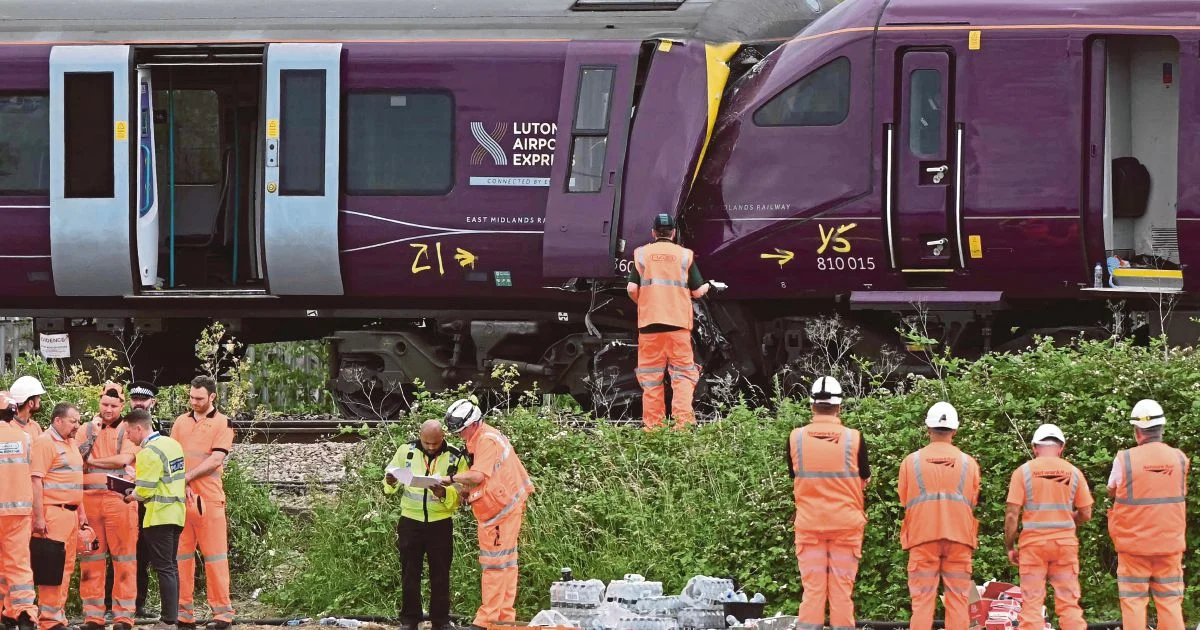
A tragic collision between two trains north of London has claimed one life and left dozens injured, prompting a comprehensive investigation by UK accident authorities. The incident, which occurred near Bedford, resulted in the death of a train driver and injuries affecting 28 individuals, with nine sustaining critical injuries. The accident has reignited concerns about rail safety protocols and the systems designed to prevent such catastrophic events on Britain's rail network.
UK accident investigators descended on the scene on Saturday to examine the wreckage and establish how two trains came into contact. The collision unfolded in a region that handles substantial passenger traffic between London and the Midlands, raising questions about the operational procedures that failed to prevent the impact. Initial assessments suggest the incident affected a large number of passengers beyond those hospitalised, with emergency services responding rapidly to manage casualties and contain the situation.
The critical injuries sustained by nine of those hospitalised highlight the severity of the collision's impact. Medical teams across multiple hospitals worked throughout the day to stabilise patients and conduct emergency procedures. The nine critically injured represent a concerning subset of the overall casualty list, indicating that despite relatively modest numbers hospitalised, the force involved in the crash was considerable and localised in its most destructive effects.
Rail safety mechanisms in the United Kingdom include automated train protection systems and signalling protocols designed specifically to prevent such collisions. The presence of a fatality among the driver staff underscores how these systems can occasionally fail or become circumvented under certain conditions. Investigators will scrutinise whether human error, technical malfunction, or a combination of factors contributed to the trains' failure to maintain safe separation.
The Bedford area serves as a major transit corridor for commuter and freight services throughout central England. Regular traffic through this corridor means that any operational disruption or safety incident carries wider implications for rail users across the region. The timing of the collision on a Saturday suggests both passenger and operational trains were active, potentially affecting diverse travel patterns and freight schedules.
For Malaysian readers and Southeast Asian observers, such incidents serve as important reminders about the ongoing maintenance requirements and systemic safeguards necessary in any rail network, regardless of a nation's development stage. Malaysia's own expanding rail infrastructure, including the KL-Singapore High-Speed Rail project and ongoing MRT extensions, must incorporate lessons from international incidents. The investment in robust signalling systems, driver training, and emergency response protocols remains essential as regional railway networks expand capacity.
The investigation into this collision will likely require several weeks to complete, involving detailed examination of track conditions, train operating systems, communication records, and weather factors. The accident investigation branch in the UK has significant experience with such inquiries and will produce detailed recommendations to prevent recurrence. These findings often influence rail safety standards across international networks and can inform best practices adopted globally.
Emergency response protocols appear to have functioned effectively, with ambulances and rescue services successfully extracting and treating the injured. Hospital coordination ensured that critically injured patients received priority treatment whilst others received appropriate care. The rapid response prevented what could have been substantially higher casualty numbers had response systems been delayed or inadequate.
This incident arrives amid broader discussions about rail safety in an era of increased automation and driver fatigue management. Modern trains incorporate sophisticated safety technology, yet human factors remain central to preventing such tragedies. Driver training, alertness monitoring, and shift management systems continue to evolve as transport authorities seek to eliminate human error from the safety equation.
The psychological impact on survivors and witness passengers should not be understated. Train collisions create traumatic experiences that extend beyond physical injury, affecting mental health and confidence in rail travel. Support services for affected passengers and rail staff are typically mobilised following such incidents, recognising the broader impact beyond the immediate casualties.
The investigation will examine whether maintenance schedules for both trains were current and whether any mechanical defects contributed to the collision. Rolling stock condition directly impacts braking capability and overall system responsiveness, making maintenance documentation a critical element of the inquiry. Any deferred maintenance or overlooked technical issues will feature prominently in investigators' findings and subsequent safety recommendations.