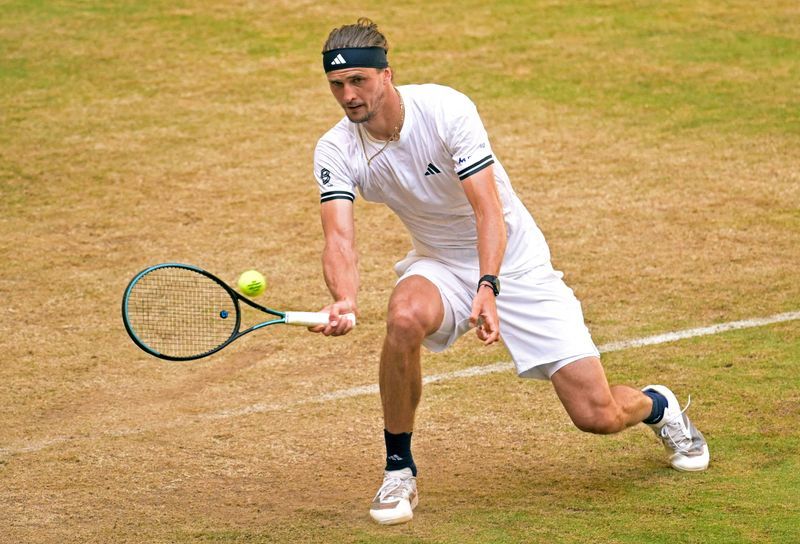
World number three Alexander Zverev pointed to equipment failure rather than poor form following his loss to Taylor Fritz in the Halle Open semi-final on Saturday, attributing the defeat to a malfunctioning glucose sensor that dramatically interfered with his match performance. The German fell 6-7(4) 6-4 7-5 to the American in a contest that stretched just over two hours and thirty-nine minutes, marking another setback in their head-to-head rivalry where Fritz now holds a commanding advantage.
Zverev has managed Type 1 diabetes since childhood, diagnosed at just four years old, making glucose management essential to his competitive routine. For nearly a decade, he has relied on Medtronic continuous glucose monitoring technology to track and regulate his blood sugar levels both during training and matches—a system he has integrated seamlessly into his professional career. However, the sensor used during the Halle encounter provided readings that were dramatically inverted from reality, creating a medical crisis mid-competition that no athlete should face.
The malfunction forced Zverev into a dangerous position where the sensor indicated dangerously elevated glucose values when his actual levels were dangerously low. Trusting the equipment, he administered significantly more insulin than his body actually required, sending his glucose into a rapid decline that left him feeling physically compromised throughout the opening phases of the match. During the initial forty-five minutes alone, he consumed approximately 350 grams of sugar—an extraordinary quantity required to counteract the effects of the miscalculation—yet continued competing while feeling physically diminished.
Despite these extraordinary circumstances affecting his physical state and tactical execution, Zverev demonstrated the competitive character that has made him a consistent Grand Slam contender by refusing to blame the loss entirely on external factors. He acknowledged that Fritz produced superior tennis on the day and earned the victory through merit, recognising that elite athletes must sometimes compete through adversity and still accept when opponents simply perform better.
The incident marks an unprecedented occurrence in Zverev's relationship with his monitoring equipment. He has utilised these particular sensors since 2016 or 2017, providing nearly nine years of continuous use without experiencing such a substantial technological failure. The magnitude of the error—reversing high readings as low and vice versa—represents a rare breach in equipment reliability that could have had serious health implications beyond mere sporting consequences.
The loss extends Zverev's recent struggles against Fritz, with the American now leading their head-to-head record after six consecutive victories. Prior to Saturday's semi-final, Zverev had not enjoyed success in their recent encounters, suggesting that even without the glucose sensor complications, he faced a formidable opponent in excellent form. Nevertheless, the technical failure undoubtedly affected his ability to perform at the level required to challenge the American's aggressive baseline game.
Looking forward, Zverev expressed confidence that the sensor malfunction would not create further concerns as the professional tennis calendar shifts toward Wimbledon, scheduled to run from June 29 to July 12. His remarks suggest the issue was an isolated equipment failure rather than a systemic problem with his diabetes management protocol, allowing him to prepare for the grasscourt Grand Slam without fundamental changes to his medical support structure.
The incident underscores the complex realities facing elite athletes managing chronic medical conditions at sport's highest level. Zverev has pioneered a model of professional tennis excellence despite Type 1 diabetes, demonstrating that the condition need not prevent athletes from reaching the sport's pinnacle. However, his Halle experience illustrates how technological dependencies, while generally enabling performance, can occasionally create unexpected vulnerabilities that even the most prepared and disciplined athletes cannot prevent.
For Malaysian and Southeast Asian followers of professional tennis, Zverev's situation provides insight into the multifaceted demands faced by modern elite competitors. Success requires not only physical conditioning, tactical sophistication, and mental resilience, but also seamless integration of medical support systems that frequently operate invisibly in the background. When those systems fail, even champions must navigate unprecedented challenges while maintaining professional standards and composure.
%22%2F%3E%3C%2Fpattern%3E%3C%2Fdefs%3E%3Crect%20width%3D%22100%25%22%20height%3D%22100%25%22%20fill%3D%22url(%23ph3iugkg)%22%2F%3E%3Crect%20width%3D%22100%25%22%20height%3D%22100%25%22%20fill%3D%22url(%23ph3iugkp)%22%2F%3E%3Ctext%20x%3D%2250%25%22%20y%3D%2250%25%22%20text-anchor%3D%22middle%22%20dominant-baseline%3D%22central%22%20fill%3D%22rgba(255%2C255%2C255%2C0.95)%22%20font-family%3D%22Georgia%2C%20'Times%20New%20Roman'%2C%20serif%22%20font-weight%3D%22700%22%20font-size%3D%22151%22%20letter-spacing%3D%22-0.02em%22%3EBezzecchi%3C%2Ftext%3E%3C%2Fsvg%3E)